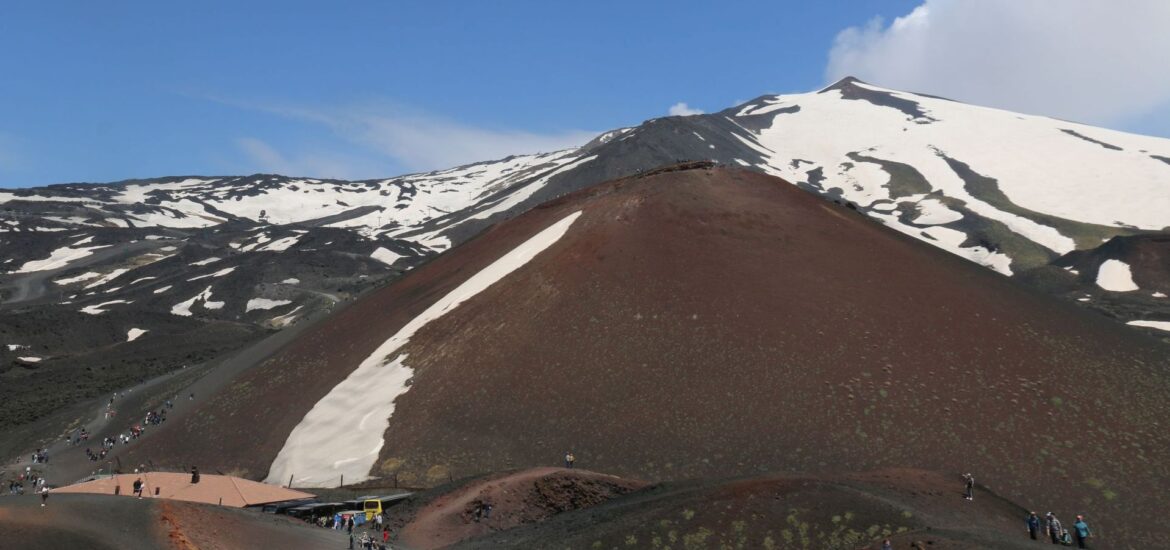
Visiting Mount Etna is high on the bucket list for anyone traveling to Sicily – and with good reason!
After experiencing the mountain once before during the winter, we returned in May during our road trip in Sicily, hoping to find the best balance between pleasant weather, a reasonable number of tourists, and stunning natural beauty.
As we are not capable of intense, high-altitude hikes, we had a clear goal: reach Rifiugio Sapienza (at 1,900 meters above sea level), explore the famous Crateri Silvestri and take a scenic road trip along the dramatic slopes of Mount Etna.
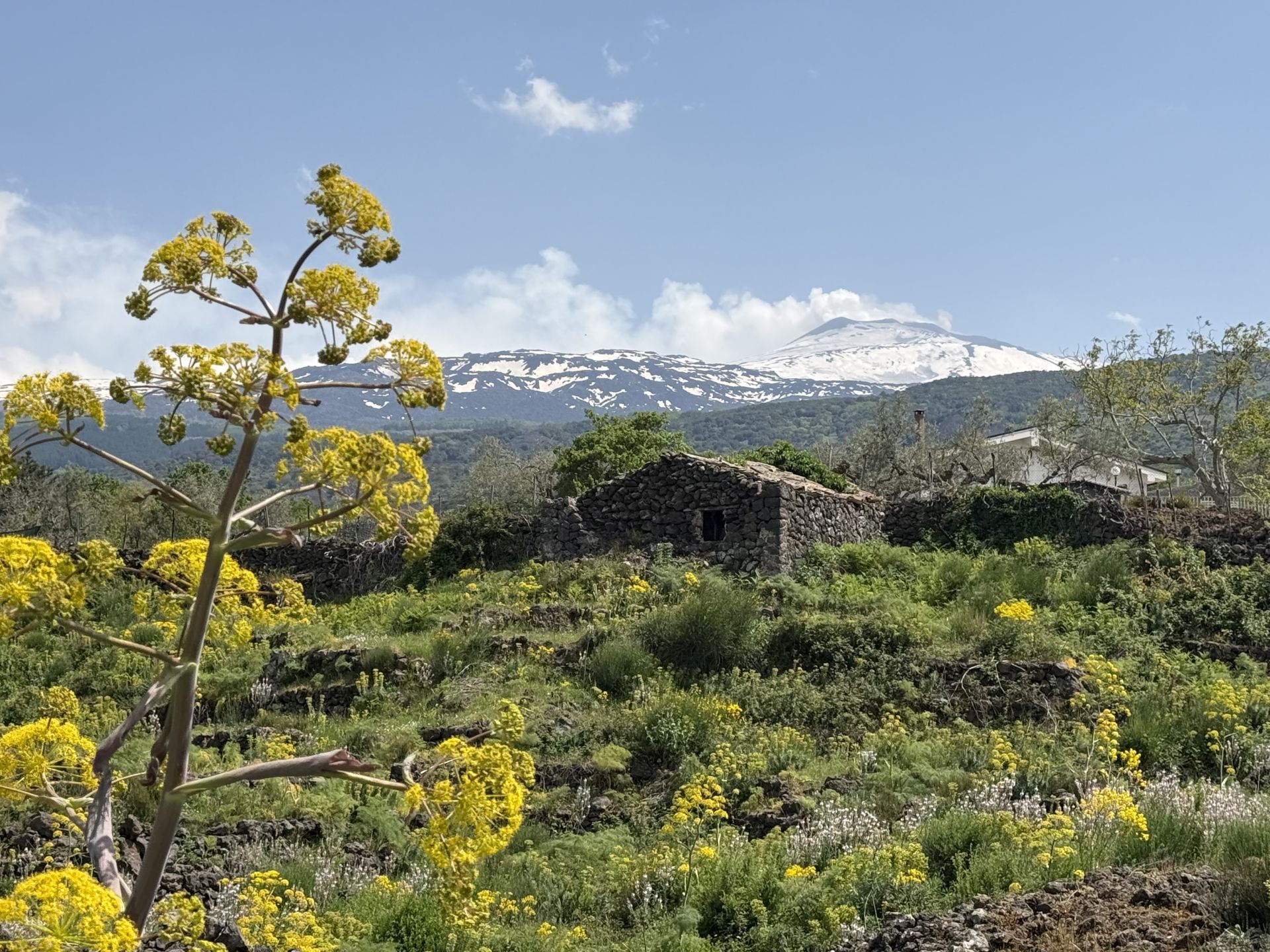
Did you know that Mount Etna is one of the highest volcanoes in Europe, with an altitude at 3,350 meters above sea level? It is also the largest, with a base circumference of around 150 km. It is so unique that the entire Etna Park (with a surface of 59,000 hectares) earned the UNESCO World Heritage status back in 2013 due to its geological features.
As Europe’s most active volcano, Mount Etna is constantly changing; its shape and elevation are shifting with each eruption. While these eruptions and the lava flow occasionally threaten local agriculture and transport, they also feed Sicily’s rich myths and legends.
Mount Etna is also known as “Mongibello” (from the Arabic word “gebel”, meaning “mount”), but the locals affectionately call it “’a muntagna”, which means “the mountain” in Sicilian dialect. Why? Well, on this island, there is only one mountain that truly matters.
According to ancient mythology, the titan Typhon was trapped beneath the mountain’s peak by Zeus, and in ancient times, earthquakes and eruptions were said to be his fiery rumbles of anger. Another legend says that Etna is the secret forge of Hephaestus, the god of fire, crafting his divine works deep within the earth.
But now I want to describe our own impressions of the extraterrestrial landscape we experienced on and around Mount Etna.
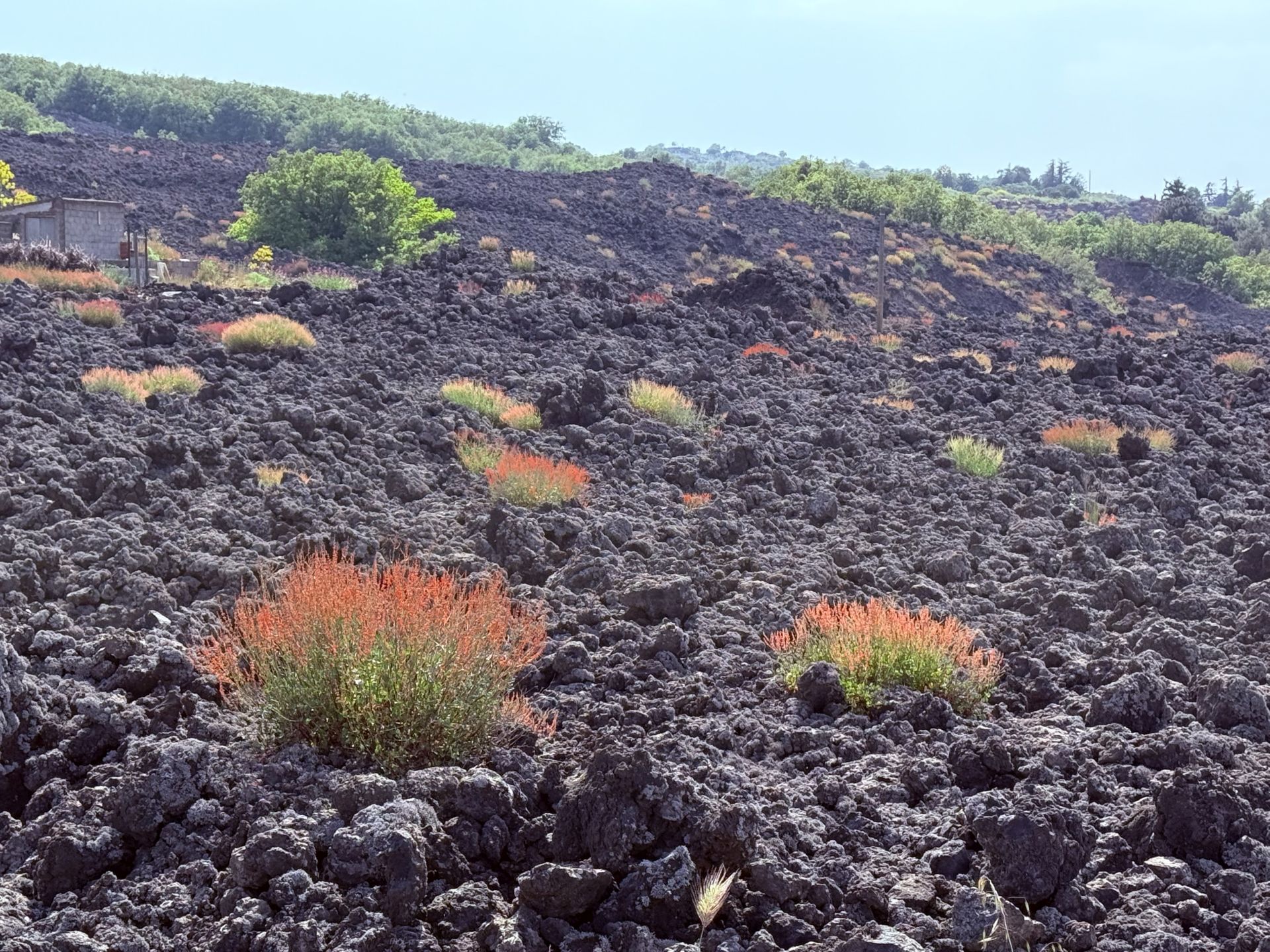
Driving up the mountain in May was a dream – traffic was light, and the changing scenery felt like driving through another world. The lower slopes were lush and fertile, covered by olive groves, vineyards and fruit orchards. At higher altitudes, we experienced a dramatic transformation into dark grey, black and red lava fields, with pink and yellow wildflowers.
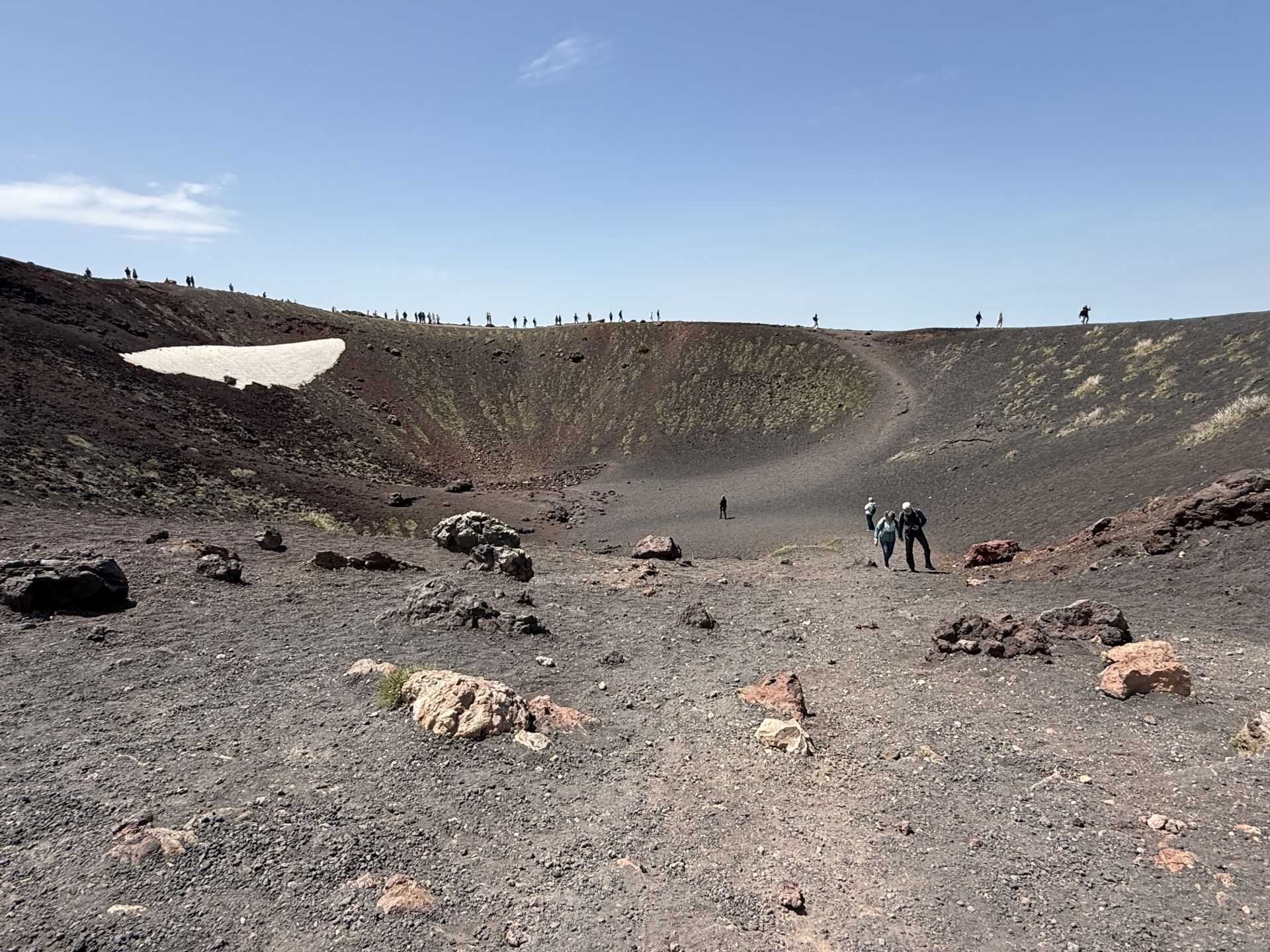
Upon arriving at Rifiugio Sapienza, we parked our car and headed to the Crateri Silvestri. Created during a six-month eruption in 1892, these craters are a popular stop, but visiting in May meant avoiding the heavy summer crowds and enjoying the scenery at our own pace.
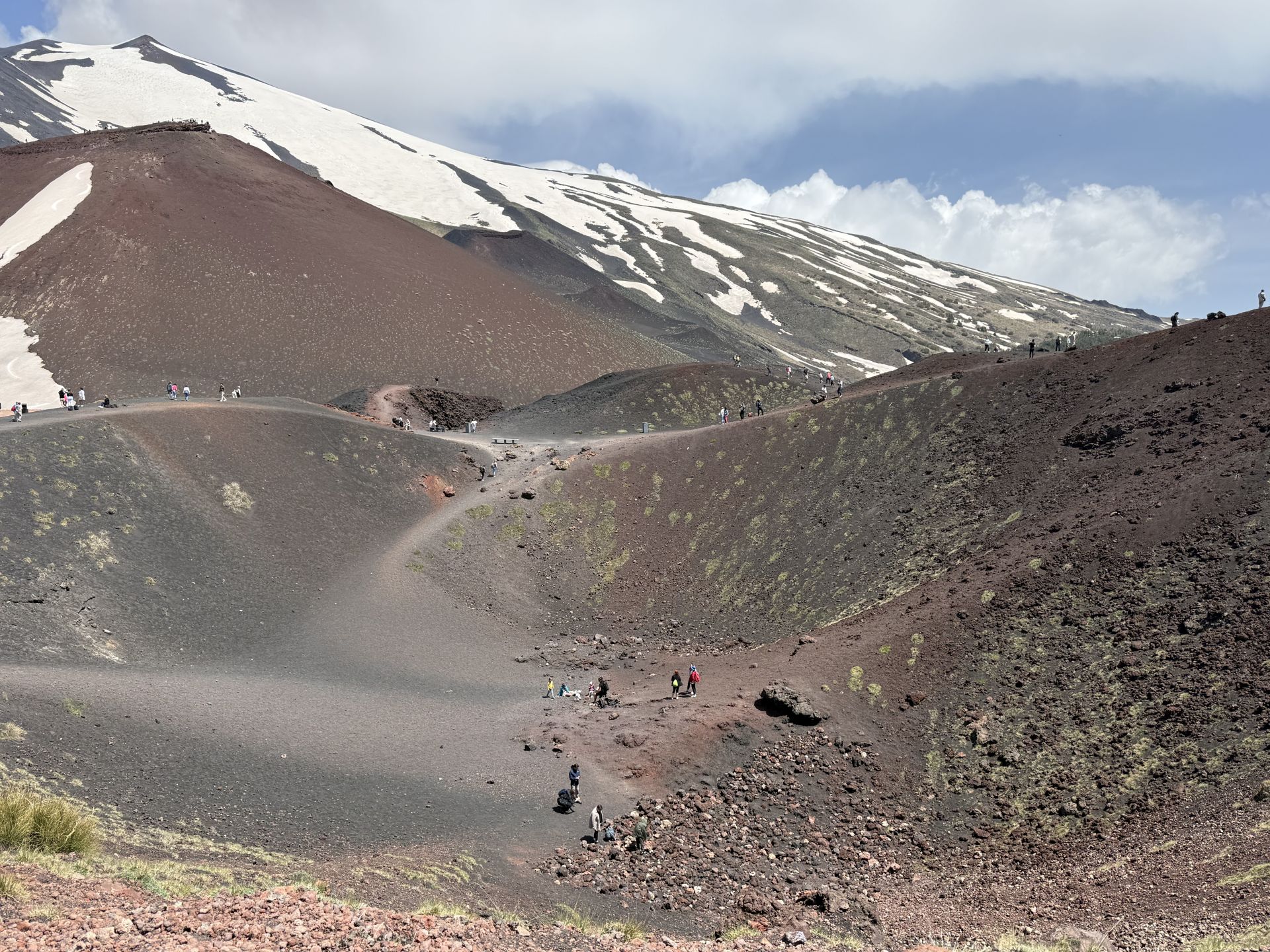
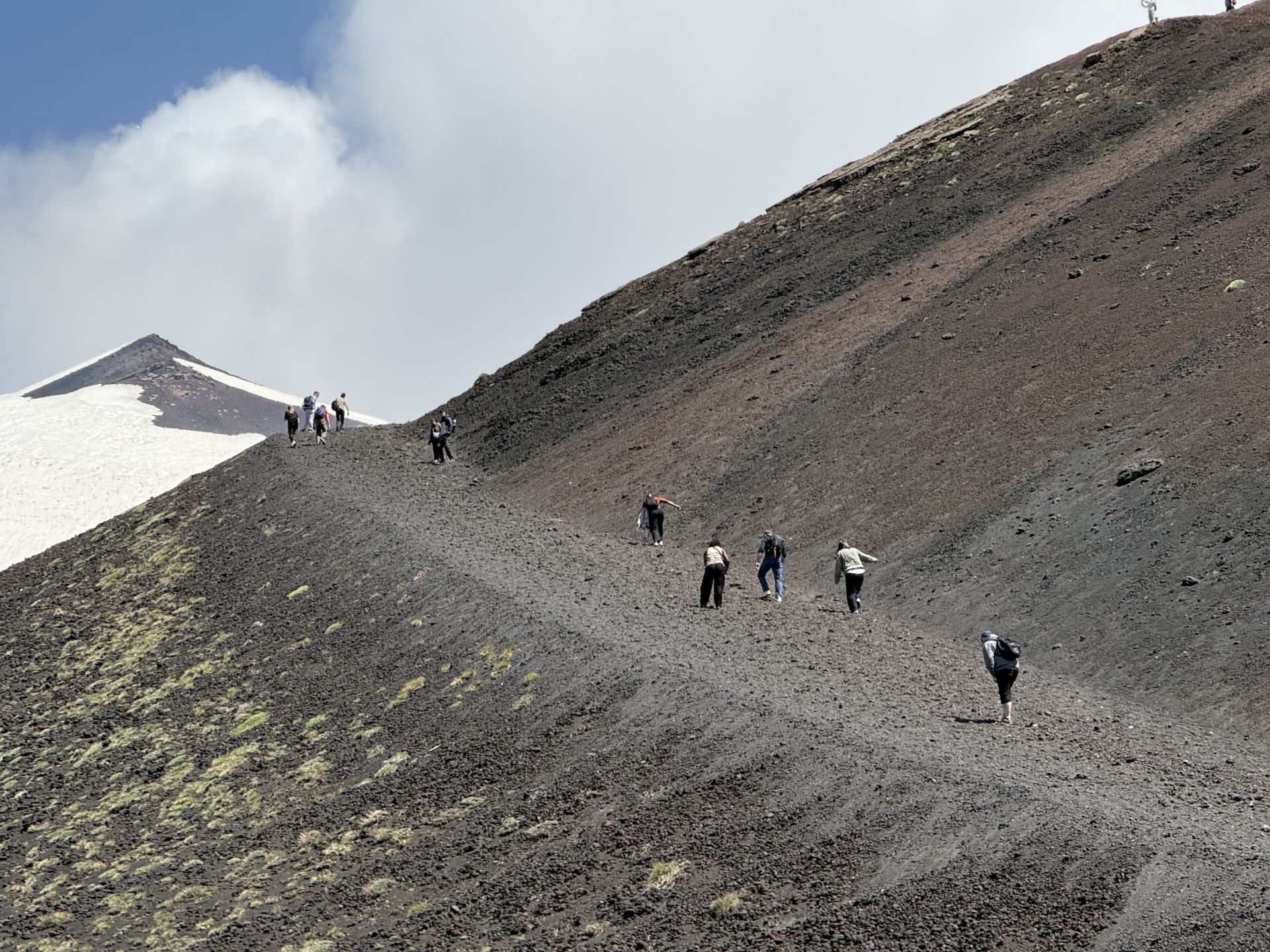
For a small admission fee (€ 5.00 per person) we took the easy 30-minute trail that runs along the edge of the lower crater. Walking along the ring of red and black cinder, we had the feeling as if we were on the planet of Mars! Looking out from the summit, the views were breathtaking: the snow-covered volcanic cones of Mount Etna, the Ionian Sea, the Monti Rossi of Nicolosi, and tiny green pockets called “dagalas”, isolated patches of plants breaking through the harsh volcanic rock.
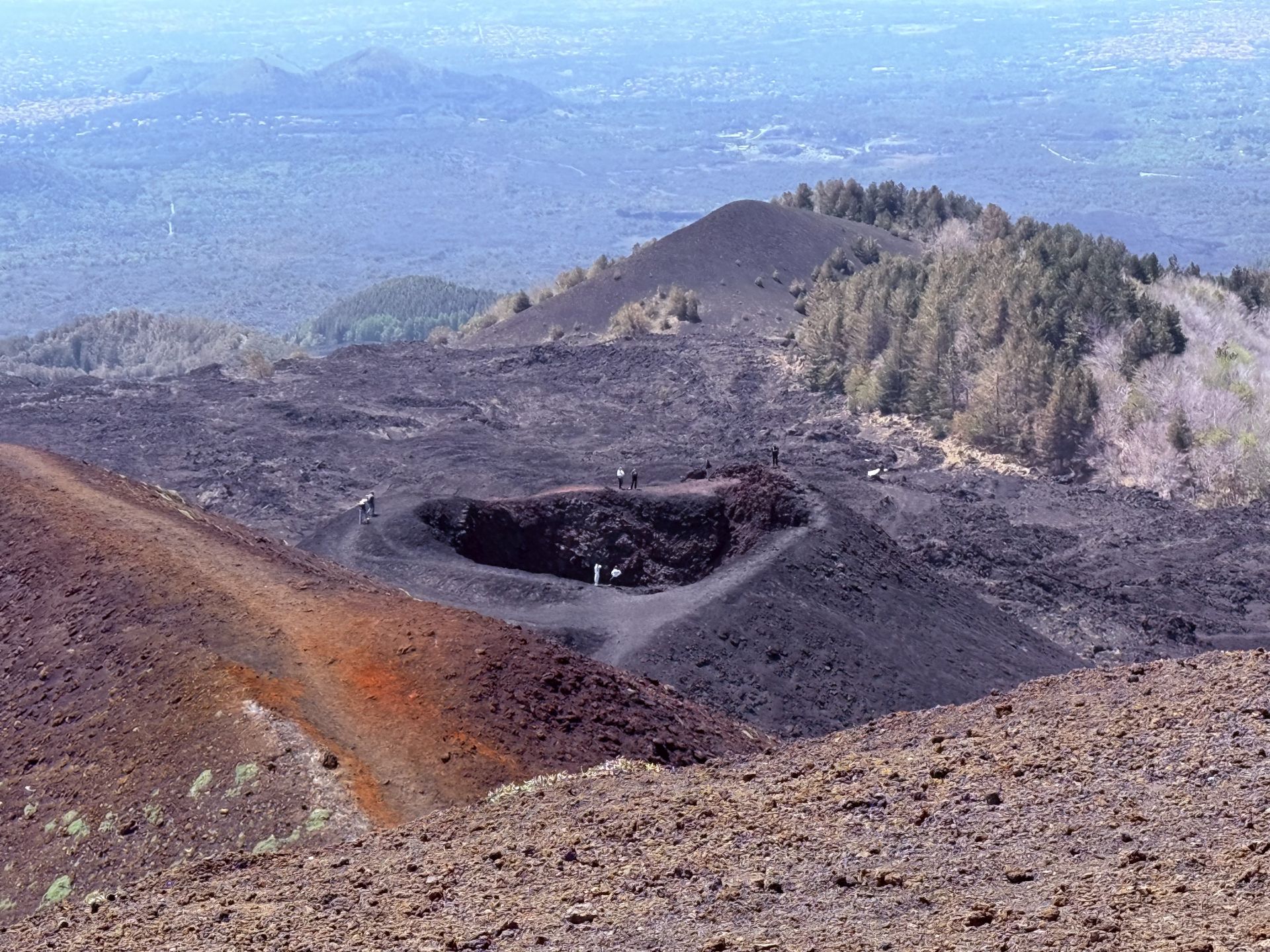
We then took the rather slippery cinder trail to the Crateri Silvestri Superiori, about 30 minutes further up. This experience was really breathtaking!
Back at the crater base, we saw the Etna cable car station where a cable car can take you up to an altitude of 2,500 meters in about 12 minutes.
But we opted to keep our feet firmly on the ground: we stopped for a delicious lunch of traditional Sicilian ‘arancini’ at one of the local restaurants. Afterward, we continued our road trip, traveling through the charming villages nestled along Etna’s lower slopes.
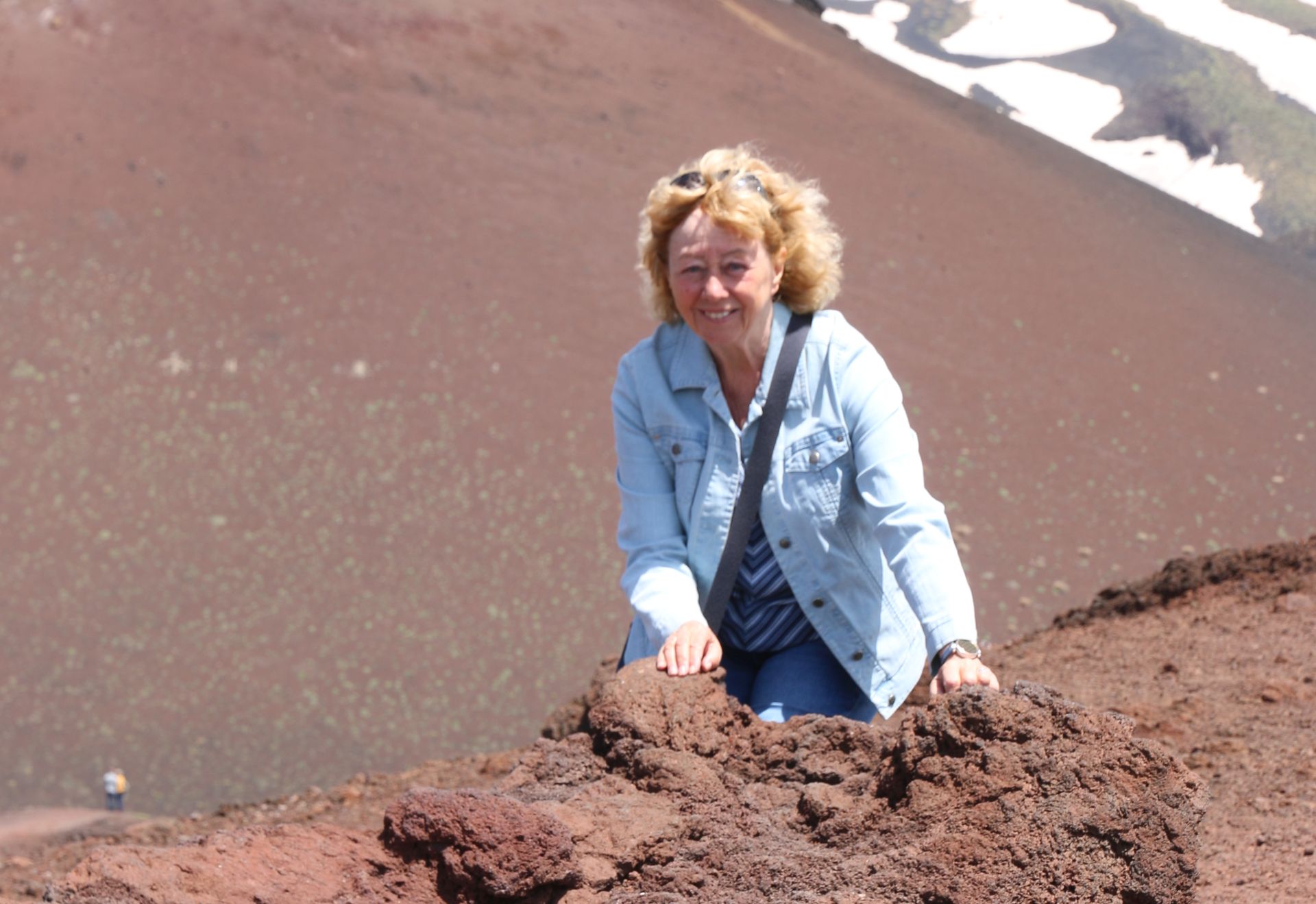
If you are planning a trip to Sicily, putting Mount Etna on your itinerary is an absolute must. It truly is the cherry on top of an unforgettable Sicilian adventure!