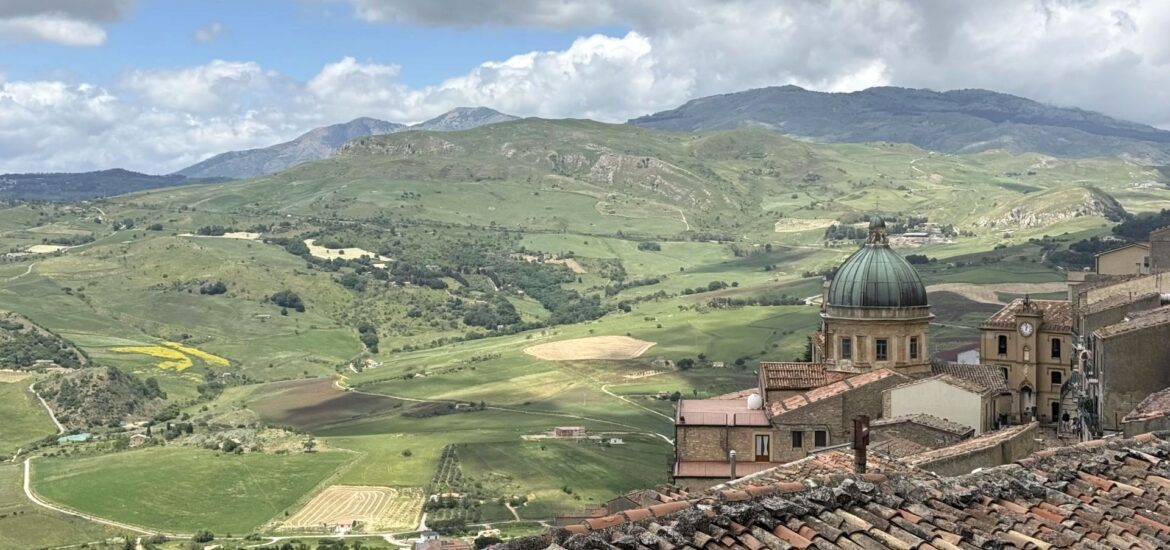
During our road trip through Sicily in May, we set out a scenic drive through the Madonie Mountains, located just south of Cefalu. This mountain range, spanning over 35,000 hectares, was the second nature reserve established in Sicily. With a vast network of trails, it is a paradise for hikers.
The Madonie range boasts some of the tallest peaks on the island, topped by Pizzo Carbonara standing at 1,979 meters and six other summits rising above 1,500 m.
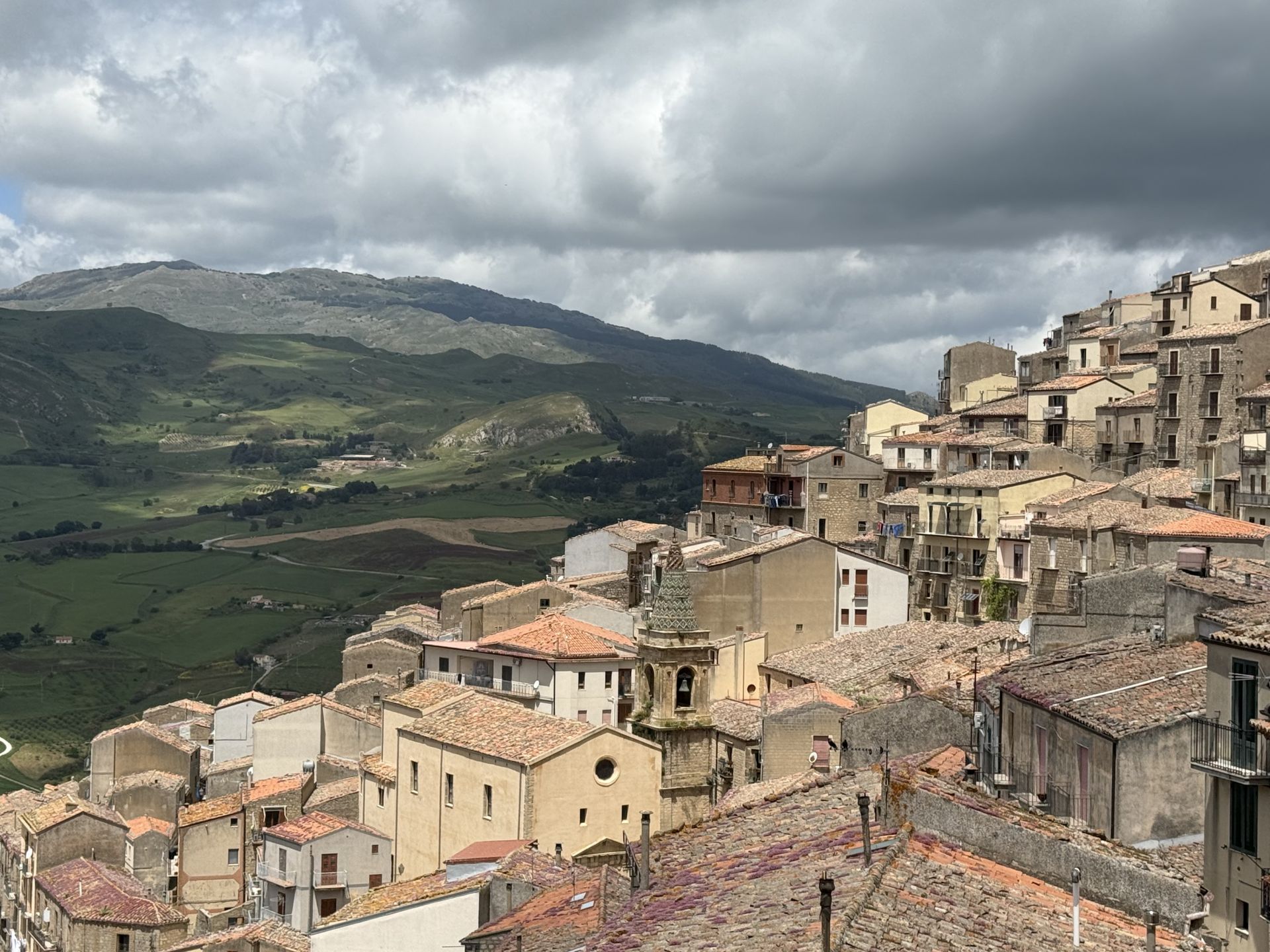
The road through the mountains was mostly narrow and winding, but the scenery was breathtaking. Several ancient villages dotted the hillsides, but one stood out as an absolute must-visit: Gangi, a village with small, picturesque old stone houses nestled around the mountain top, in the middle an old castle and some churches. The around 6,000 inhabitants of Gangi work mainly in agriculture.
Gangi is considered one of the most beautiful villages in Sicily. It boasts the title of ‘ il Borgo più Bello d’Italia’ (Italy’s prettiest village), and it offers stunning views of the valley.
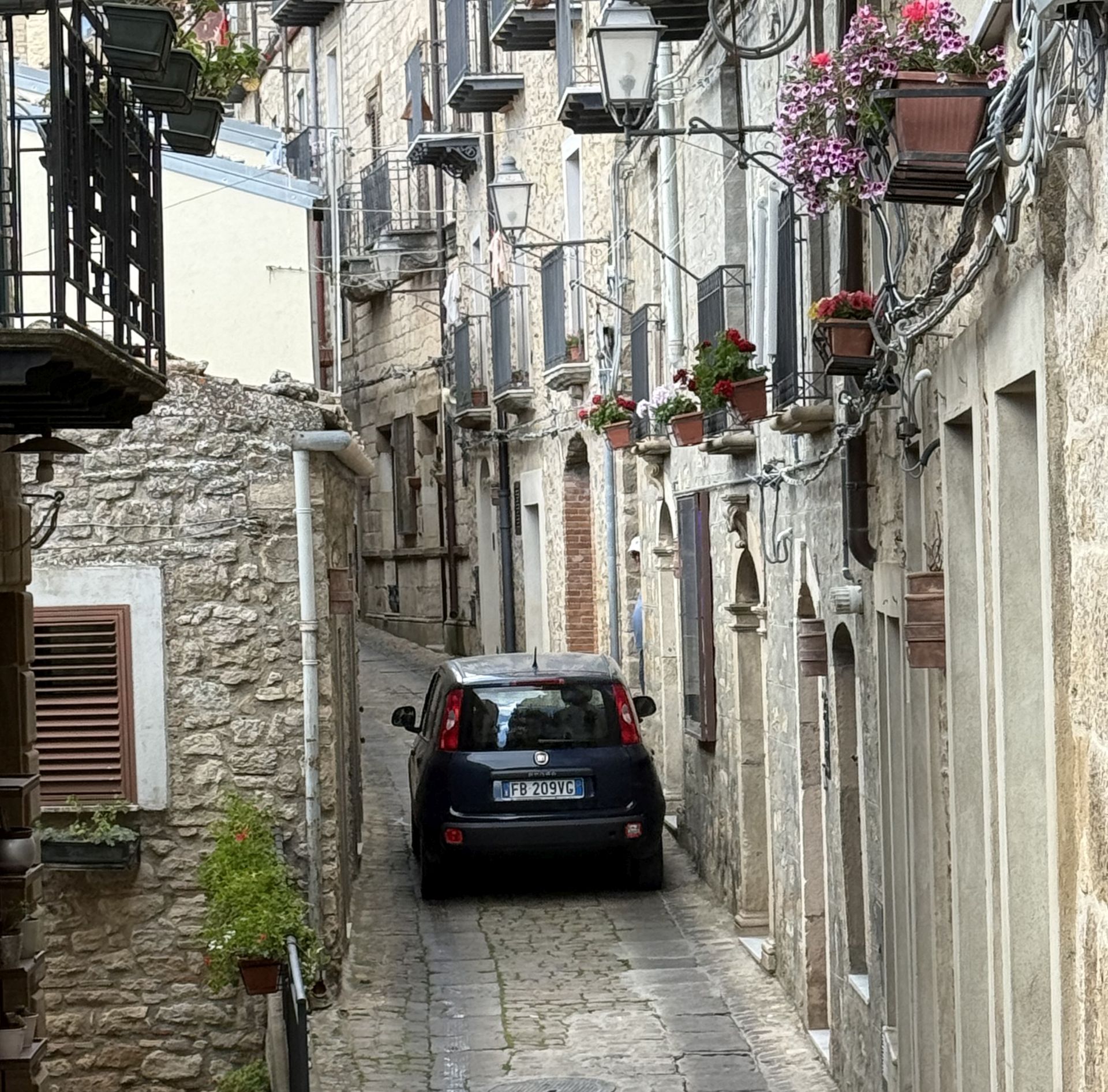
Gangi’s urban layout is the result of centuries of strategic construction. The center follows the mountain ridge; the houses cascade down the slopes on different levels, creating a continuous building system in line with the defensive and climatic needs. Narrow streets protect from the wind, building density retains heat in the winter months, and the compactness reduced vulnerability.
Did you know that Gangi was in the international press in 2017? To combat severe depopulation, the local government launched a famous one-euro house project. Abandoned homes were given away to buyers who committed to renovating them within a fixed time frame and spending some time in the village. This initiative breathed new life into Gangi, attracting curious travelers and international residents seeking an authentic Sicilian lifestyle.
How to describe this stunning place? First of all, let’s talk about history. The place was known as Engyon in ancient times; the legend assigns Gangi’s foundation to Cretan warriors back in 1200 BC. Following Roman rule, the medieval town was destroyed in 1299 during the War of the Sicilian Vespers, but it was completely rebuilt in the 1300s under the noble Ventimiglia family
The Ventimiglia di Gangi Castle was built in the 14th century and stands on Monte Marona, overlooking the town and the valley. It was built by Enrico Ventimiglia, but it was not the usual residence of the Ventimiglia family (which was at Castelbuono). Although it was transformed into a private residence in the 17th century, it still dominates the skyline.
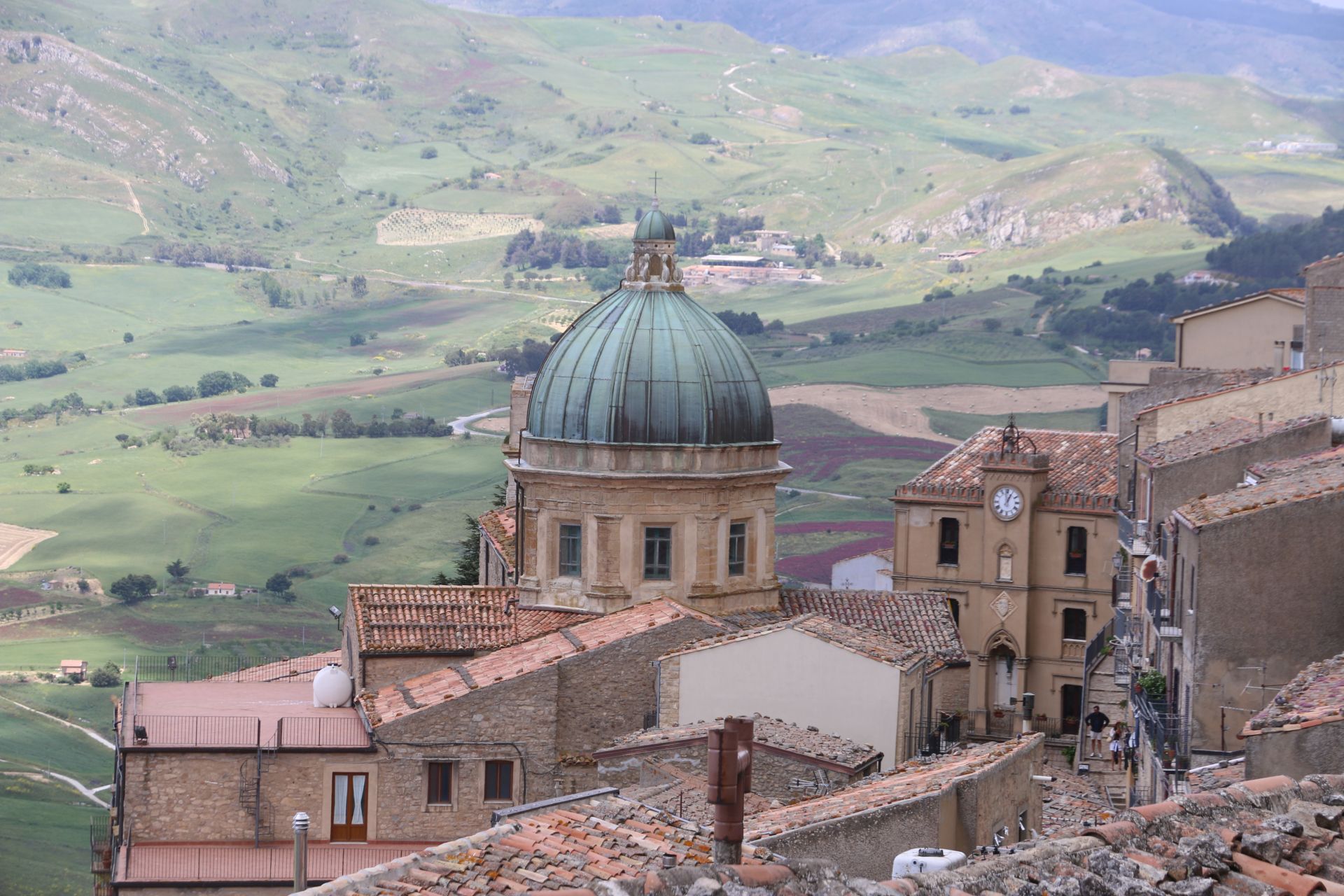
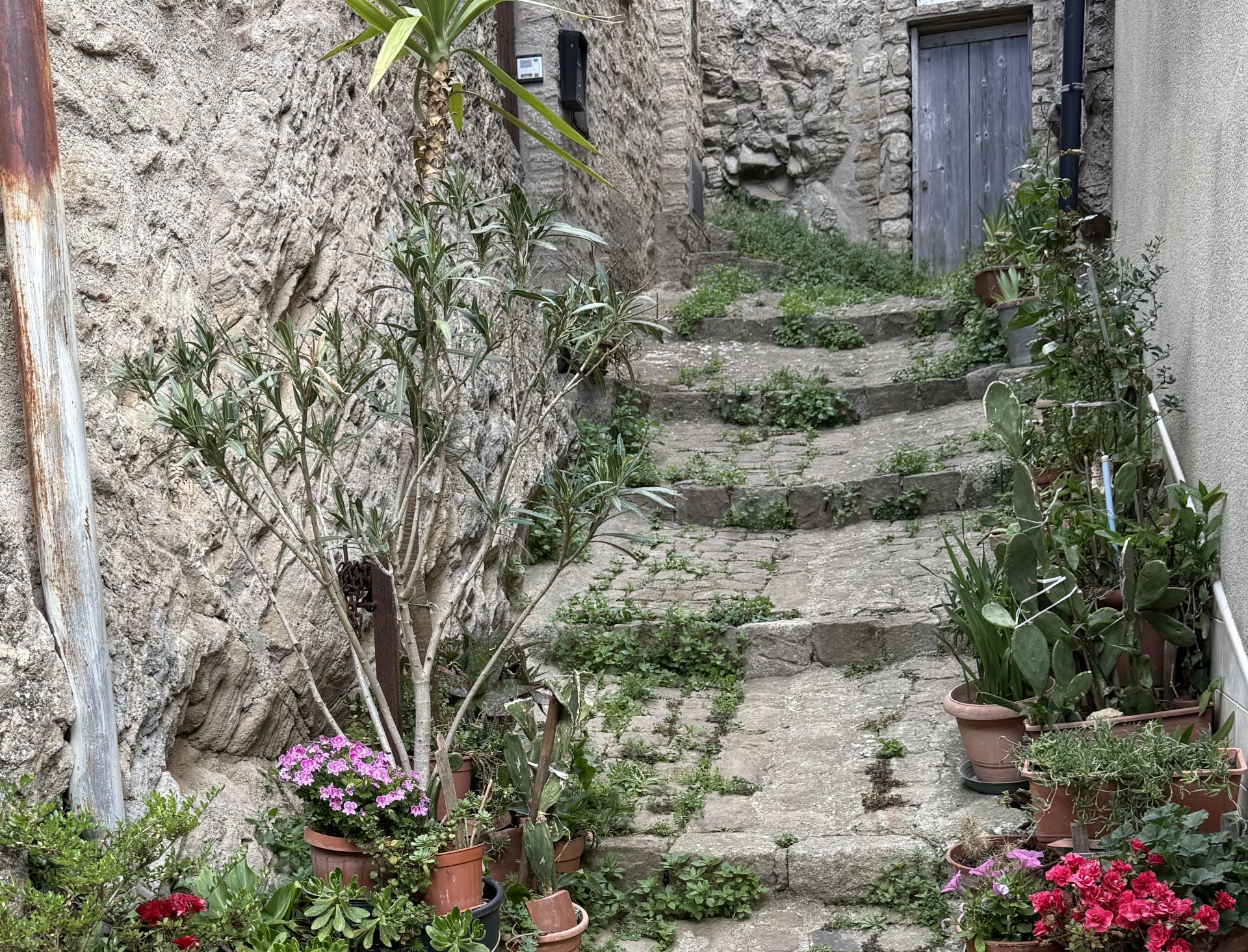
It was time to explore the maze of Gangi’s alleyways. We wandered through a labyrinth of steep, medieval stone streets, soaking up the quiet, historic atmosphere. Elderly locals made their way to prayer at the Chiesa Madre di San Nicolò.
We walked through the Gothic arch of the Torre dei Ventimiglia, a striking 13th-century civic tower adjacent to the 17th-century Mother Church, and thus we reached the breathtaking viewpoint Belvedere del Duomo.
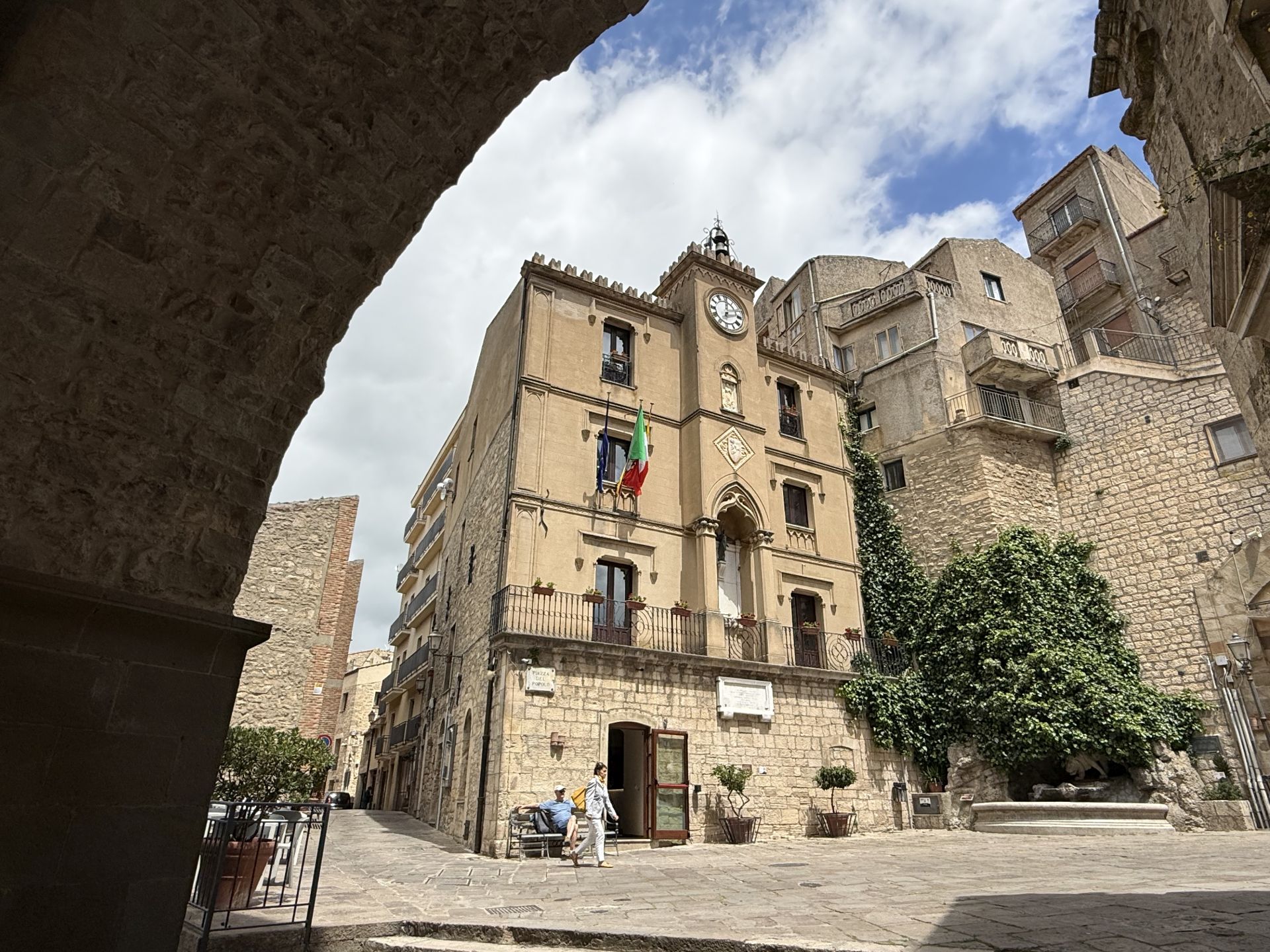
We explored Popolo Square (Piazza del Popolo), the heart of the village with the Town Hall and a panoramic viewing platform overlooking the medieval terracotta rooftops and the valley below.
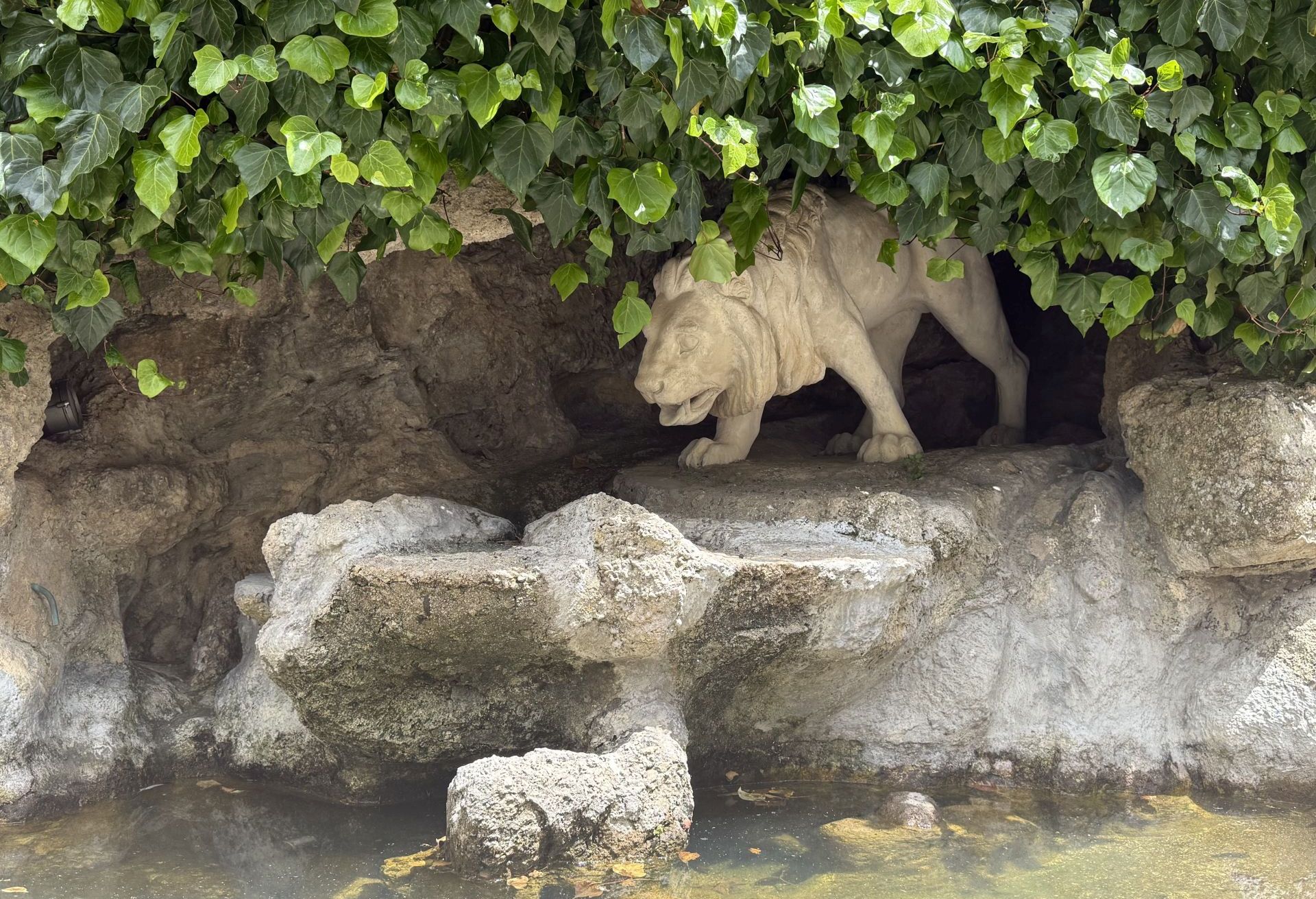
The lion at the fountain in Piazza del Popolo (known as the Fontana del Leone) was gifted in 1931 by the town’s mayor at the time; it symbolizes the strength, courage and pride of the Sicilian people.
Palazzo Bongiorno was another impressive building, located in the heart of the historic town. This palace was built in the 18th century and it houses elegant frescoes.
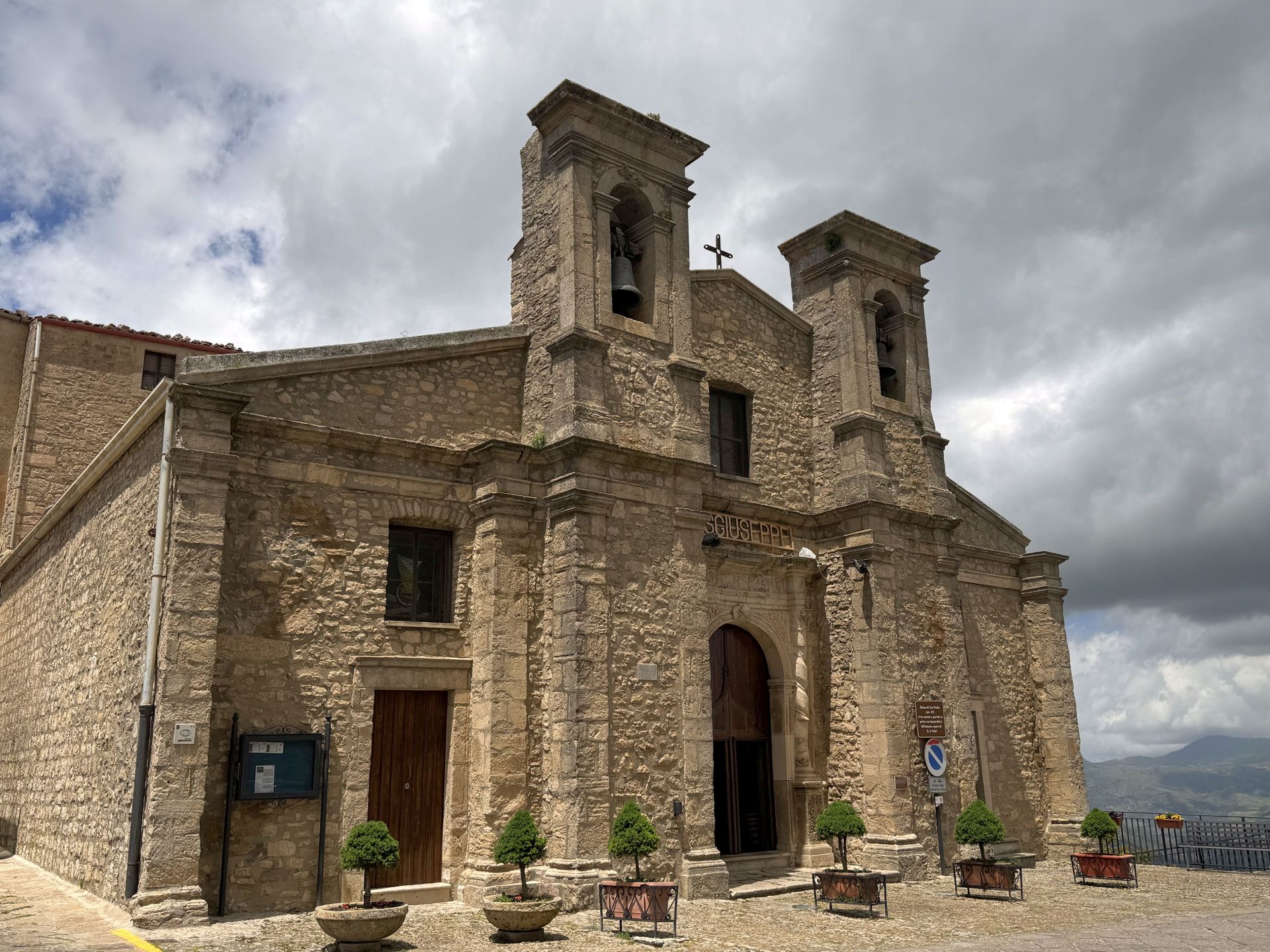
It was quite an effort for us to climb the steep alleys, but the views were a nice reward! In particular the breathtaking view of the surroundings next to the medieval churches Chiesa San Paolo and Chiesa della Badia!
Another interesting fact: in modern-day history, Gangi stands out as the town that fought hardest against the Sicilian Mafia. It was one of the towns that suffered from mafia activities the most. Following the economic crisis and lack of job opportunities, many people were forced to leave Gangi in search of a better life at the end of the 20th century. Emigration resulted in a decline in the town’s population from 16,000 to a mere 6,000 inhabitants.
We spent an entire afternoon in Gangi, exploring its alleys and captivated by the authentic atmosphere, rich history, and dramatic natural beauty of the environment. Gangi is an unforgettable mountain village and a place we will certainly return to!