Although we had visited Sicily several times, a road trip through the lesser-known areas of this island was still on our bucket list. Exploring Cefalù, an ancient medieval town that has been included by UNESCO in the Arab-Norman itinerary of Sicily, seemed to be a good choice, as it was mentioned as one of the most picturesque destinations in Sicily – especially in spring!
Approaching Cefalù, we immediately spotted ‘La Rocca’ (the Rock), a dramatic backdrop to the historic town. We had booked a B&B in the center and we spent two days in this gorgeous place with its ancient ruins, hilltop castle and impressive cathedral.
And what did we like most about Cefalù? No doubt, the historic center with its delightful, charming atmosphere that felt authentic and relaxed. The town was not overcrowded in May and the sunsets were unforgettable!
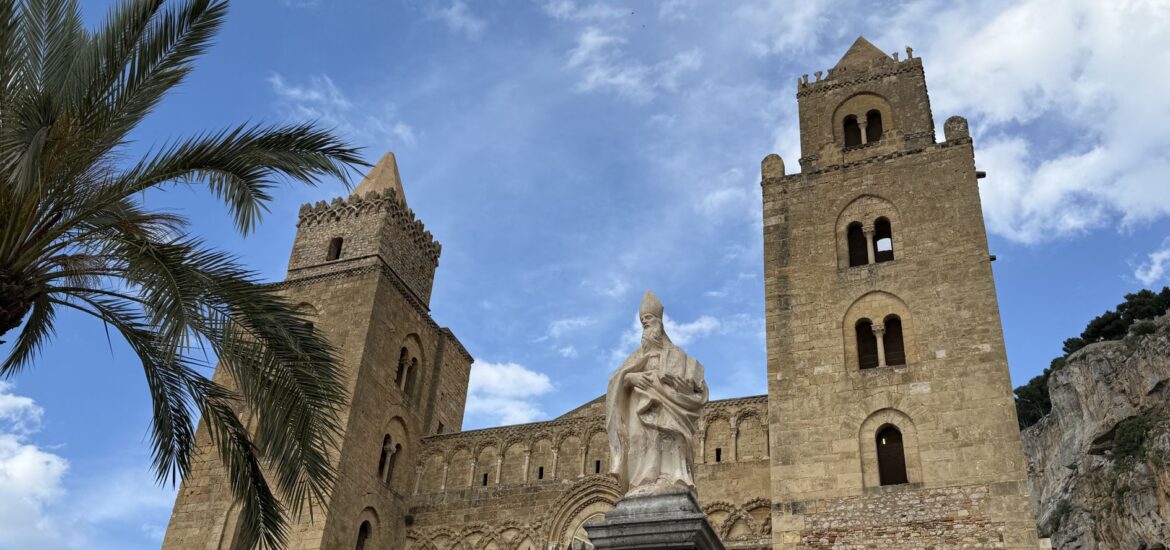
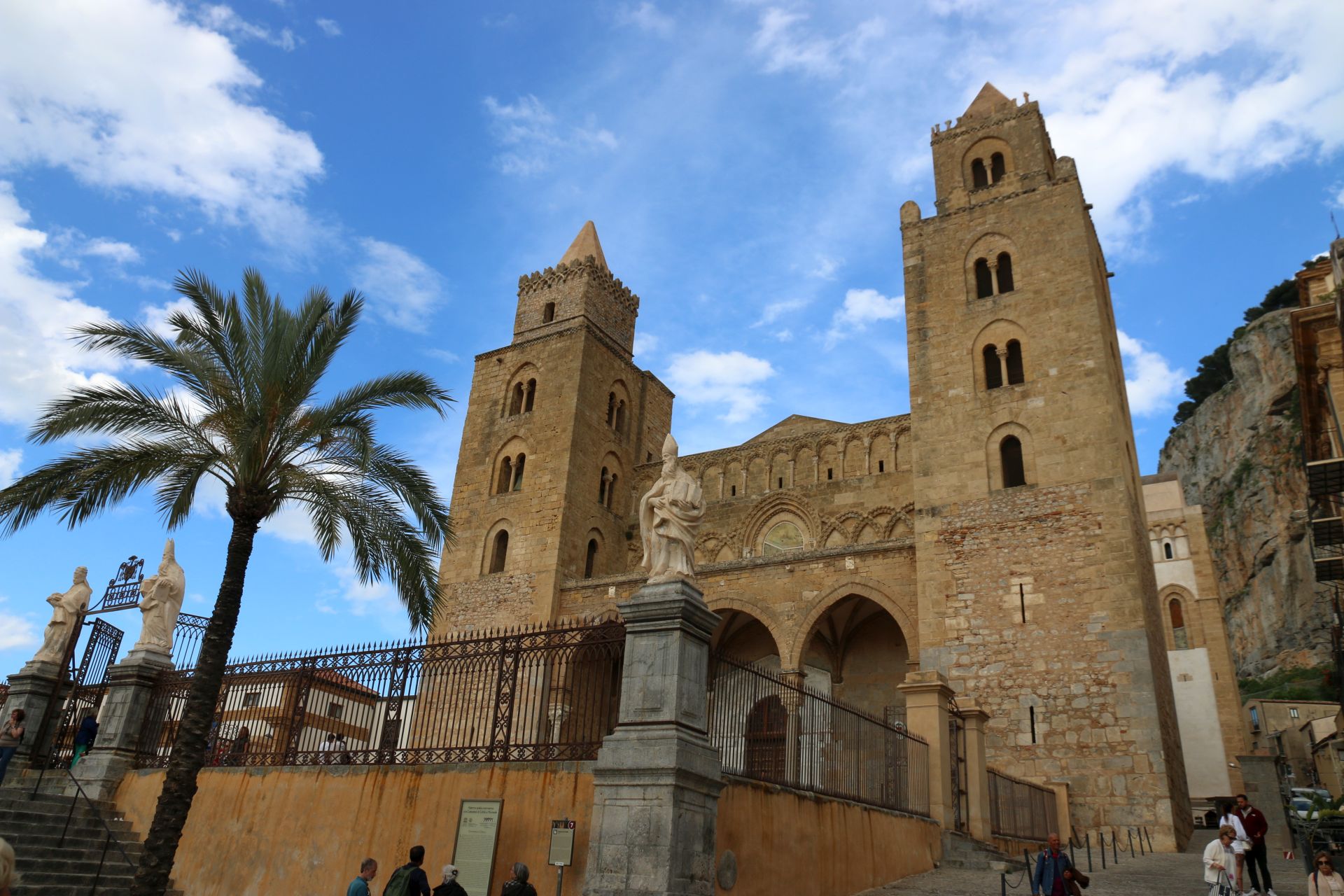
Founded by the Greeks under the name of Kephaloidion, the features of the dominations by the Romans, Byzantines, Arabs and Normans are still visible throughout the city. But the most spectacular attraction is the two-towered Norman Cathedral perched above Piazza Duomo. Built between 1131 and 1240, this impressive cathedral is one of Sicily’s protected UNESCO heritage sites. According to legend, King Roger II built the Duomo to thank God after surviving a terrible storm at sea and washing up on the shores of Cefalù.
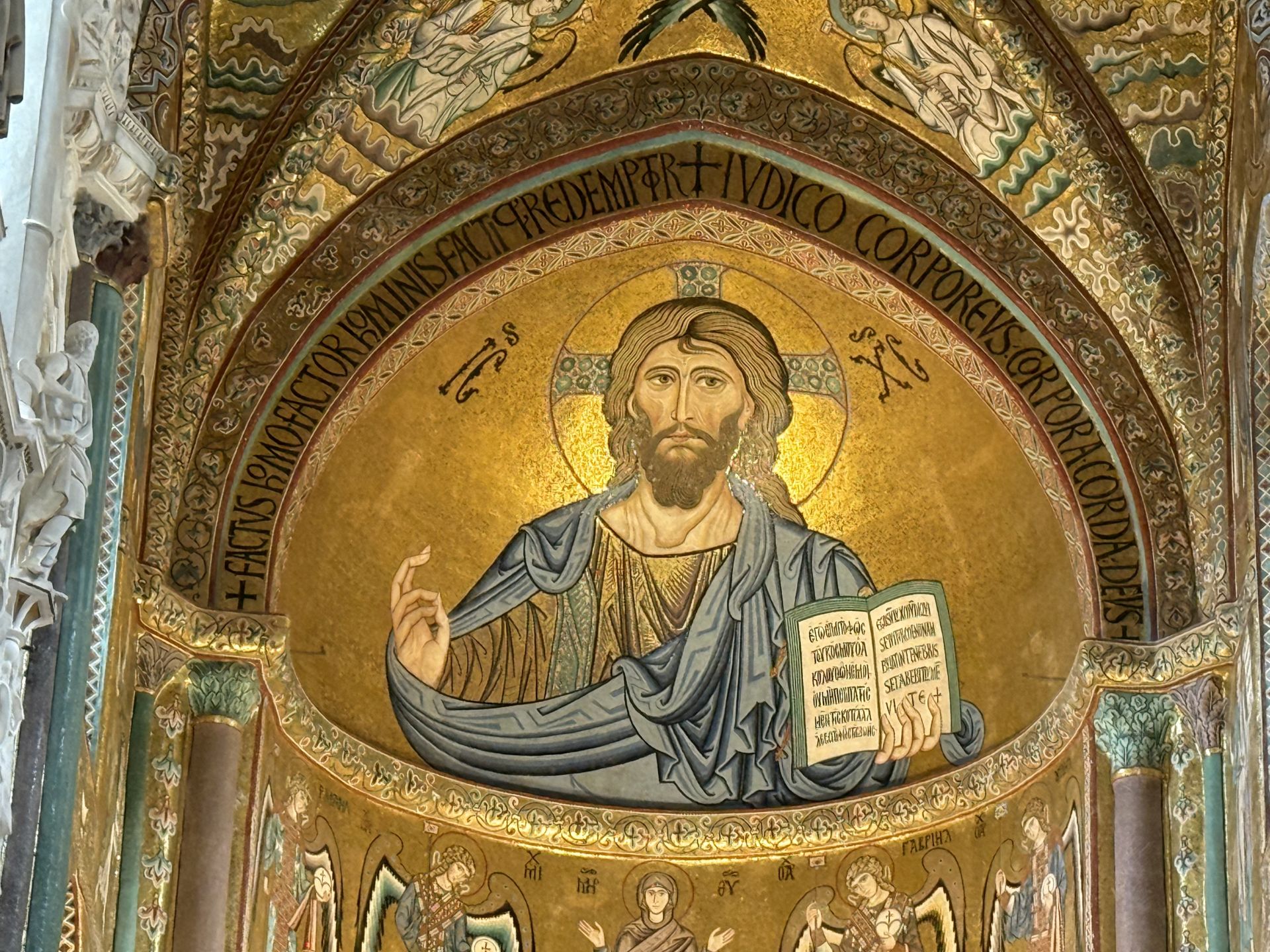
Although we did not buy a ticket for access to the towers and the rooftop, we enjoyed visiting the main part of the Duomo (for free). It’s true, the interior appeared to be rather bare, but the vaulted ceilings were covered with mosaics depicting biblical scenes and Cristo Pantocratore (Christ Almighty), one of Sicily’s greatest artistic treasures. Can you imagine that between Christ’s two hands there are 9 meters formed by thousands of small squares of glass paste in around 150 different colors?
We had a pre-dinner aperitif at Piazza Duomo, a picturesque square lined by small bars with terraces and gelato spots. The setting sun was lighting up the two towers of the Cathedral and La Rocca behind it; the atmosphere was romantic and relaxed.
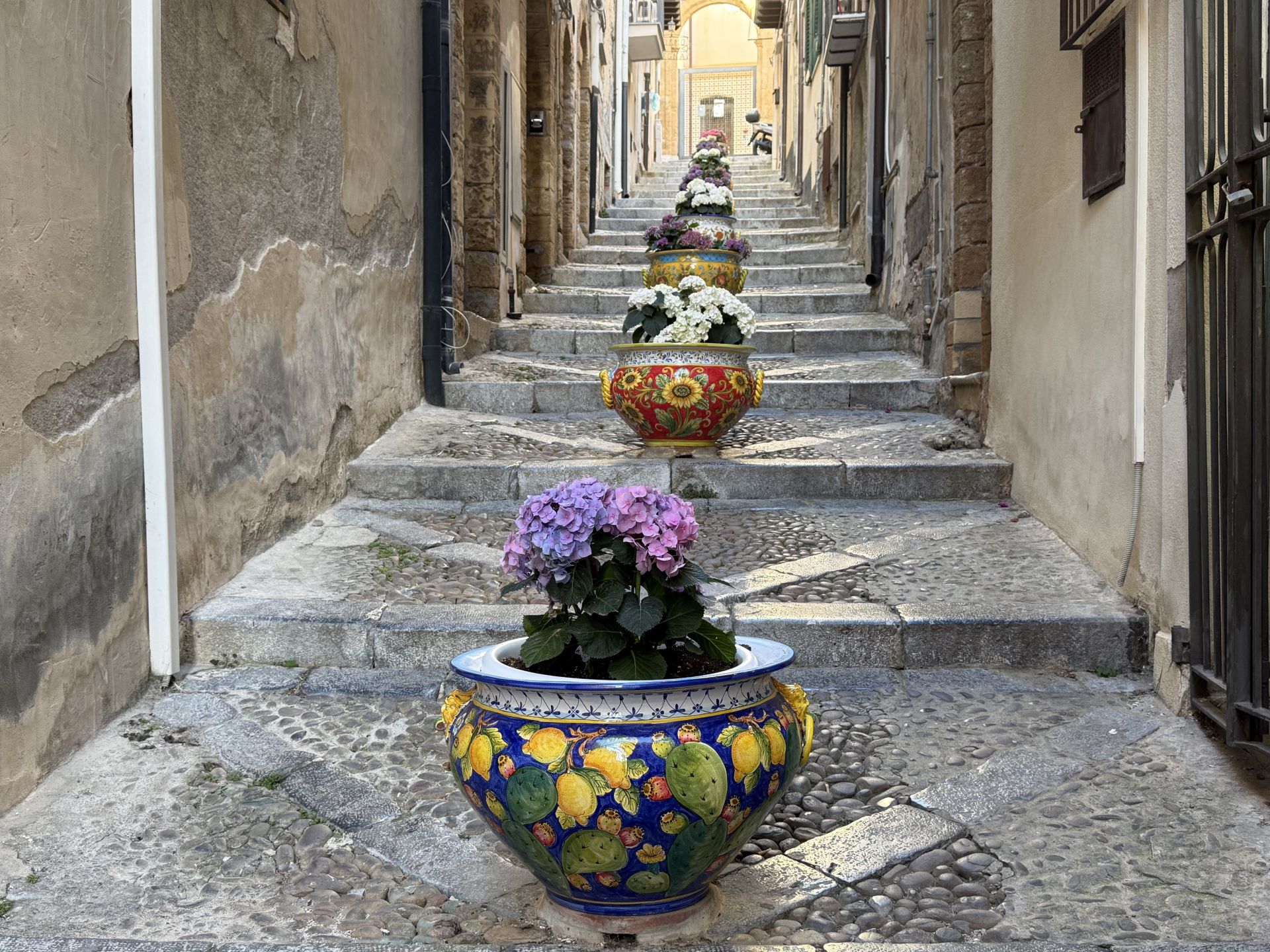
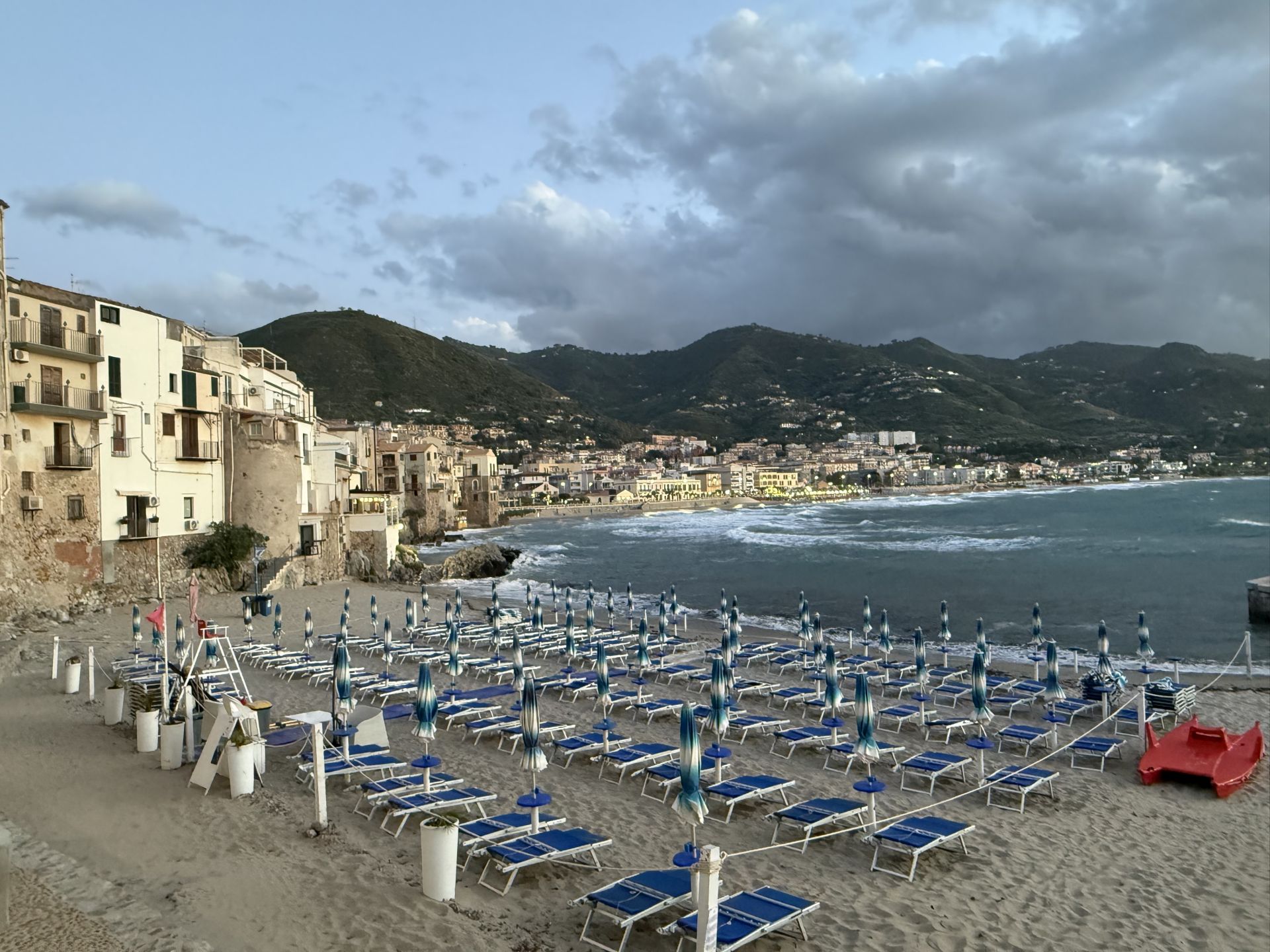
One of the best things for us to do was wandering around and getting lost down narrow passageways in the Old Town. With our photo cameras we captured simple scenes of everyday life, streets decorated with ceramic pots, houses with balconies overlooking the beaches and beautiful sunsets above the sea.
Yes, the sunsets in Cefalù are really fantastic! One of the most beautiful places to watch the sunset was from the Bastione di Capo Marchiafava. There we found plenty of space to sit on the walls overlooking the rocks into the ocean. A lovely, peaceful spot.
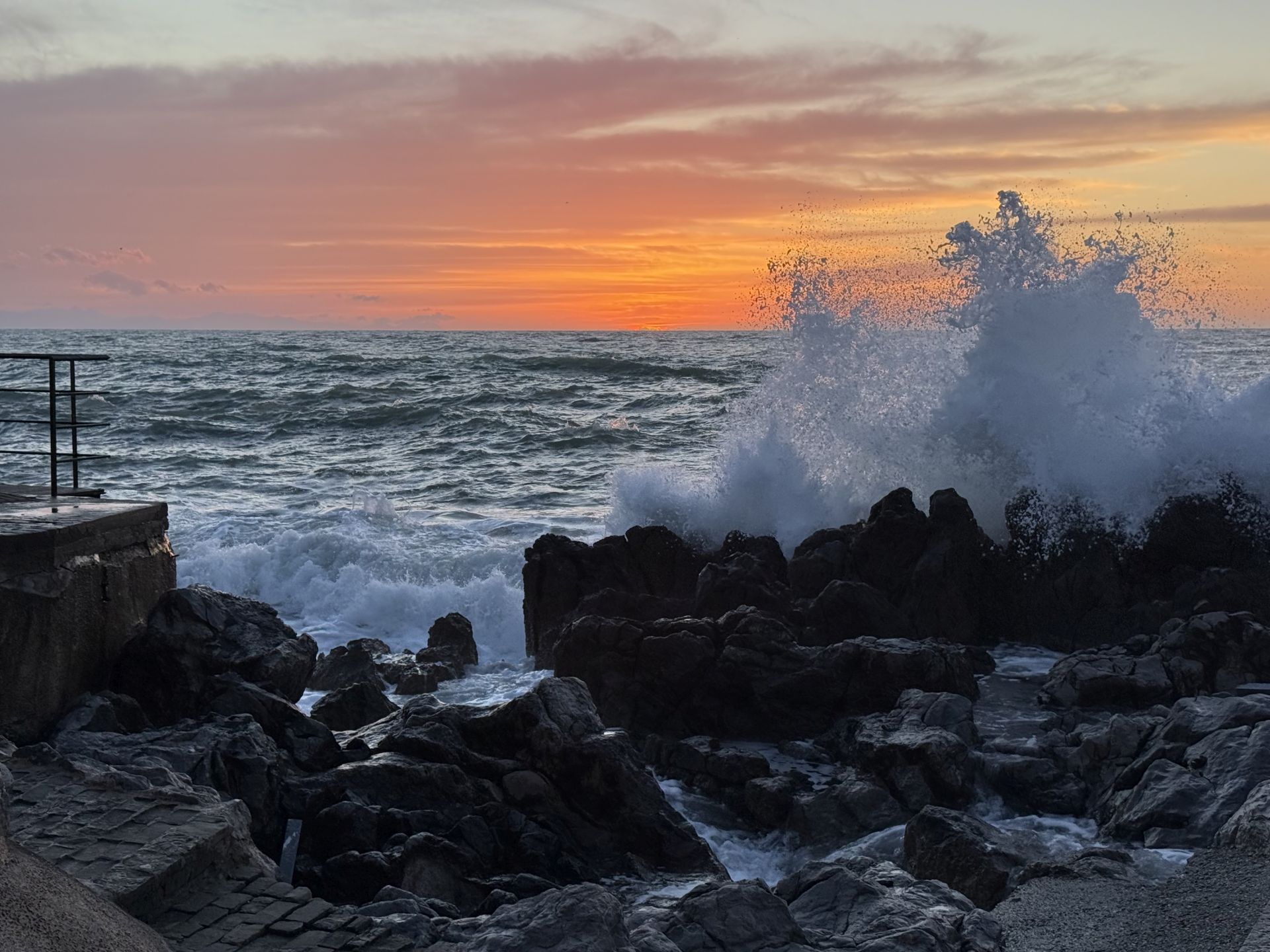
Of course, we also walked along the ancient city walls, dating back to the 5th century, which have protected the town from invaders, the sea and storms. These walls are also called megalithic, as they are formed by huge 3 m thick stone blocks, stacked according to the technique of dry masonry.
Tucked away down Via Vittorio Emanuele, we found the Lavatoio Medievale or medieval washhouse, one of the most unique places in Cefalù. This 16th-century “lavatoio” can be reached via a spiral staircase known as “lumachella”. The semi-covered space is occupied by a series of ancient basins, where the water of the Cefalino river flows from 15 cast-iron mouths in the shape of a lion’s head.
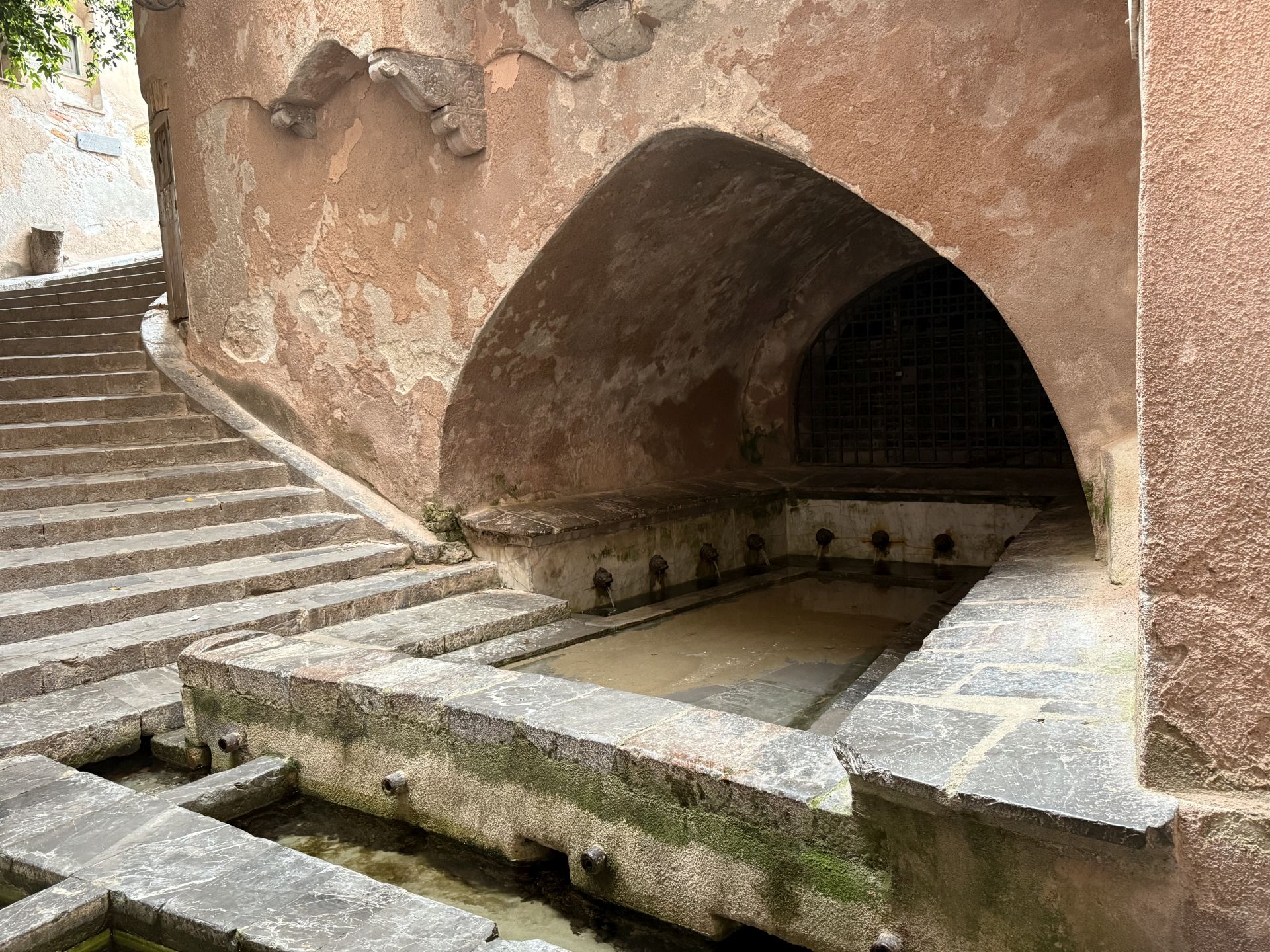
On the right-hand side of the entrance, we noticed an unusual inscription: “Here flows Cefalino, more salubrious than any other river, purer than silver, colder than snow” (in translation).
According to legend, the waters of Cefalino were and are very pure, because it is said that they were the tears of a desperate nymph who had killed her lover believing him guilty of treason.
But there is much more to admire in medieval Cefalù: you can make a hike up to the historic ruins of La Rocca, which offers spectacular panoramic views. Honestly speaking, we didn’t walk to the top, as it is a 284 m climb along a progressively worsening trail. This was too much for us, but I am sure that many travelers want to check out the ruins of Cefalù Castle.
It takes approximately 2-3 hours to complete the return trip, and on the way up you can also see the ancient Temple of Diana that dates back to the 4th-5th century BC, as well as other ancient ruins. From the top, there are breathtaking views over the town below and the sea beyond.
It is quite easy to reach Cefalù, by car or by train, as the distance from Palermo is just 70 km. So, when you are in Sicily, don’t miss Cefalù – it will be a pleasant surprise!