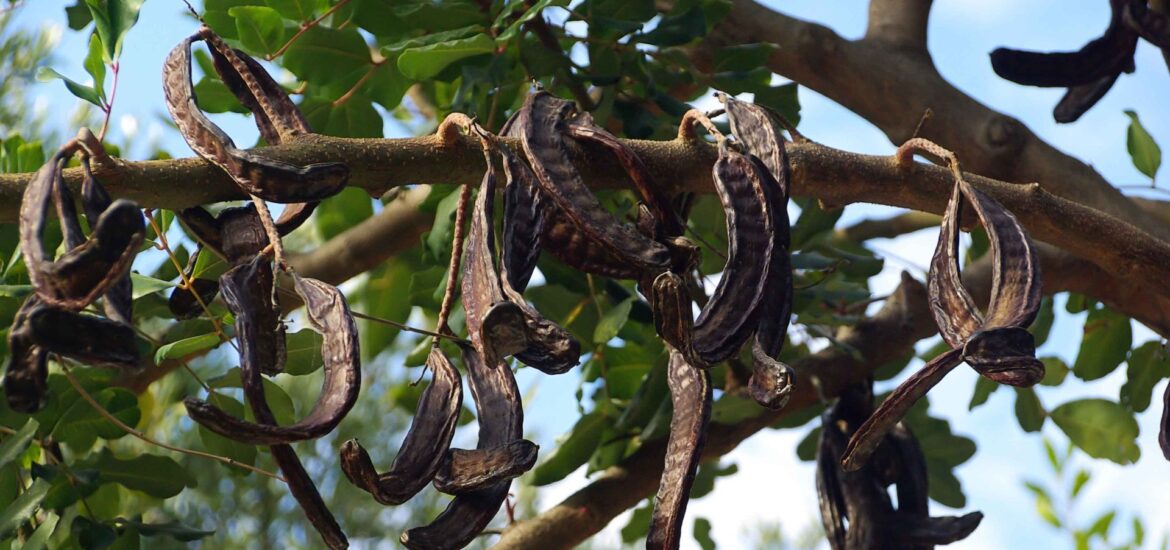
There is a rhythm to the summer, and for me, it always beats in the same place: Camp Rogač in the Bay of Slano.
Every year, we cannot wait to pack up and travel to Grgurići, a tiny village where our camper becomes our home for two full months. Tucked right against the shoreline, this little campsite is a hidden gem for anyone who loves peace and quiet.
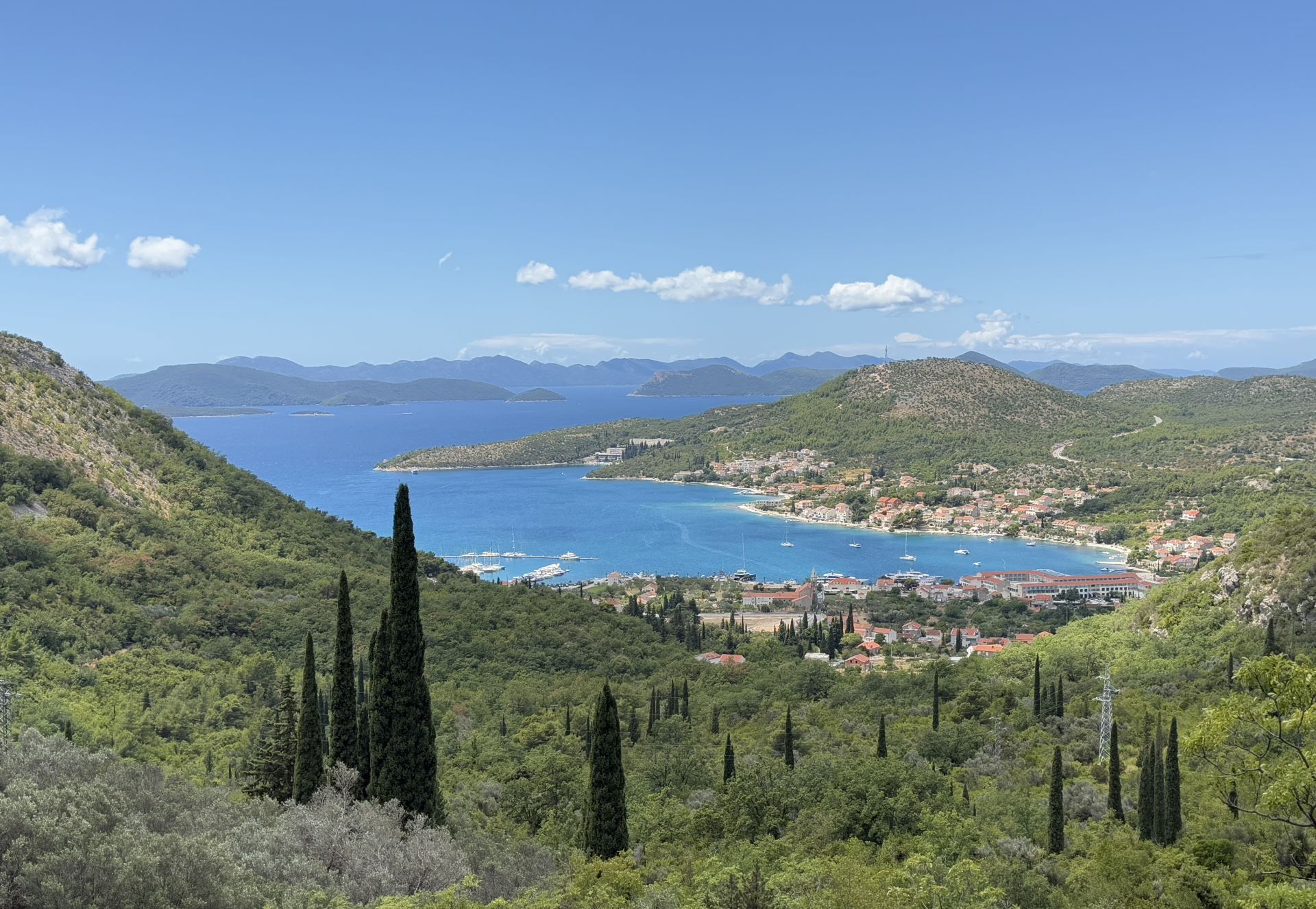
We can safely say that this place is a green oasis. You are surrounded by olive trees, pomegranates, figs, oaks, willows and, most of all, carob trees (rogač, as the locals call them). Because it is so peaceful, most of the people staying here are regulars who return summer after summer.
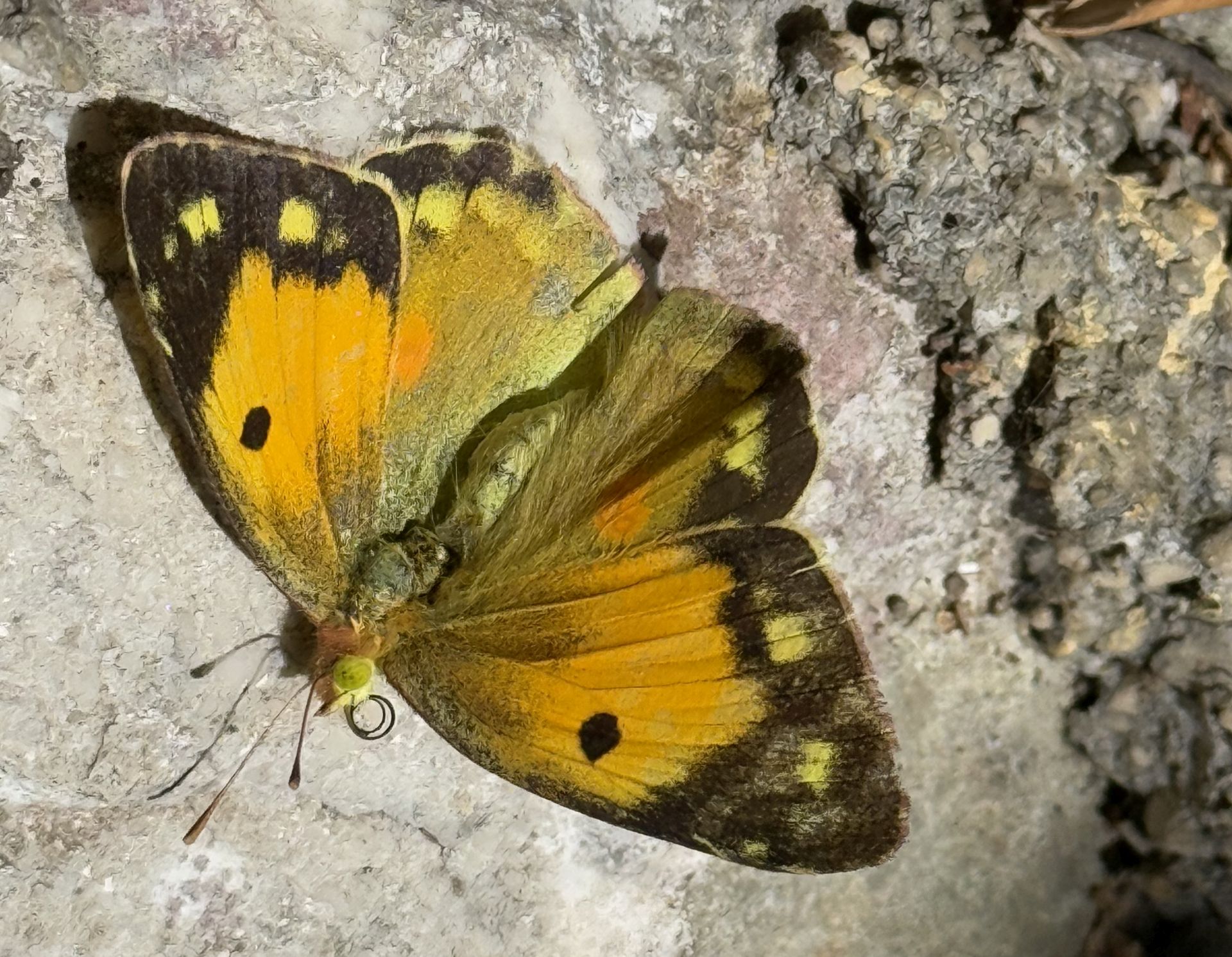
When you arrive in Grgurići, the loudest thing you will hear is the silence. Well, that and the steady soundtrack of cicadas and the screeching of seagulls. You will watch colorful butterflies and lizards, and if you are lucky, a slow-moving turtle crossing your path.
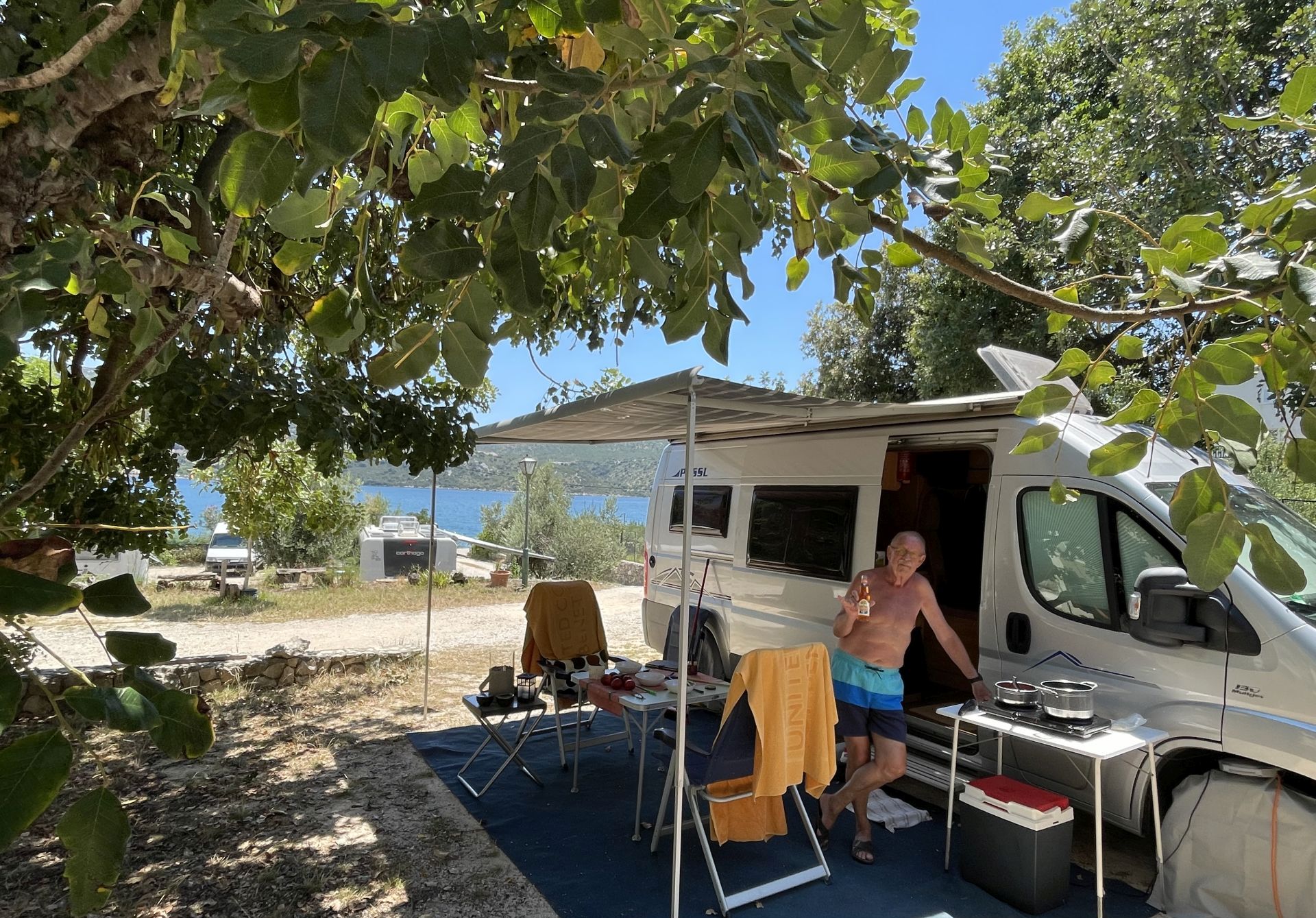
We always stay on the same pitch under a massive carob tree, of course, with sea view. That is where we set up our camper, our outdoor furniture and the ‘kitchen table’ with our cooker and electric grill. It’s simple, but it’s home.
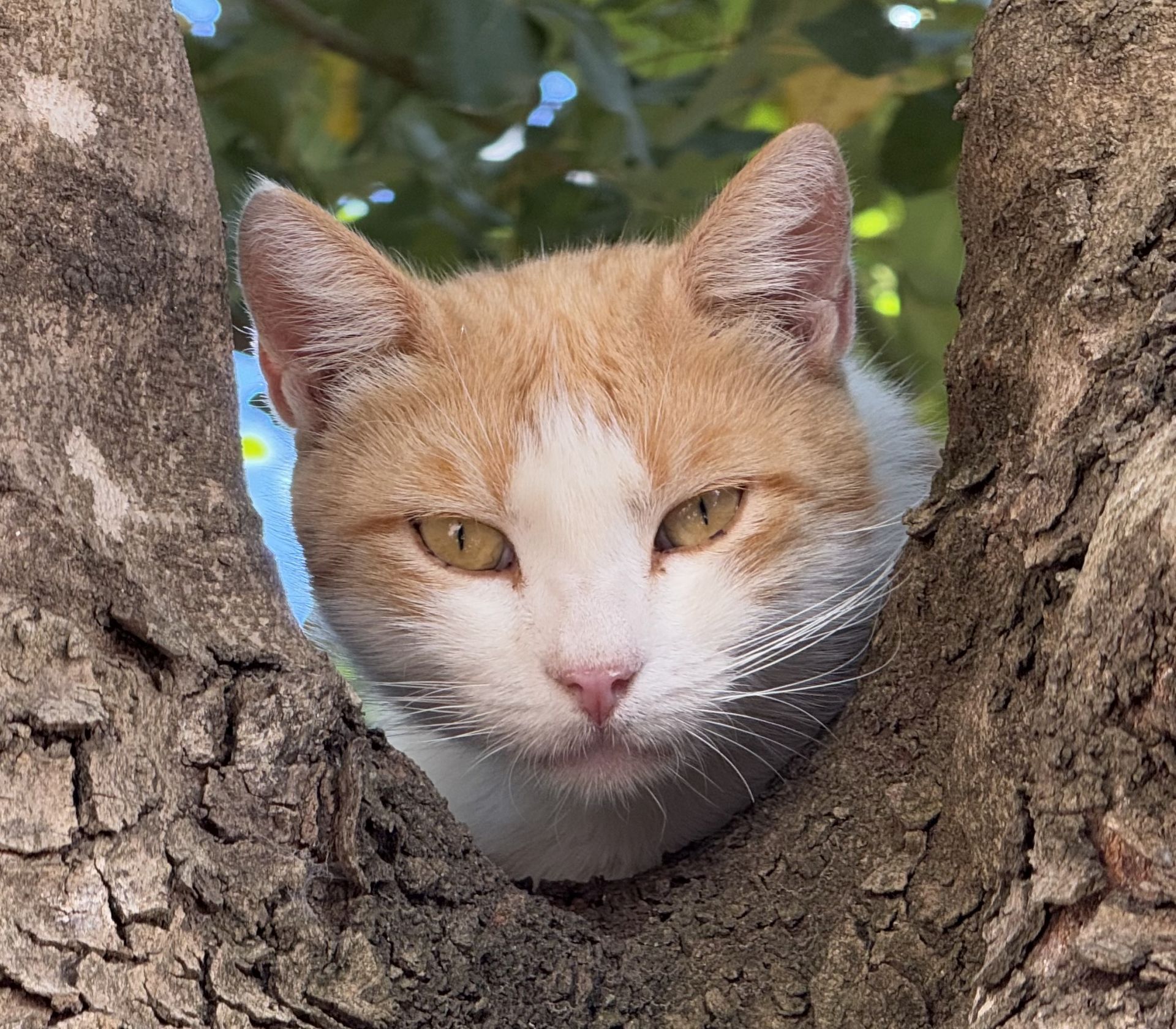
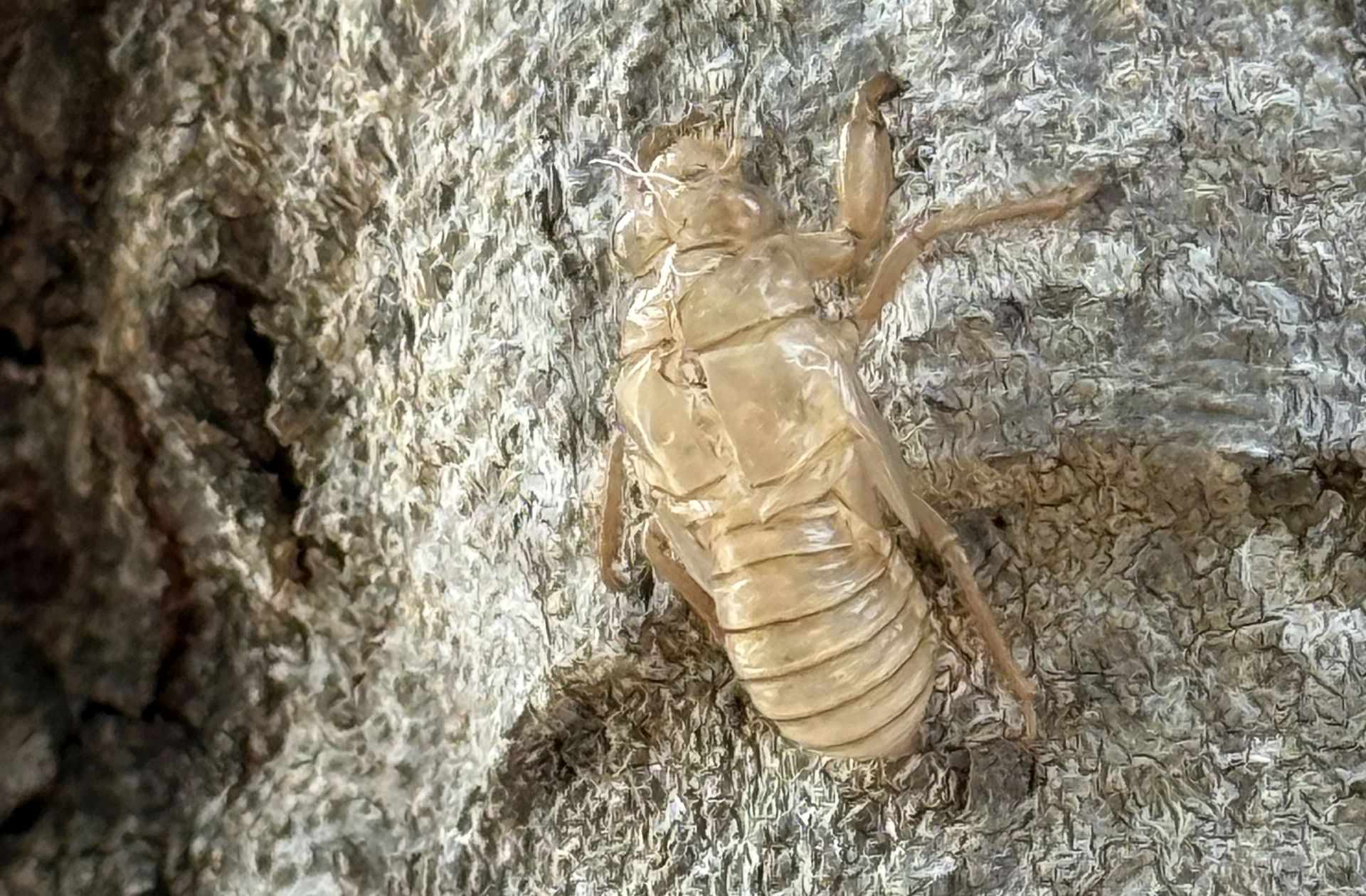
The house cat watches us, resting high up in the carob tree, while a well-camouflaged moth blends seamlessly into the gray bark of the trunk. Below, ants march in endless, orderly columns, bees drift towards the sweet pods and a careful observer can even spot the transparent shell of a cicada nymph.
Yes, the summer heat is often relentless, with temperatures consistently above 30 degrees, but the distance from the camper to the beach is fifty meters only and is rewarded by plunging into the sea whenever you like.
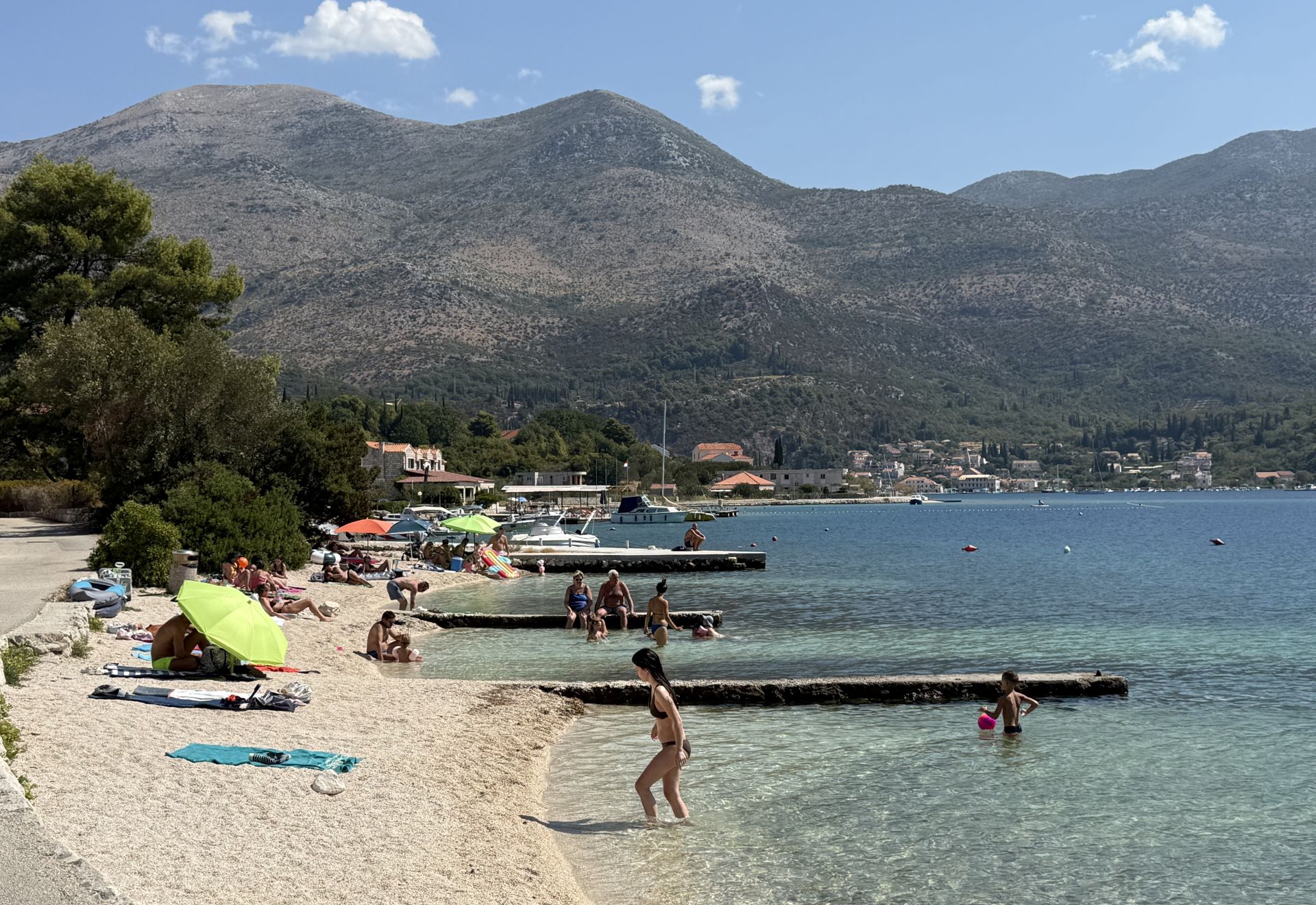
And as the evenings are cooler, we make a daily ritual of walking to the port, sitting on a bench with a drink or an ice cream, and watching the sun go down.

Of course, living right under a giant carob tree is not always pleasant, especially in July. That is when the green pods are ripening, which means that the tree starts producing a sticky gum. It definitely attracts bees and wasps, and it leaves some stains on our camper, shoes and clothes. But honestly? It’s a small price to pay for the best backyard in the world.
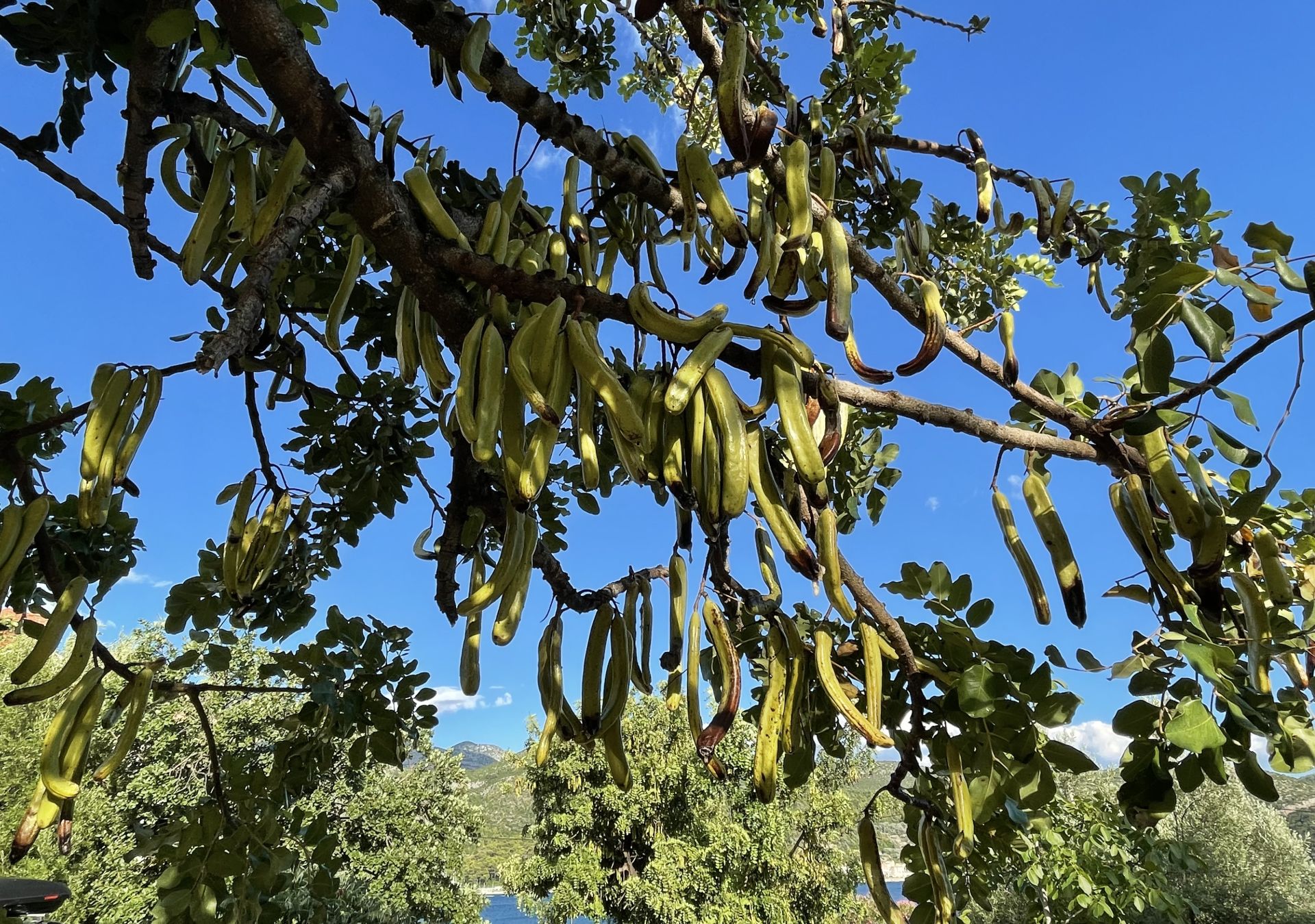
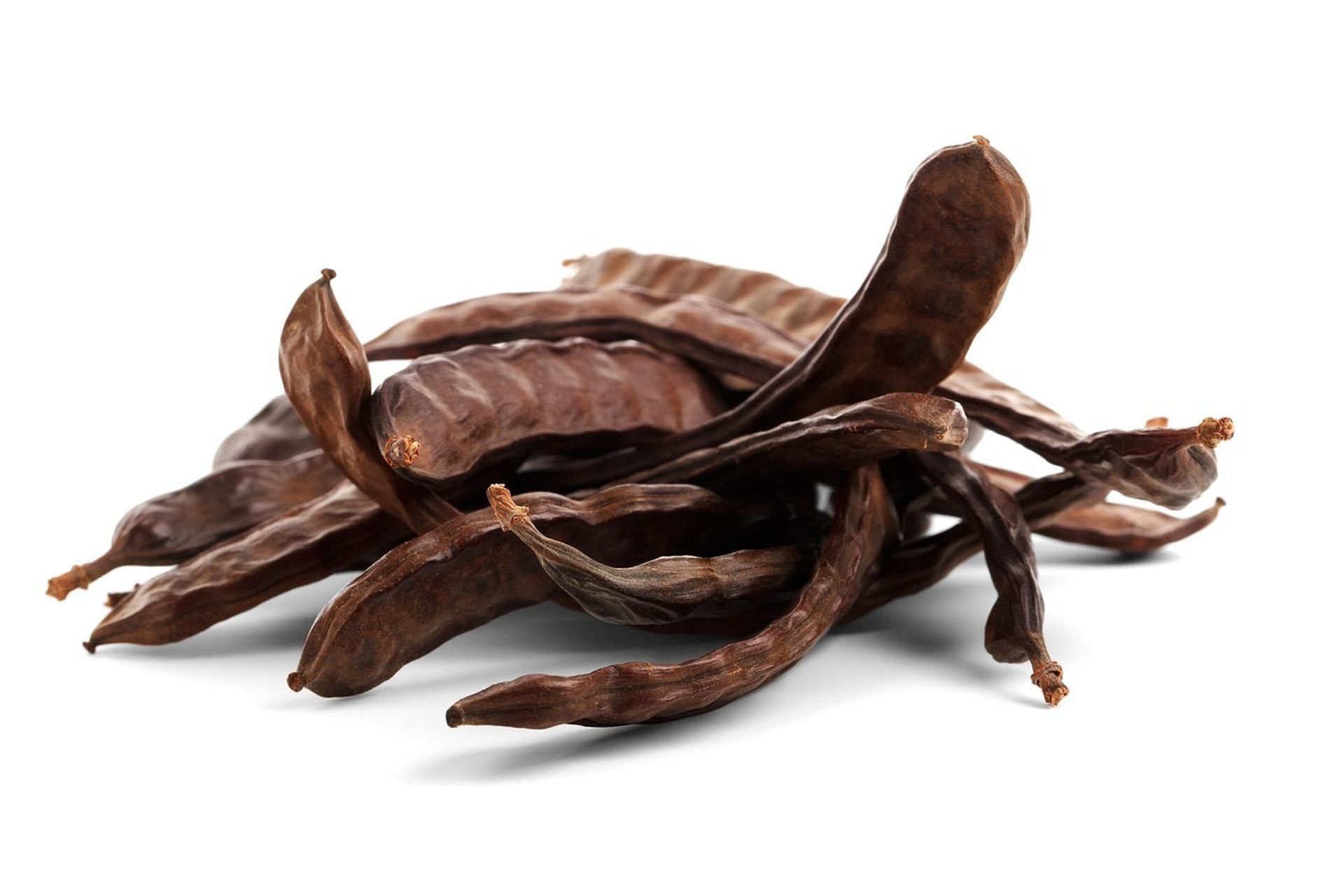
Newcomers often wonder what kind of fruit it is – although carob trees are rather common in Southern Dalmatia, they are rarely found up north; no wonder, they are of Middle Eastern origin (in Arabic they are called ‘kharrub’ and in Hebrew ‘charub’). We always explain that carob pods are used in as an ingredient in cakes and cookies – in powdered, chip or syrup form – and sometimes as a substitute for chocolate. And let’s not forget: for carob liqueur!
Why is carob also known as ‘St. John’s bread’ (Johannesbrot in German, Johannesbrood in Dutch)? Well, according to the Bible, John the Baptist survived in the desert on ‘locusts and wild honey’. Many people interpreted ‘locusts’ as the pods of the carob tree, which grow abundantly in that region. This reading gave carob two lasting nicknames: St. John’s bread and locust bean. The word ‘carat’, the unit used to weigh gemstones, also traces back to carob. Carob seeds are quite uniform in weight, and ancient merchants used them as balance weights.
But let’s follow the ripening of the carob pods… In August, they get dark brown and sweet. One by one, they let go from the branches and hit the ground. It is always our voluntary daily task to gather them from the ground and put them on the stone wall around our pitch to let them dry. After that, Marijana, the campsite’s owner, collects them, filling large white sacks; she brings the harvest to a storage place in a small wheelbarrow. And then? They are sold!
And then September arrives. We gather the last ripe carob pods. We lock up the camper, our skin still tanned, our minds heavy with the approaching departure. Another summer has passed, spent entirely in the shadow of the carob tree. The only thought holding back the melancholy is the quiet promise we make to ourselves: Let’s stay healthy! We will come back next year!
Finally, I would like to give you a classical recipe for carob liqueur:
Ingredients:
8–10 ripe carobs
1 liter of homemade brandy (preferably grape or herb brandy)
1 lemon (optional)
pinch of grated nutmeg (optional)
100–150 g sugar (depending on desired sweetness)
Preparation:
Wash and cut the carobs into 2–3 cm pieces.
Wash and cut the lemon into thin slices (you can lightly peel the peel and add it).
Place the carobs, lemon, and nutmeg in a large jar and pour over the brandy.
Add the sugar and mix well.
Close the jar and place it in a sunny place. Shake it daily to dissolve the sugar more quickly.
After 40 days, strain the liqueur through cheesecloth or a fine strainer.
If desired, you can add a little more sugar for extra sweetness.
Let the liqueur sit for a few more days before drinking.
Beautiful! Especially the perfectly framed cat face.