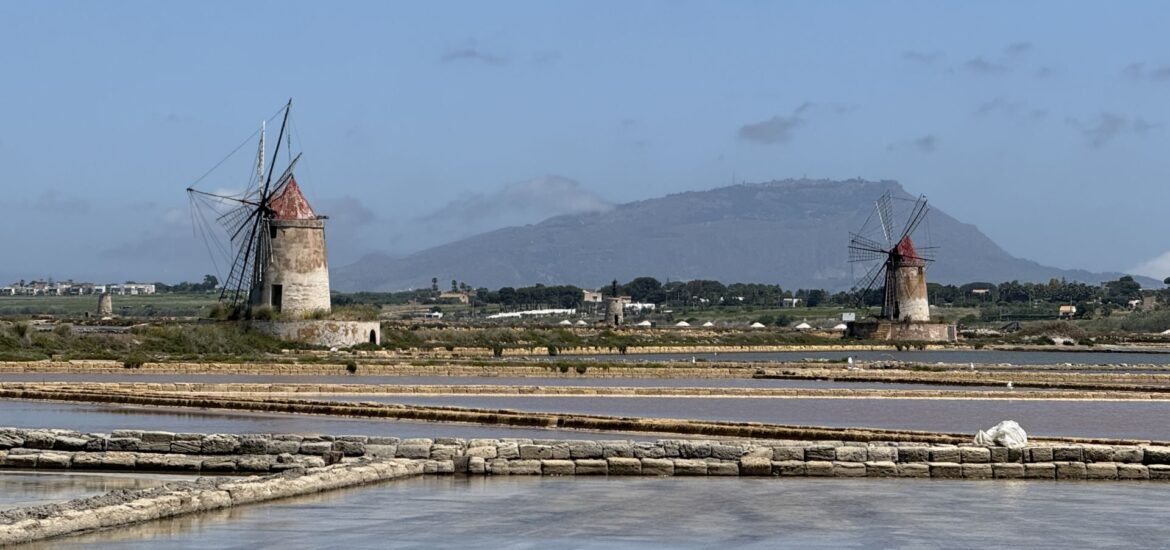
We have made several road trips in Sicily over the last few years, but this year we had a truly fascinating experience exploring the western coast of the island.
Driving along the Via del Sale (Salt Road) that leads from Trapani to Marsala felt like taking a journey back in time. This ancient, 30 km long route (Strada Provinciale 21) led us past the silhouettes of old windmills, mirror-like waters, and white dunes that look like snow – but are actually pyramids of sea salt. The landscape was unforgettable.
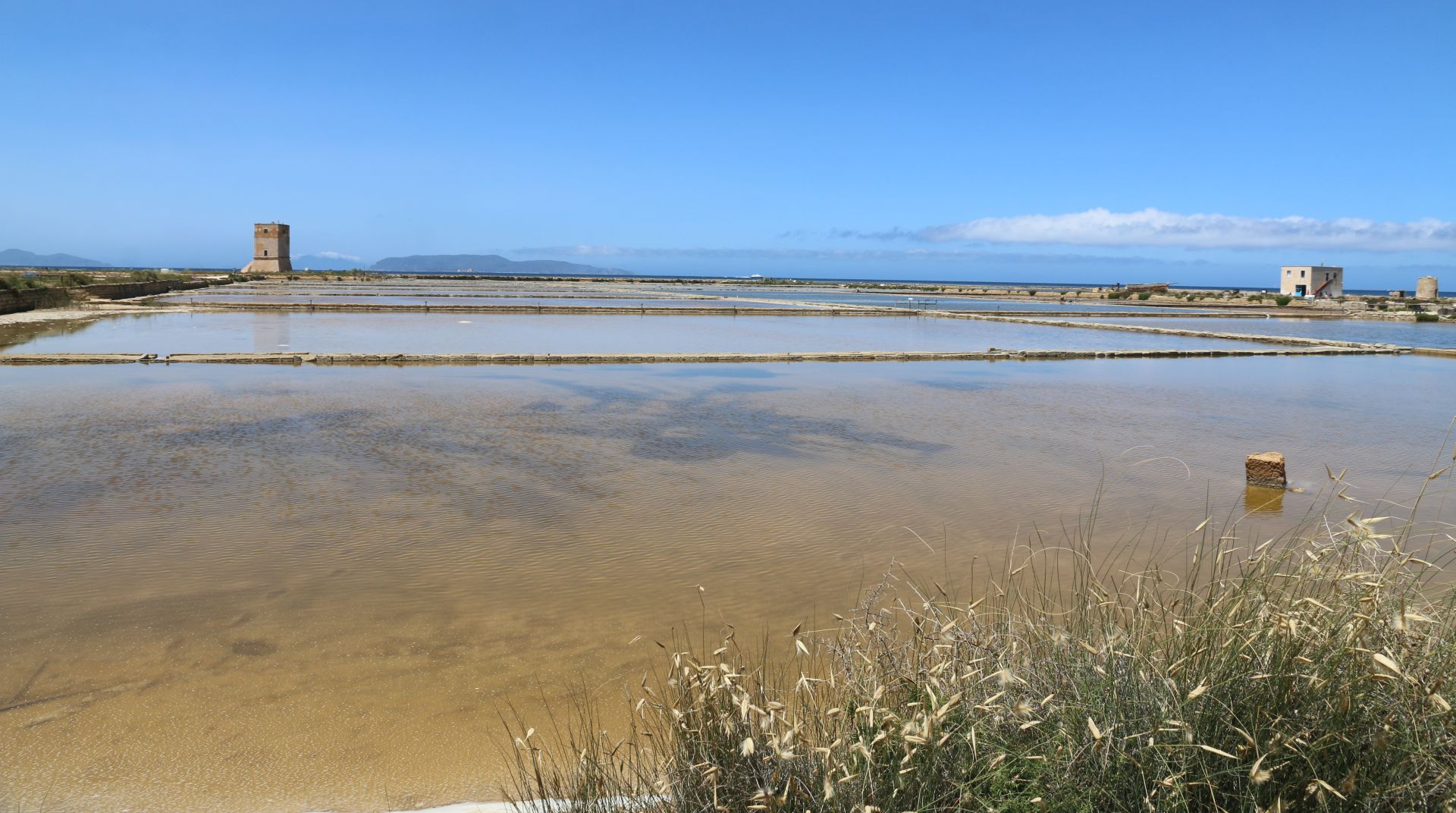
The coastal stretch between Trapani and Marsala turned out to be one of the best scenic drives in Sicily. Along the way, we traversed two protected sanctuaries of great ecological value: the Saline di Trapani e Paceco Nature Reserve and the Isole dello Stagnone di Marsala Nature Reserve, which is home to Sicily’s largest lagoon.
Leaving Trapani behind, we soon reached the Salt Pans of Trapani and Paceco. Protected by the WWF since 1996, this reserve covers an area of about 1,000 hectares and is one of the most important wetlands on our planet.
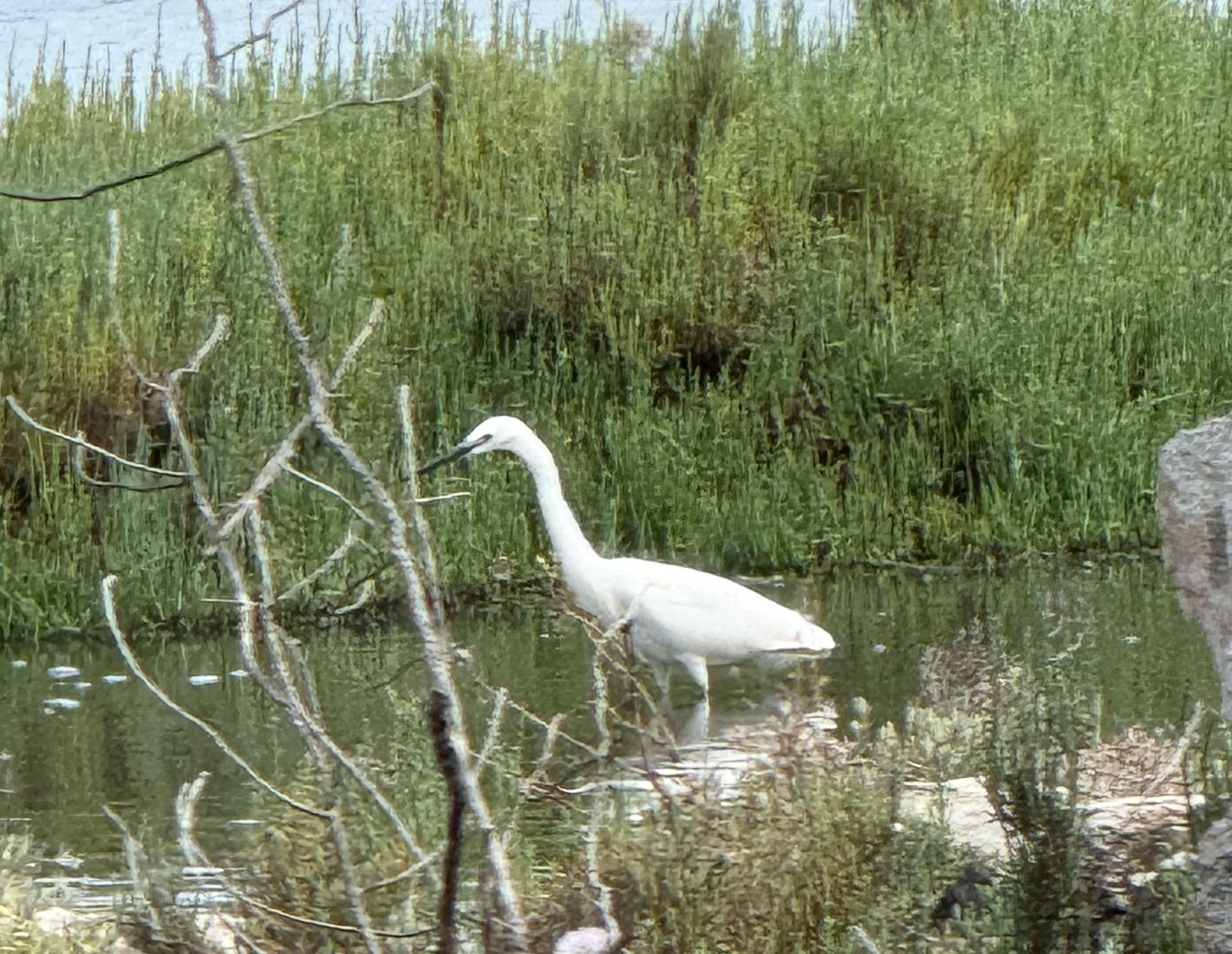
The horizon stretched out as a geometric mosaic of shallow salt ponds, narrow canals and historic windmills and towers. As we drove, we spotted herons and we saw some pink flamingos wading through the water.
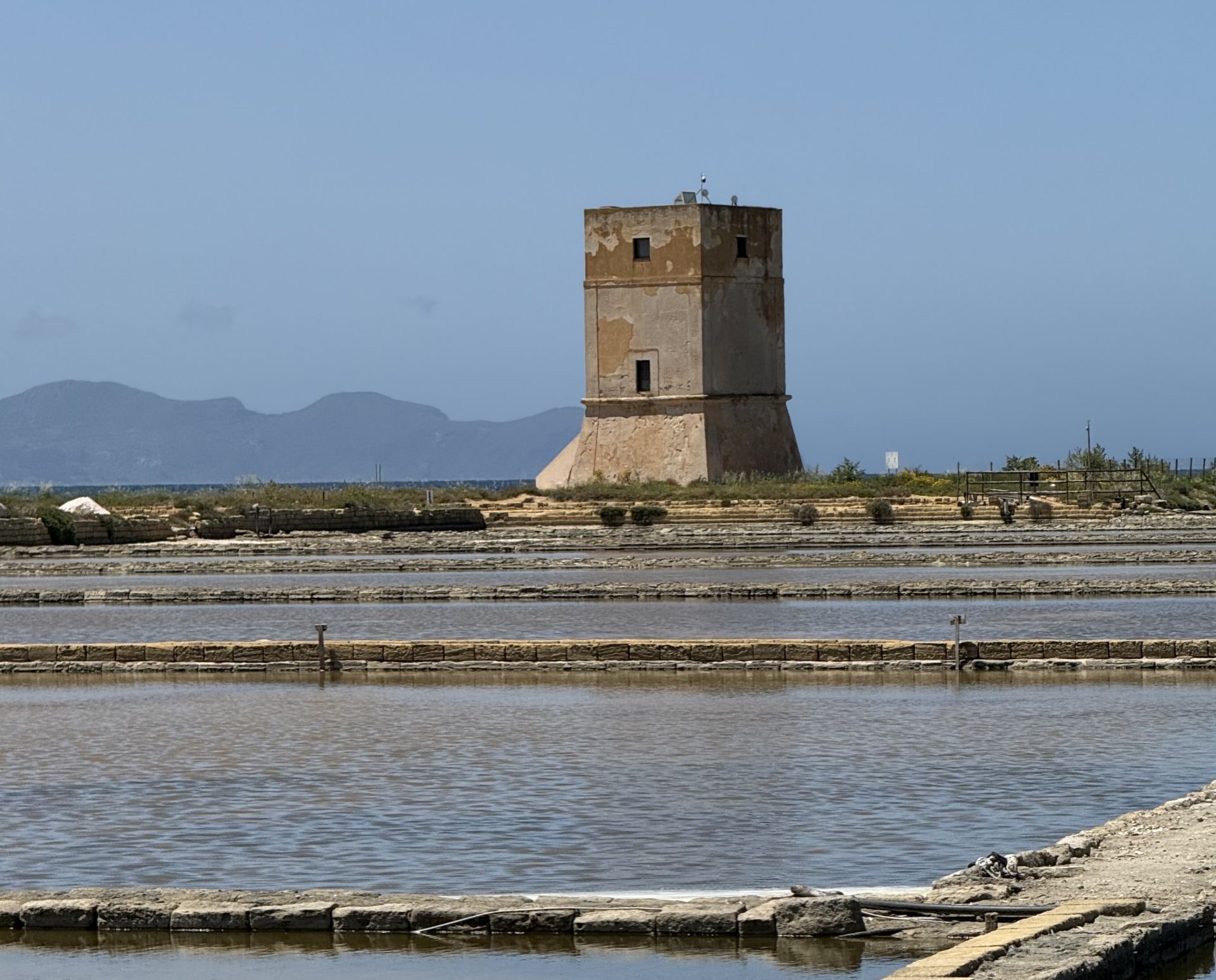
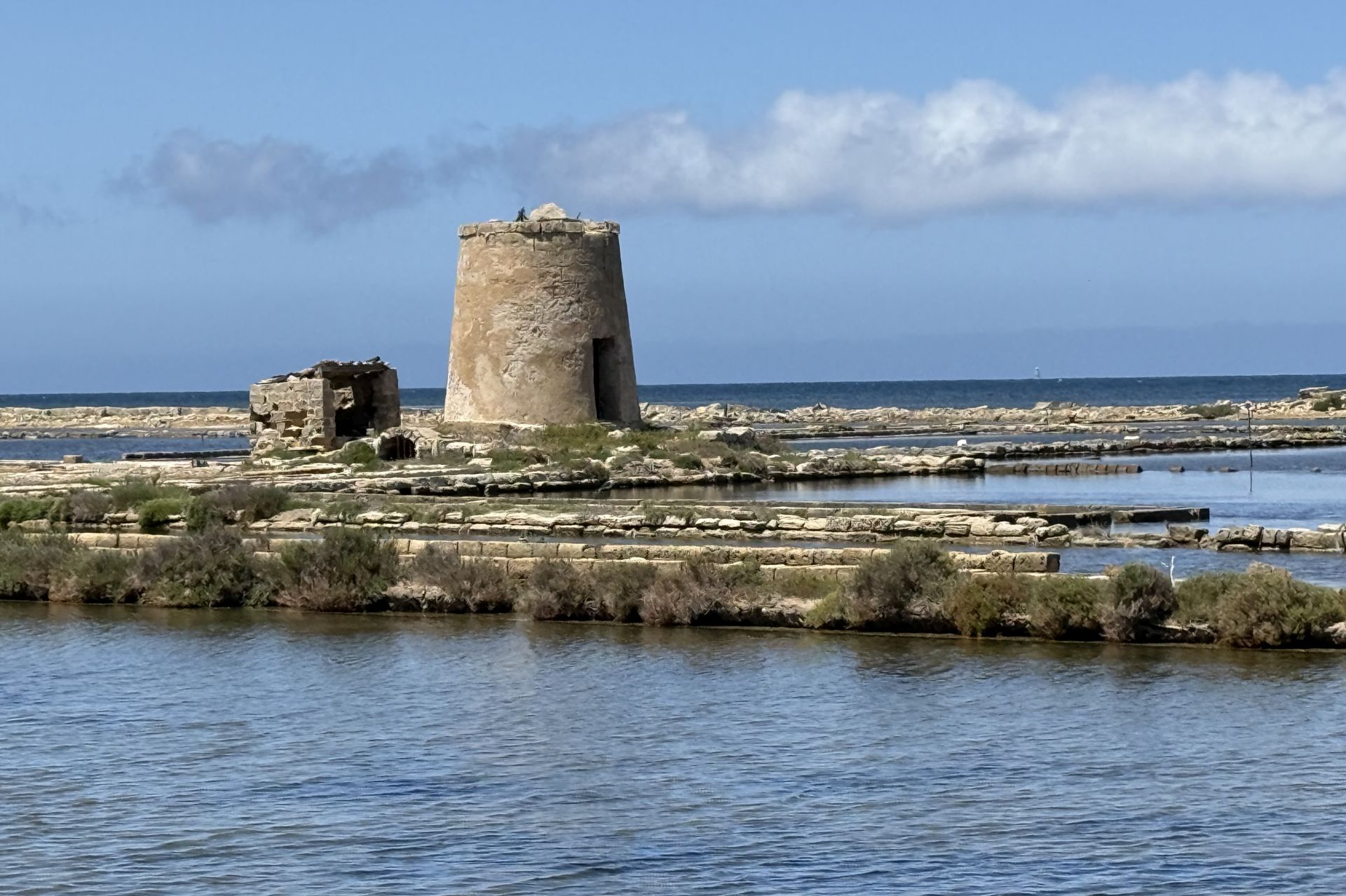
We also saw the solitary Torre di Nubia (Nubia Tower) that was standing in the crystal-clear waters of the salt marshes. It used to be an old coastal watchtower whose task was to warn the population about the arrival of Saracen pirates.
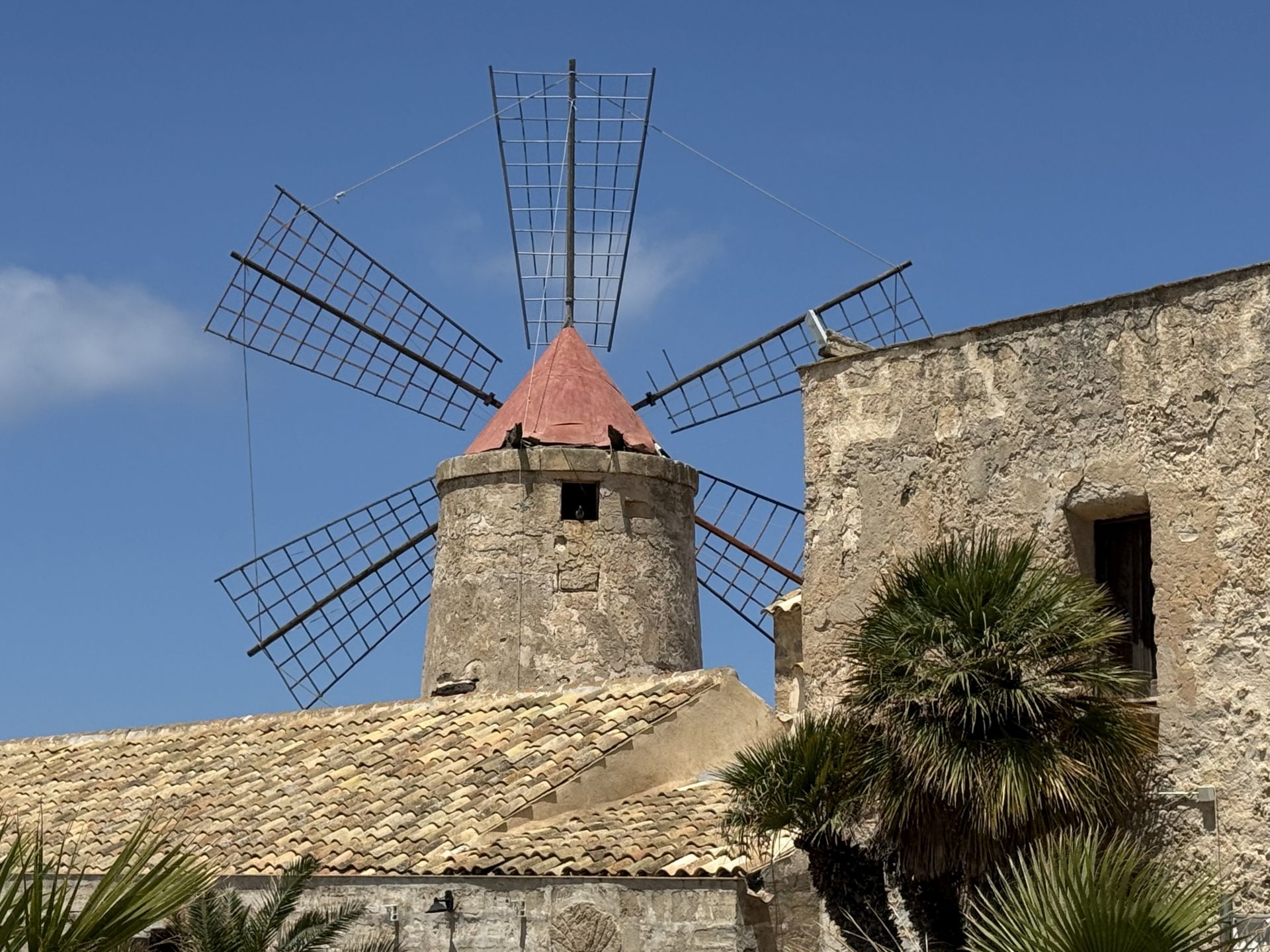
Our first stop was the Nubia Salt Museum, housed inside a 300-year-old baglio (a traditional fortified farmhouse) in the village of Nubia.
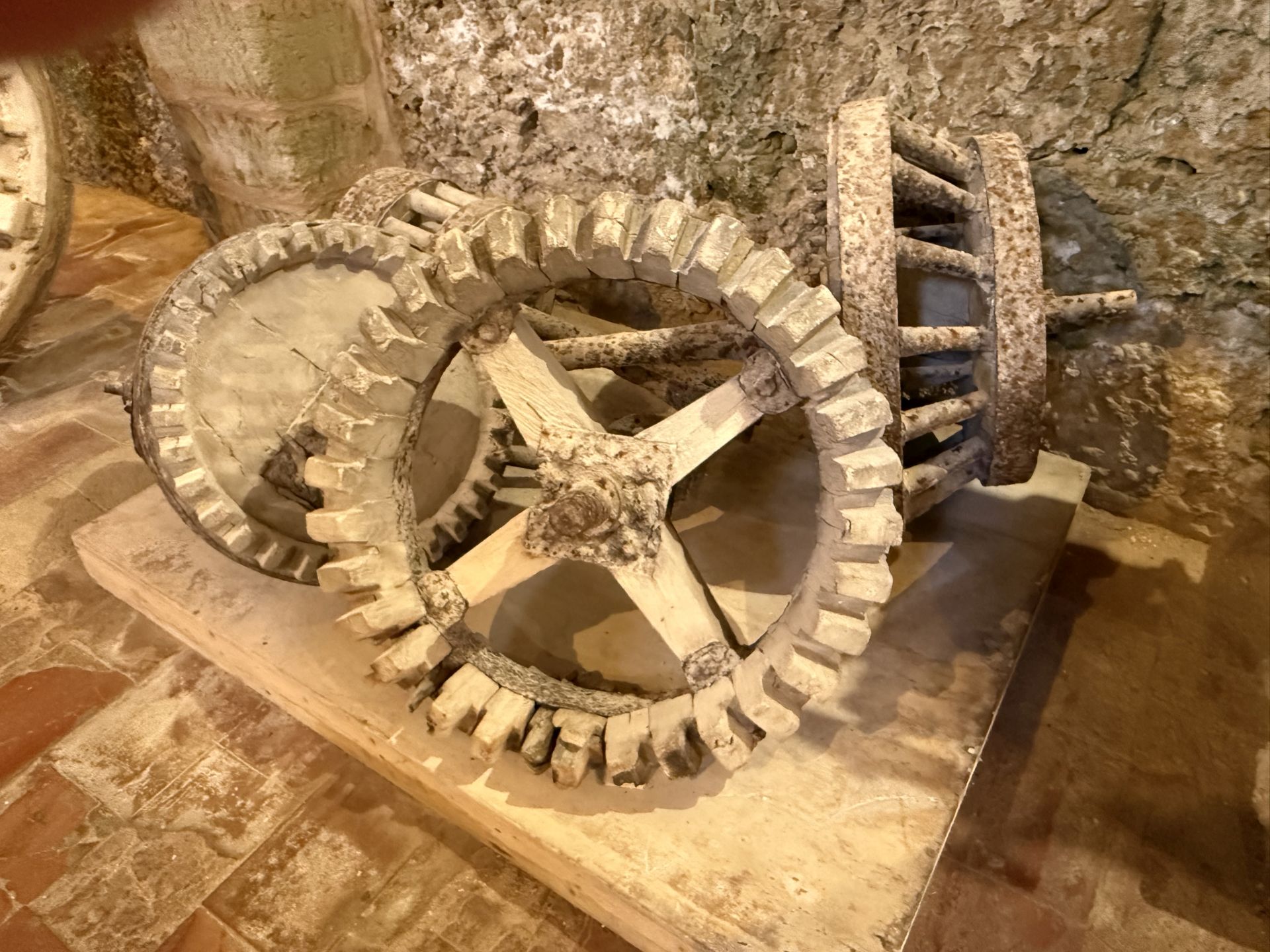
Inside, we learned more about the history of salt harvesting and we admired the original wooden gears, shovels, toothed wheels, pins – artifacts of a demanding craft that passed from father to son.
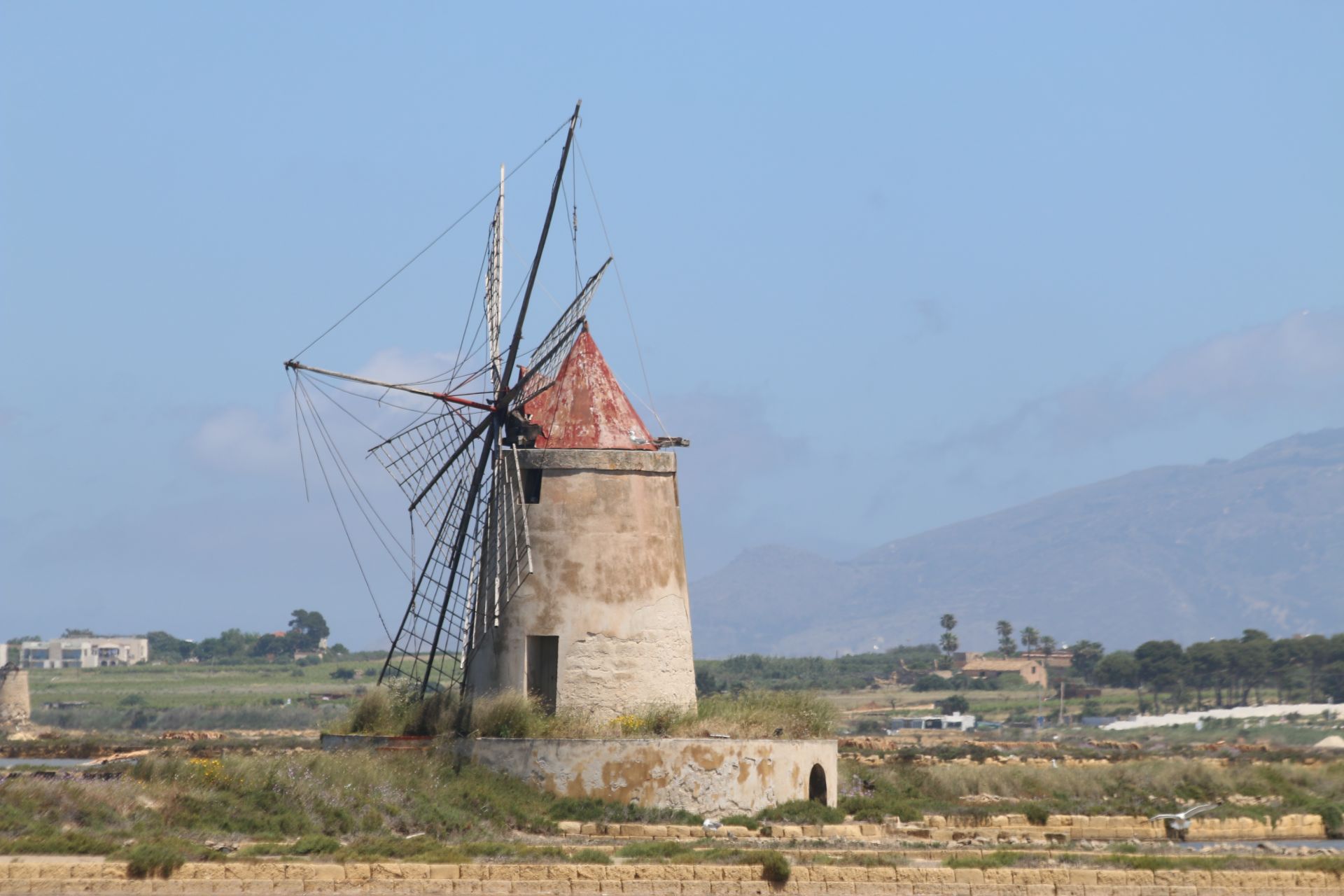
Continuing down the coast from Nubia, the scenery opened up into the vast Stagnone lagoon, with beautifully restored windmills dotting the horizon.
But let me give you some more details about the history of salt production. Can you imagine that the Phoenicians, some 2,700 years ago, developed the first methods for salt-making? Even during the Phoenician and Roman eras, Sicilian „white gold“ played a role of primary importance in the economy of the island and beyond.
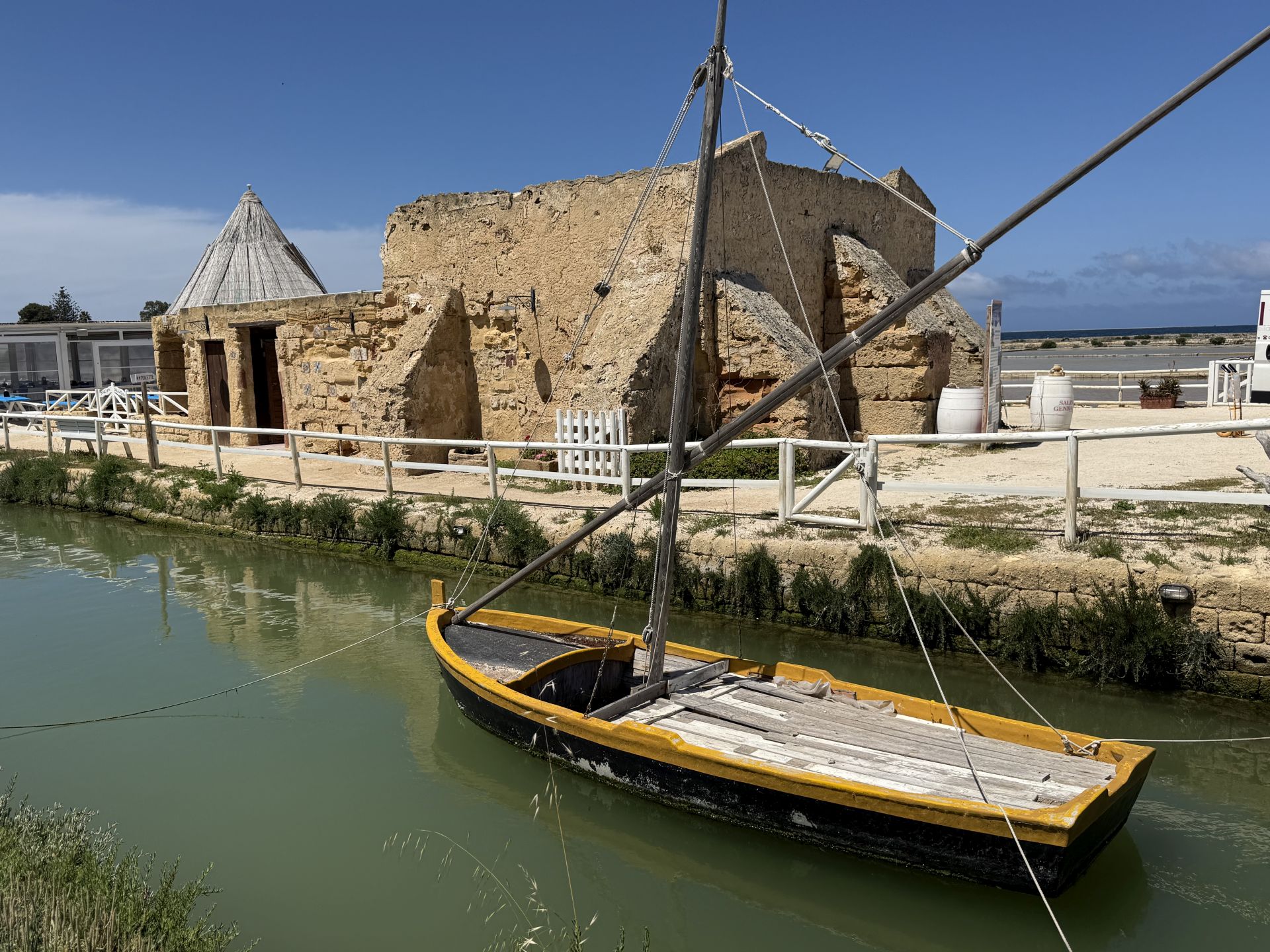
Over the centuries, the control and management of these salt pans have seen a series of rulers. The Normans, under Frederick II in the 12th century, recognized the strategic and economic importance of salt, a precious commodity in times when refrigeration was non-existent. The king therefore imposed a state monopoly on salt production. After the Normans, the Aragonese privatized the salt pans. The economy increased, and Trapani became the most important European center for salt production.
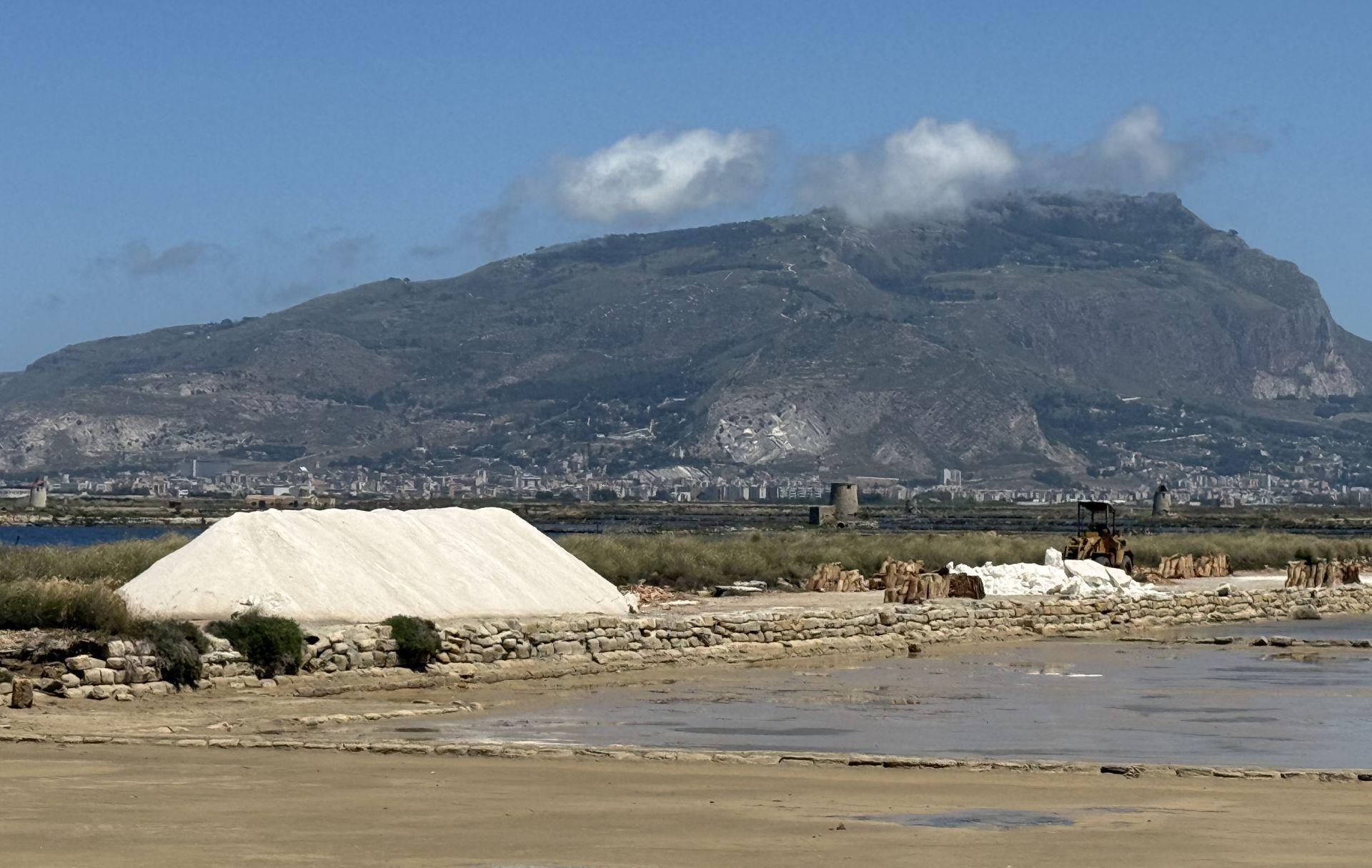
One of the most fascinating things about the Via del Sale is that the production process has barely changed in centuries, relying entirely on the sun, the wind, and human skill.
The process is simple: Seawater flows into shallow, rectangular pools through a system of channels and gates. Once trapped, the hot Sicilian sun and winds slowly evaporate the water, concentrating the brine. Workers (“salinari”) move this brine into smaller basins, increasing the salinity at each stage until a sparkling crust of salt forms on top. Using long-handled wooden rakes, harvesters gather the crystals by hand and pile them into the white pyramids we saw from the road.
Whether you are a history fan, a nature lover or a photographer, driving the Via del Sale is a must-do experience on any western Sicily itinerary.