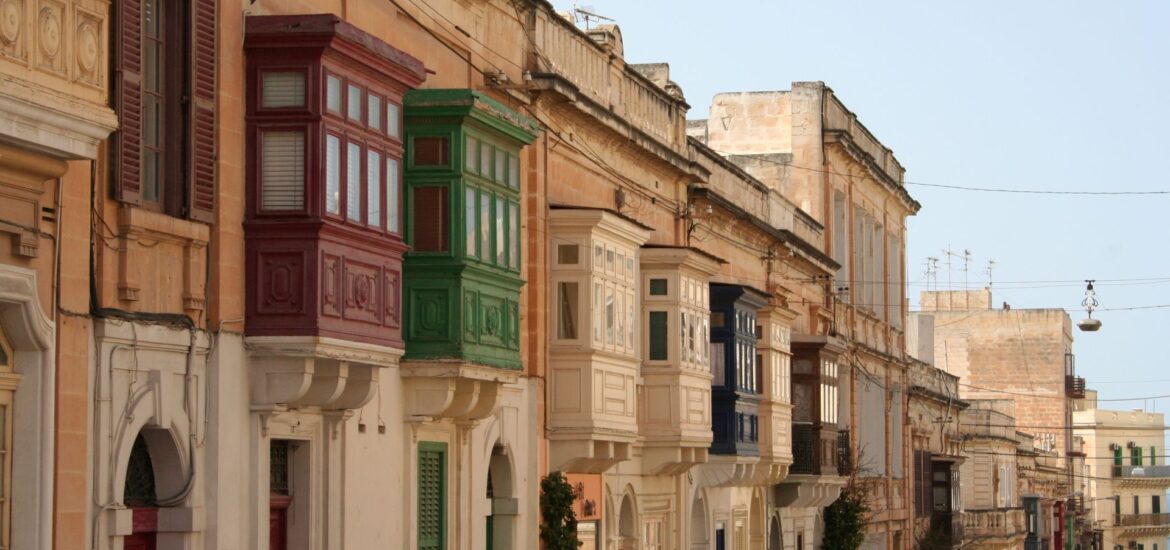
Visiting Malta is a special experience. This tiny archipelago in the Mediterranean – situated between Sicily and North Africa – offers warm and sunny weather during most of the year, a deep blue sea and many historical towns and cultural treasures.
We traveled to Malta in March, expecting a relaxed stay without the crowds – but no, the season had already started, most hotels were fully booked and lots of tourists were exploring Valletta and other attractions.
But nevertheless, Malta is beautiful with its Baroque limestone buildings decorated with colorful doors and wooden balconies, its hidden coves and sea caves, its ancient temples and charming fishing villages.
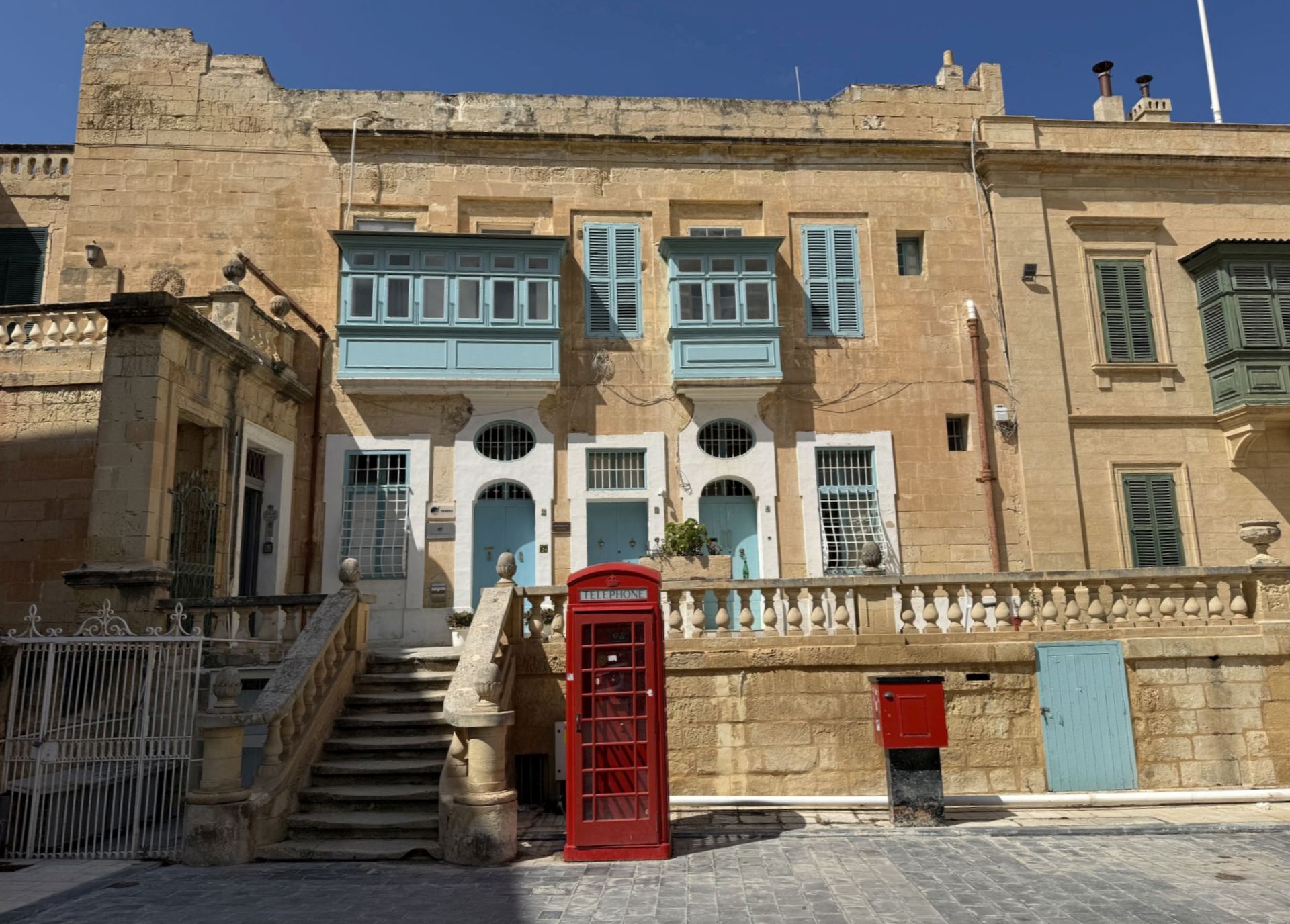
Once a crown colony of the United Kingdom, the country still shows many English features: old red phone and post boxes, driving on the left side of the road, the general use of the English language (although Maltese, a Semitic language that sounds 60% Arabic, is the most spoken) and the presence of many English ’pensionados’ enjoying their holidays at a place where they feel at home.
Our hotel in Sliema was located directly on the promenade and near the ferry terminal to Valletta, which departed each 30 minutes and took us only 10 minutes.
Valletta is Malta’s capital and a UNESCO World Heritage Site. Moreover, it became the European Capital of Culture for 2018, which made it even more popular. No wonder, due to its abundant Baroque architecture, Valletta looks like an open-air museum. It offers a mixture of European and Arabic influence that is unique and incredibly photogenic.
Valletta was founded in 1566 by the Knights of St. John, also known as the Knights of Malta. Who were these Knights of Malta? They represented a roman-catholic military order that was founded in the 11th century to help pilgrims going to the Holy Land. In the 16th century, the Knights took the role of defending Christianity from the advance of the Ottoman Empire. Their leader, Grand Master Jean Parisot de la Valette, fortified the city of Valletta after the siege in 1565.
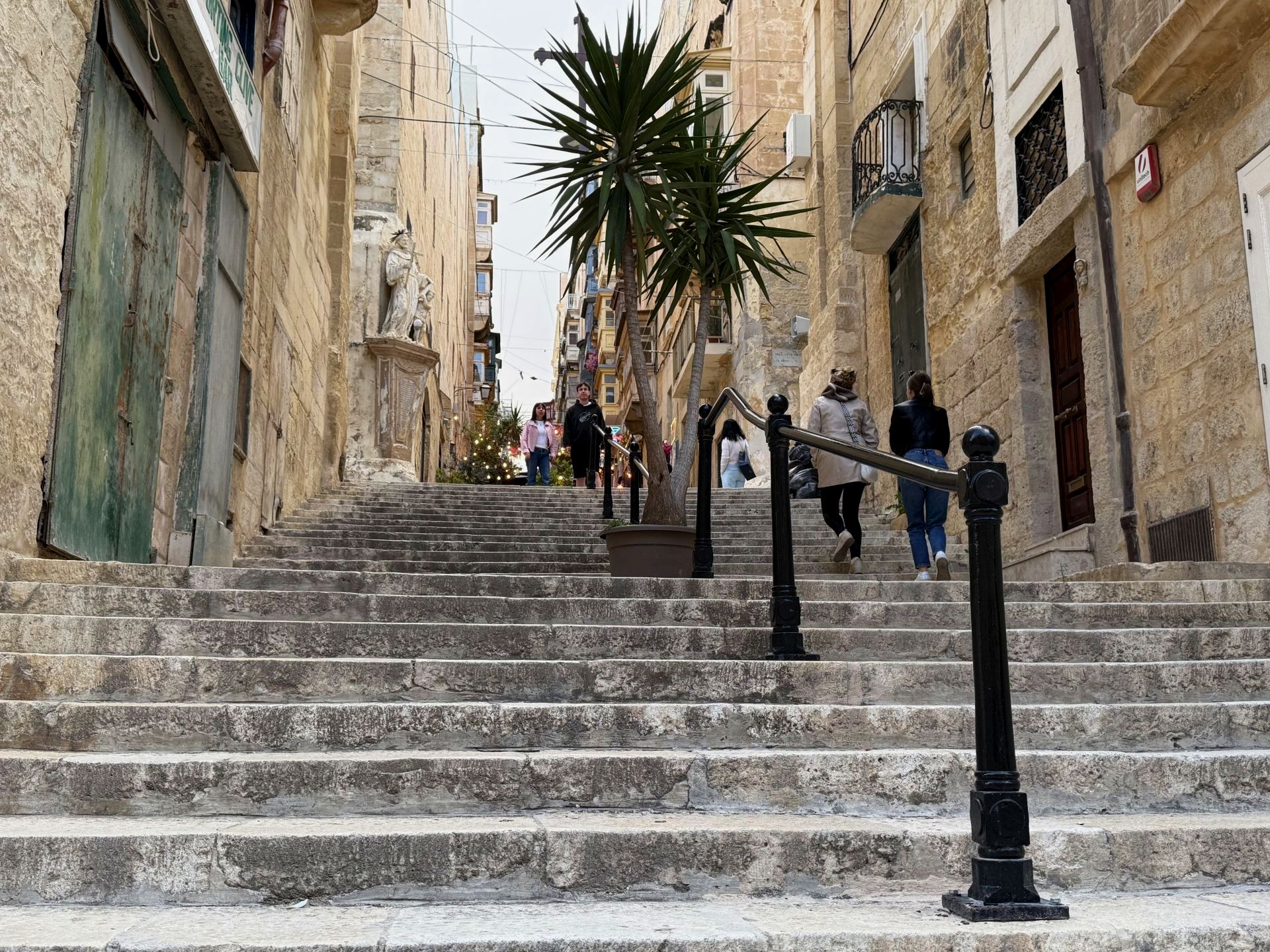
We explored Valletta by foot, although walking through the narrow and steep cobbled streets was quite an effort. Many streets have a narrow lane for cars and stairs for pedestrians, but there are also streets and alleys that consist of stone stairs only.
By the way, when the famous poet Lord Byron visited Malta in the 19th century, he was not happy with all those stairs and wrote ’Adieu, ye curses street of stairs, how surely he who mounts you swears’.
However, Valletta is crammed into a very small space as it is only 1 kilometer long and 600 meter wide. So we took our time and were awarded with many interesting photo motifs.
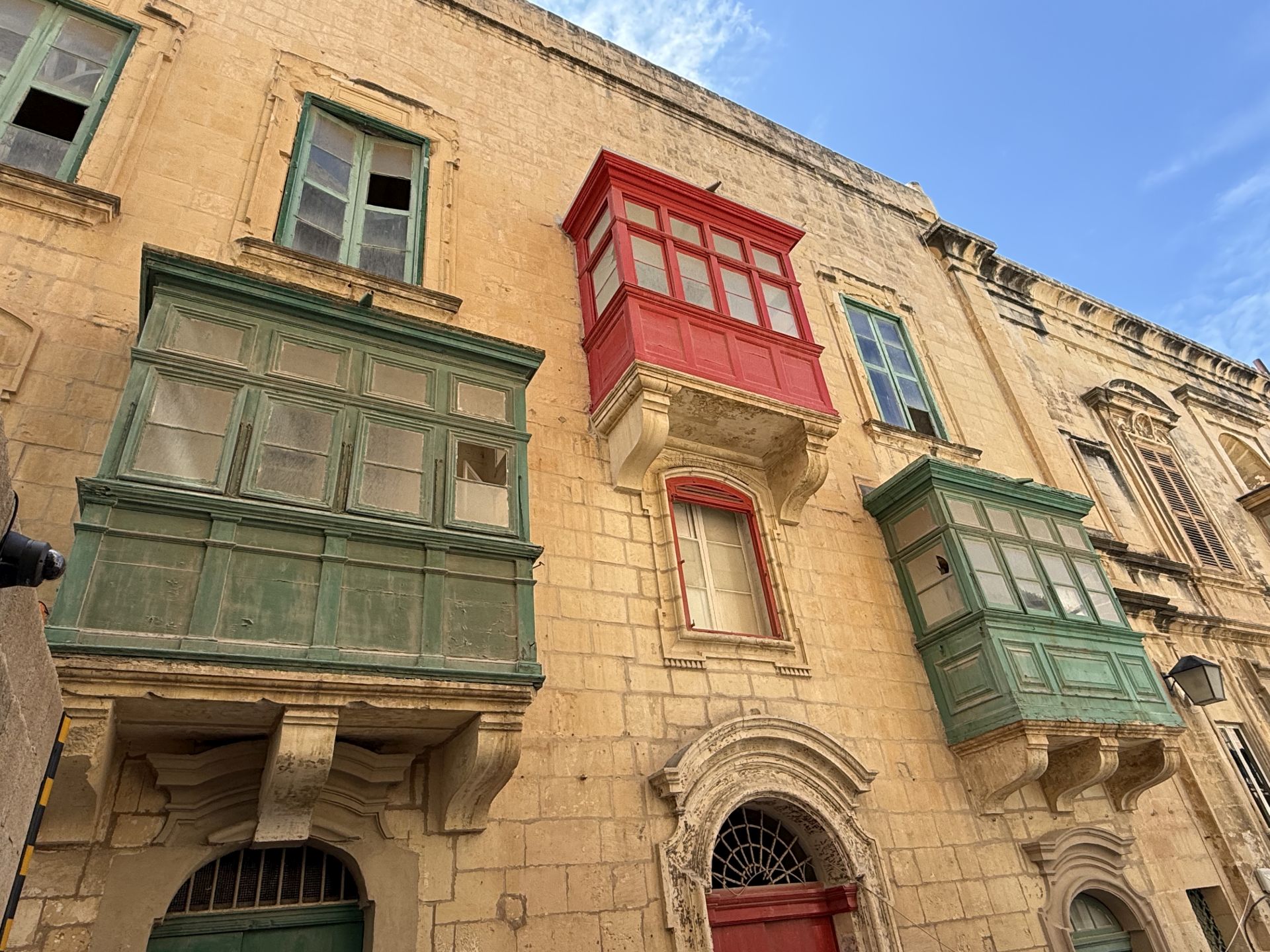
Old and dusty, abandoned limestone buildings could be spotted next to beautifully restored houses. They were often personalized with a colorful wooden balcony, an elaborate metal door knocker and the plaque or statue of a saint – yes, the Maltese people are very religious and catholic churches can be found all over the island.
We enjoyed the open-air terraces in the side streets and on historic squares, and we had an excellent cup of coffee at the outdoor terrace of Caffee Cordina, an old style coffee bar right on the main square.
The Maltese food was very tasty as well. I liked traditional snacks like ’pastizzi’ (Maltese pastries filled with ricotta or a pea mixture) or typical drinks like ’kinnie’ (a popular carbonated soft drink made from bitter oranges and spices).
When traveling, we always love roaming around, looking for typical features of a country or city. And yes, in the narrow side streets, early in the morning, we succeeded in avoiding the crowds: Valletta appeared to be a city that can be explored quietly and individually.
Which are the most typical characteristics of Valletta? No doubt, the colorful wooden balconies (’gallarija’). They are probably inspired by Arabic balconies and there is a legislation to preserve the balconies when renovating old buildings. A good idea indeed!
But of course, there are also more specific tourist attractions in Malta’s capital. Let me describe some of them:
The main street in Valletta is Republic Street. It is lined with classic Maltese yellow buildings containing shops, restaurants and some of the main attractions.
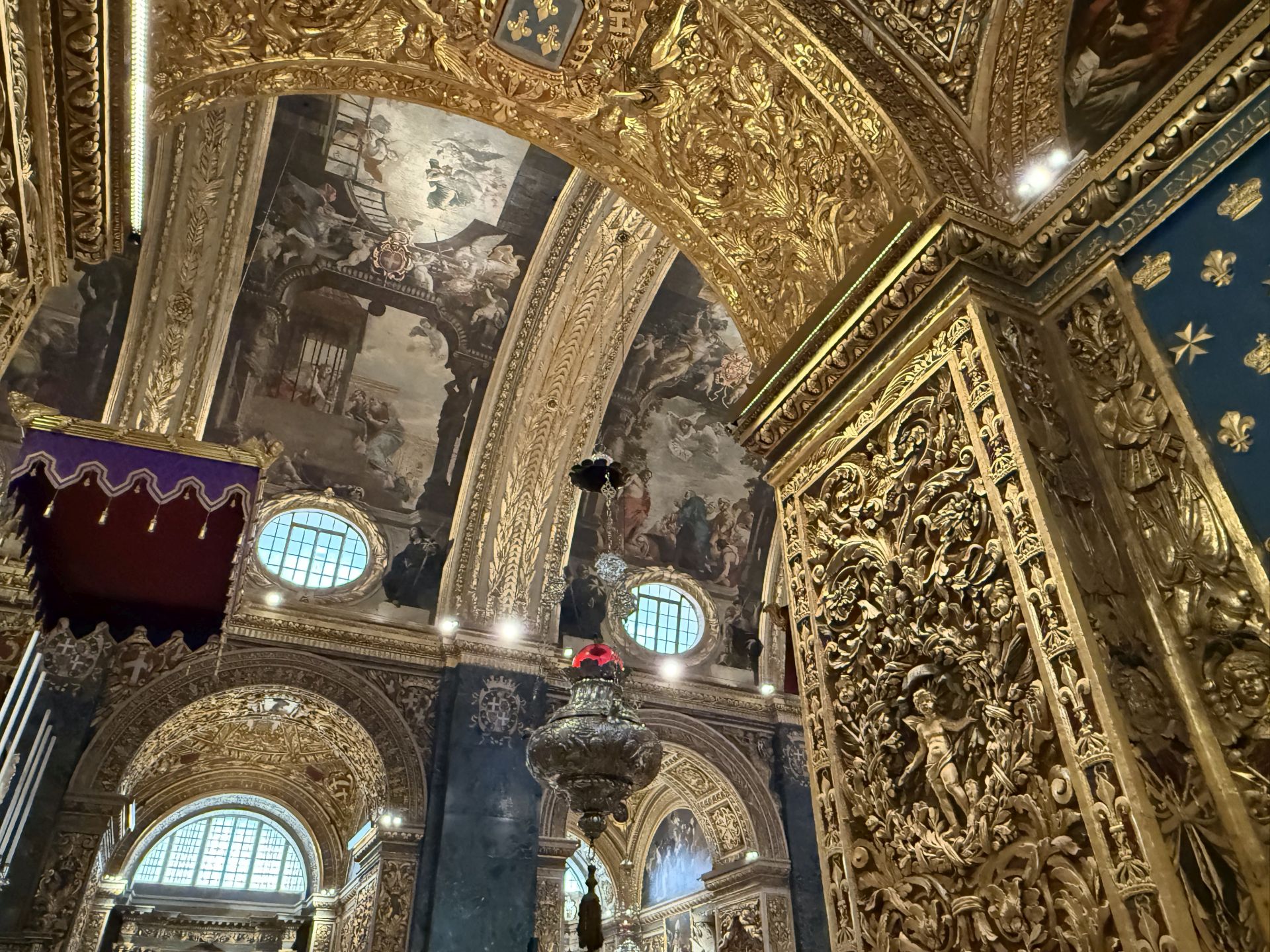
In my opinion, the most beautiful building is the St. John’s Co-Cathedral, a Baroque masterpiece that contains the tombs of 400 of the Knights of Malta. It also houses the only painting Caravaggio ever signed (’The Beheading of St. John the Baptist’). Although the cathedral is rather modest from the outside, the interior is splendid. It is decorated from floor to ceiling with marble and gold, and it is full of art work and painted frescoes.
Other impressive buildings are the Grand Master’s Palace, now home to the President’s Office and the Maltese Parliament, and the Royal Opera House, built in 1866.
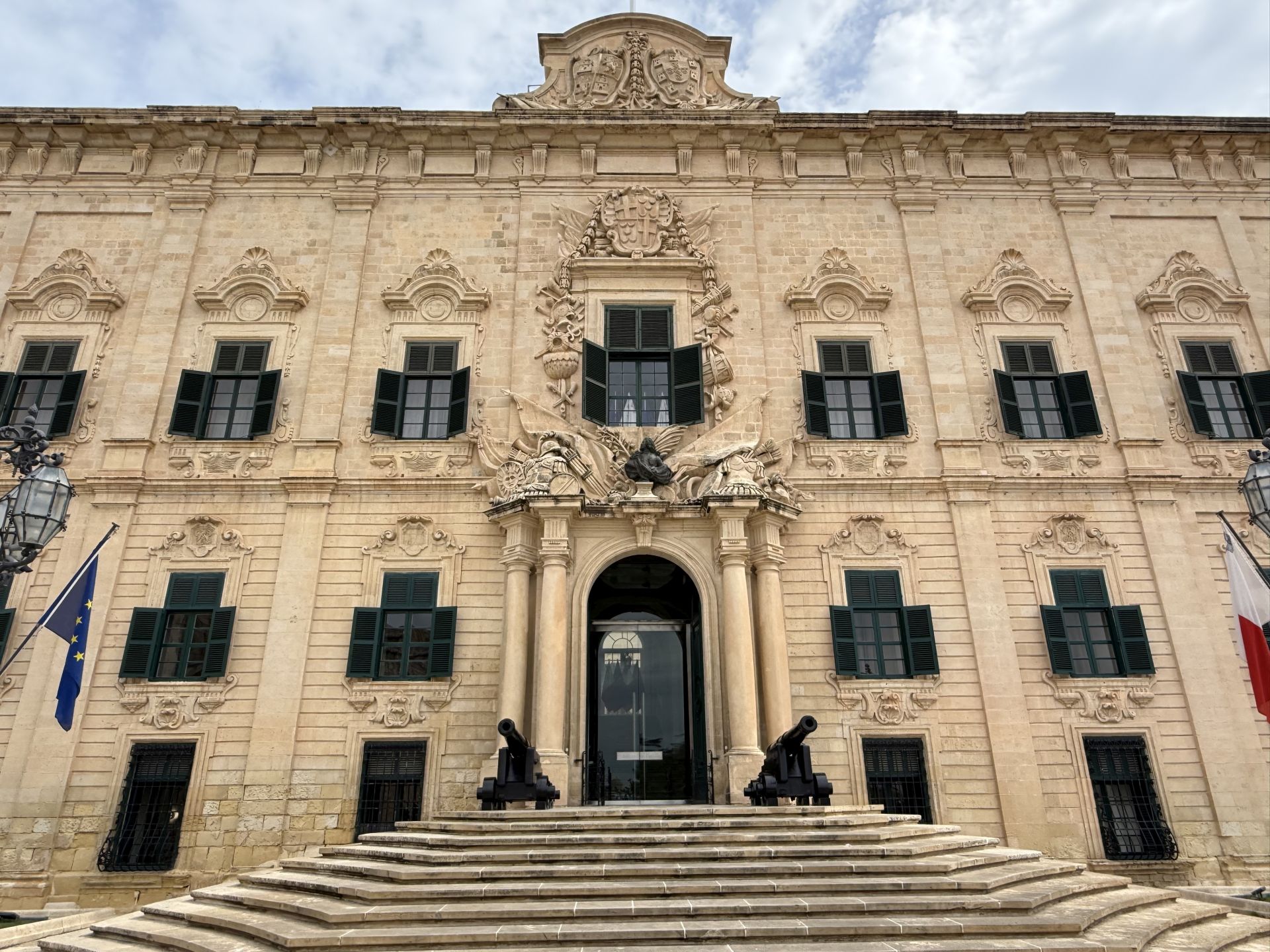
I particularly liked the Auberge de Castile, with cannons flanking the entrance. This was one of the ’Auberges’ (’Inns’) in Valletta, which were used by different branches of the Knights of Malta. It is now used as the office of the Prime Minister, with the square in front used for public events.
We enjoyed the walk to the Upper Barrakka Gardens that were originally used by the Knights of Malta. They were opened to the public in 1824. Colonnades led to a terrace overlooking the Grand Harbour and the Three Cities across the bay.
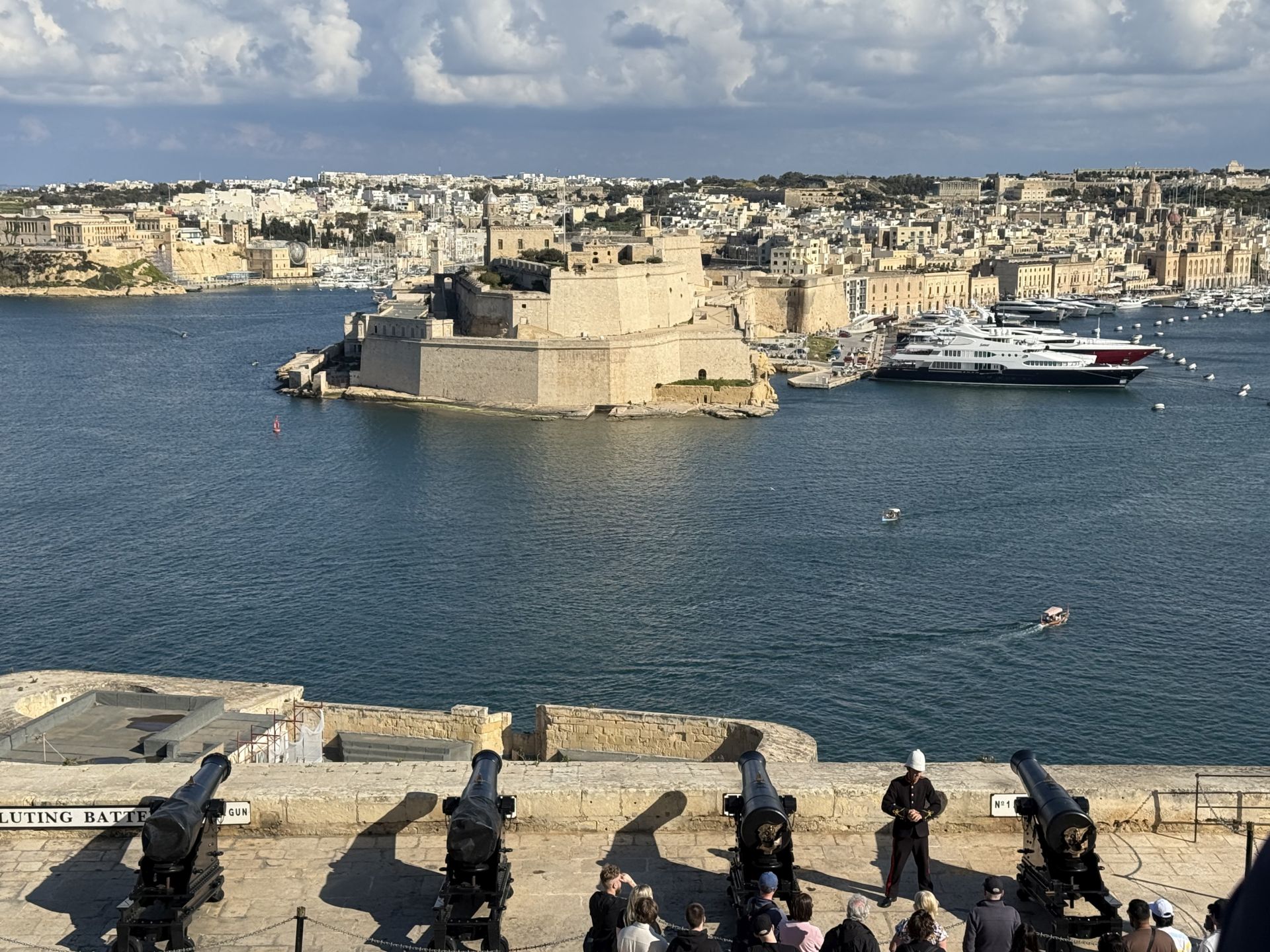
Below us we saw the Saluting Battery with rows of cannons pointing out to the sea. The cannons are fired each day at 12 noon and 4 pm. From the gardens we took a lift down to harbour level and we continued our walking tour along the promenade to Valletta Waterfront, originally a series of storehouses that were built along the waterfront in 1752. The ’Pinto’s Stores’ have been renovated and transformed into restaurants, shops and service points for visitors arriving with huge international cruisers.
The view of the Grand Harbour from the Upper Barrakka Gardens provoked us to make a trip to the Three Cities, where we enjoyed another beautiful day in Malta.
Altogether, Valletta is a charming city, a living piece of history that is certainly worth visiting.
Thank you for all your reports. I visited Malta twice, and still love it. There is also a modern Malta, a the lovely island Gozo to the north. Today I’m again in Montenegro, and on tuesday we move further to Mostar and Sarajevo for our first time.
[…] you ever heard of Gozo? This island is part of the Maltese archipelago, just north of Malta. It has a surface of 67 square kilometers only and is home to about 37,000 people who speak their […]