Have you ever thought about visiting the old Austro-Hungarian fortresses in Montenegro? Many of these fortresses are located along the Montenegrin coast, especially in the area of the Bay of Kotor and around Budva. Most of these fortifications, built between 1838 and 1914, are abandoned and dilapidated, and only some of them are preserved and worth visiting. Of course, there are also some fortresses that have been sold to international or national companies. They have been reconstructed and serve as tourist attractions or for other purposes (Mamula, Fort Rose, Kastel Lastva in Petrovac).
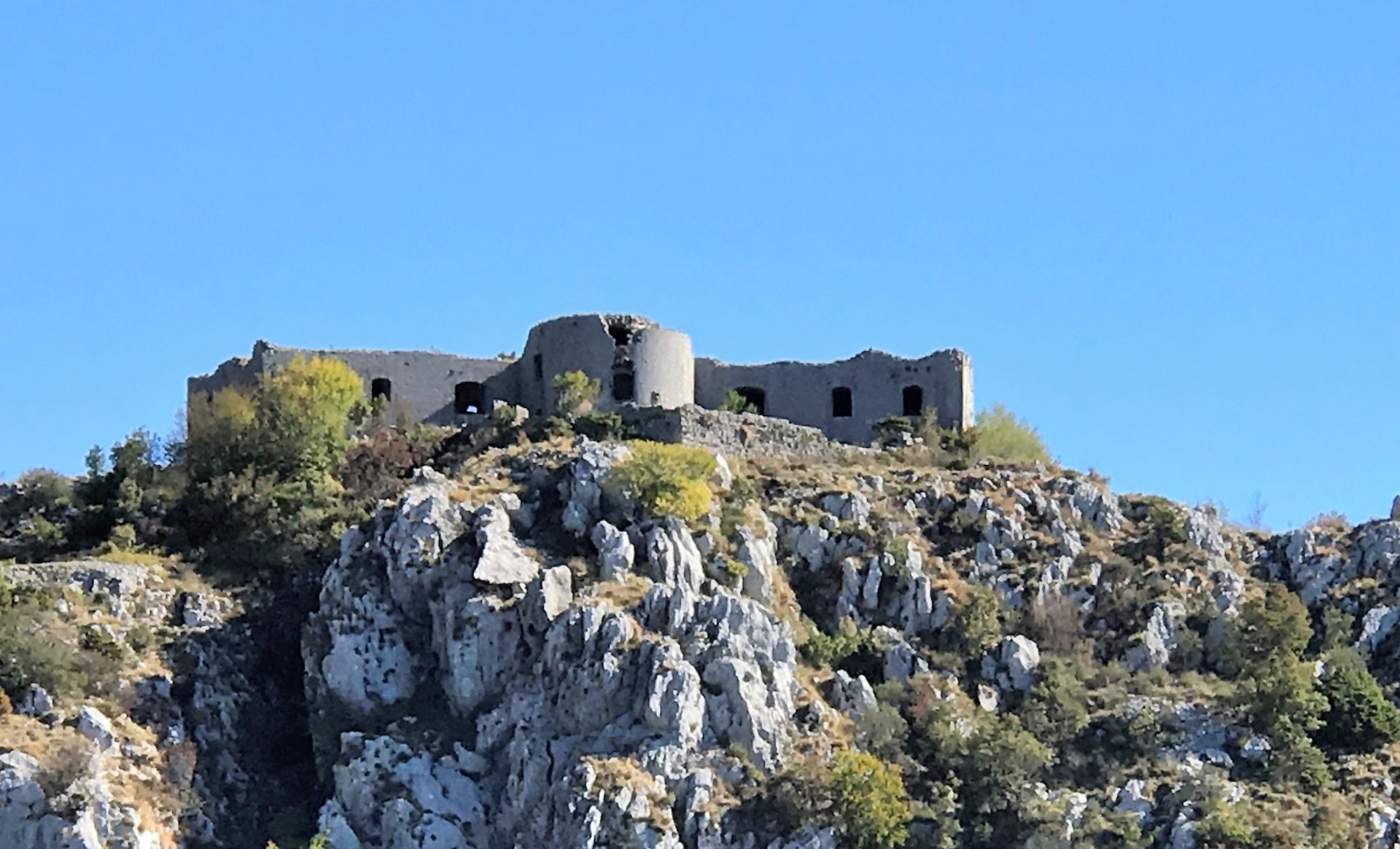
One of the many Austro-Hungarian fortresses on the Montenegrin coast is the Kosmač fortress. All passengers traveling on the route Cetinje-Budva know where this fort is located. Its remains can be seen at an altitude of 843 meters, high on a rocky hill near the village of Brajići. At the first glance, the fortress is difficult to access, which is probably the reason why few people visit it. However, Kosmač is accessible, because this fortress is a waypoint on the Coastal Mountain Trail (PPT), a well-known hiking route along the Montenegrin coast.
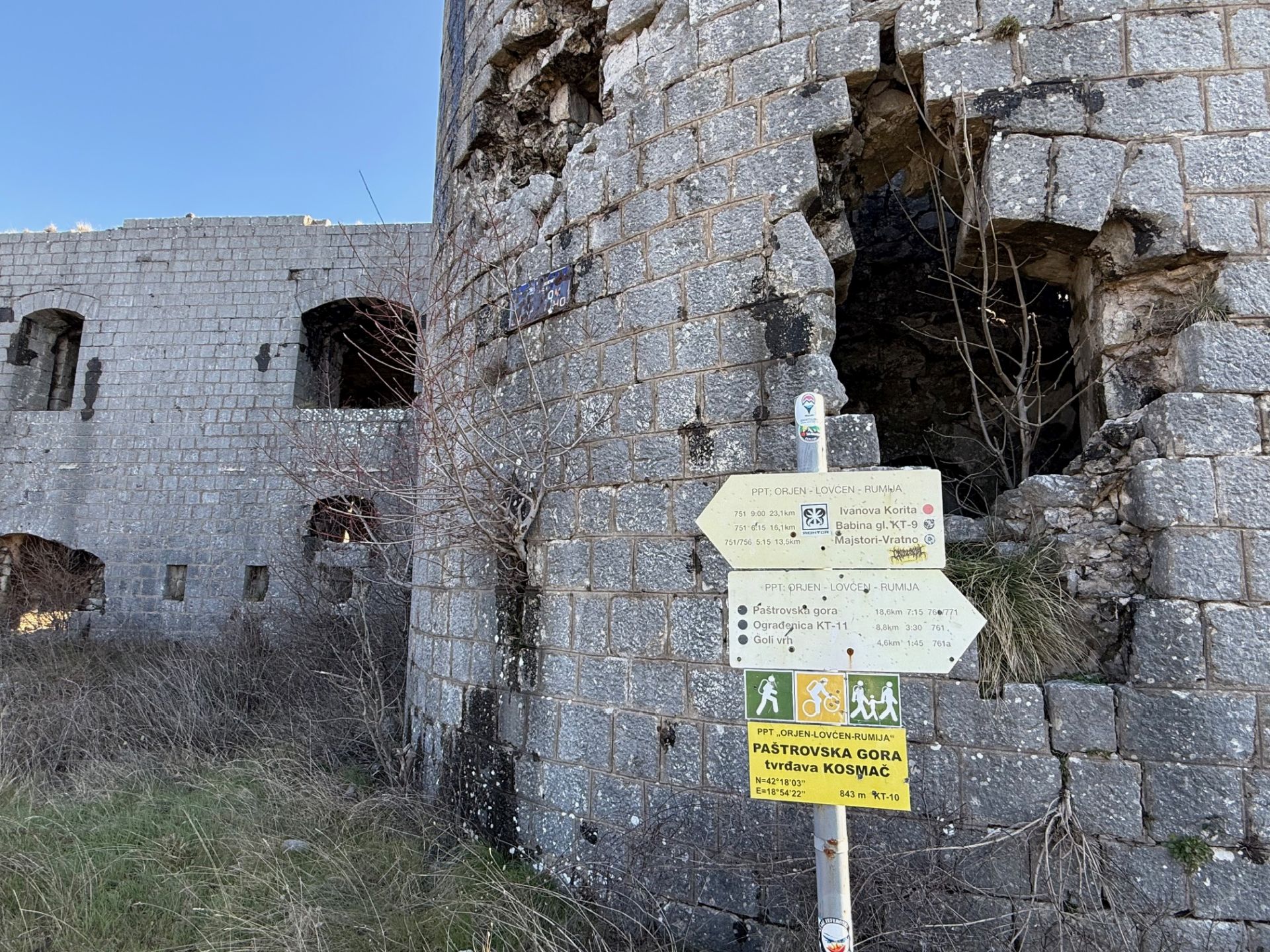
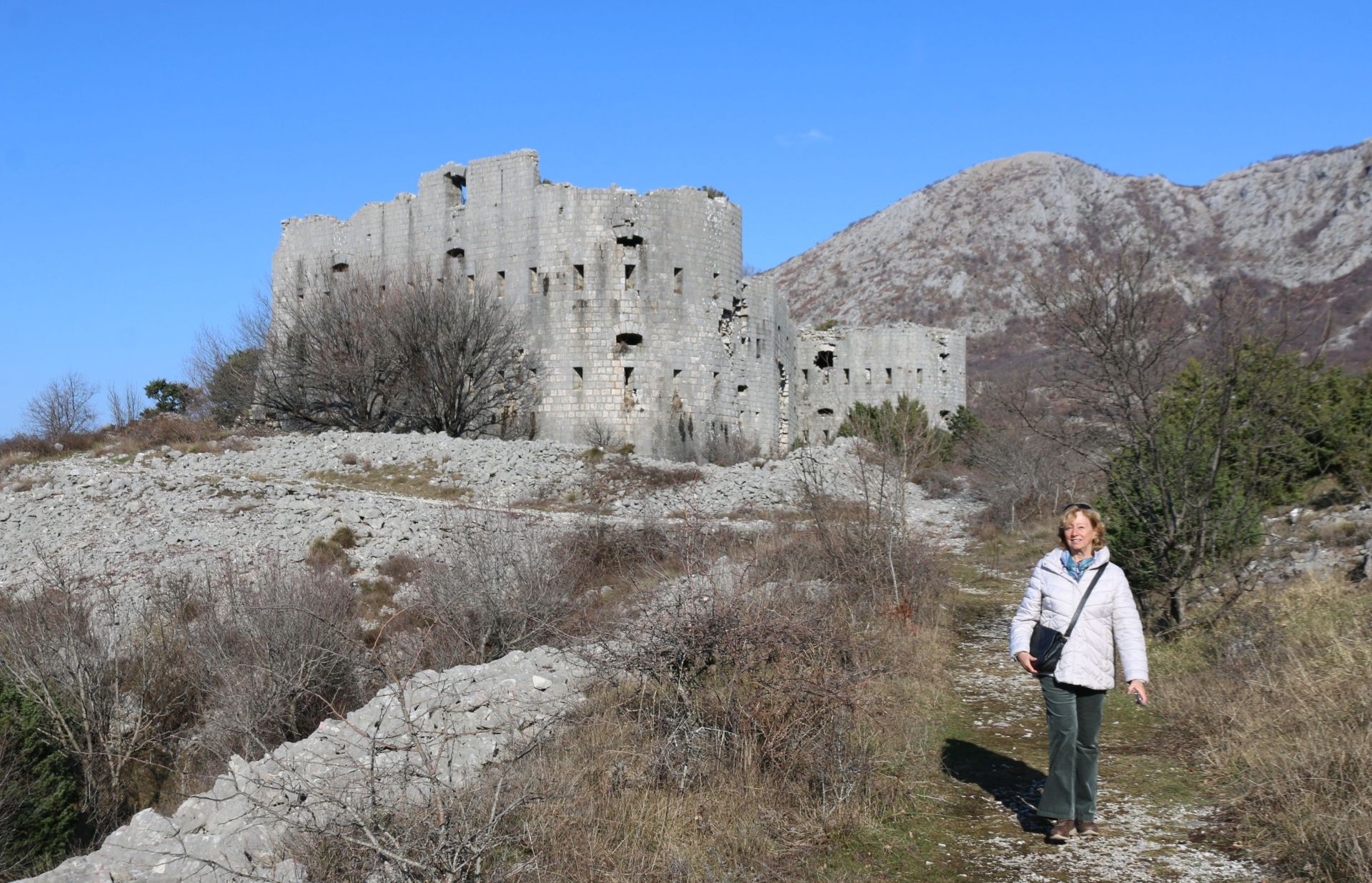
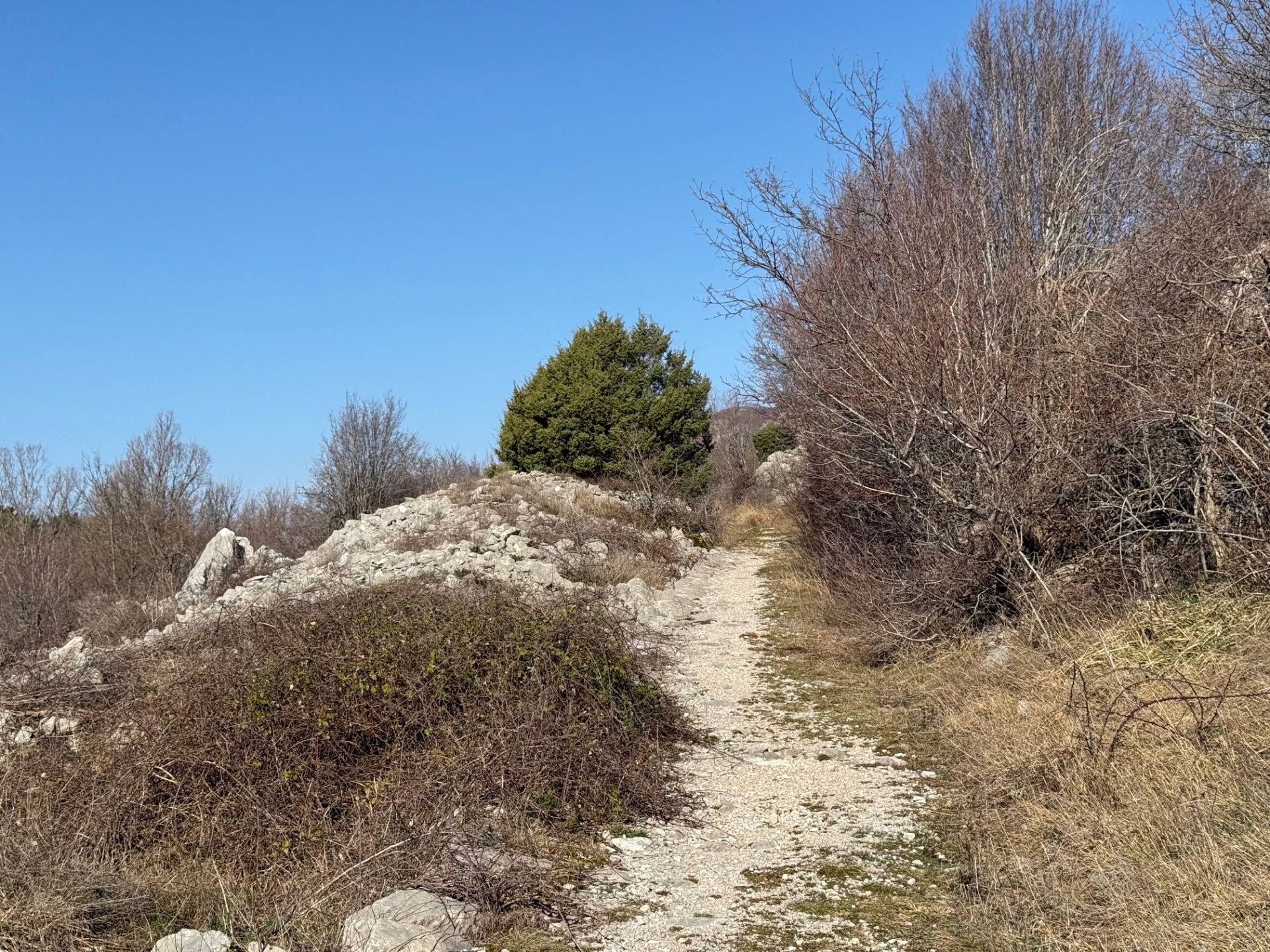
You can park your car next to the highway, at the place where the tourist signpost for Kosmač is posted. Follow the narrow asphalt road for 400 meters (you can also cross this section by car, if that’s more convenient for you). At the last paved bend (with big potholes!) turn right, where a narrow rocky path leading uphill begins. Pass through the iron gate and continue to the fortress. After sightseeing, you can continue on the same path behind the fortress and after a short time you will reach the same old Austro-Hungarian road again, where you should turn left to return to the parking lot. The complete walk takes less than an hour and the path is well-marked.
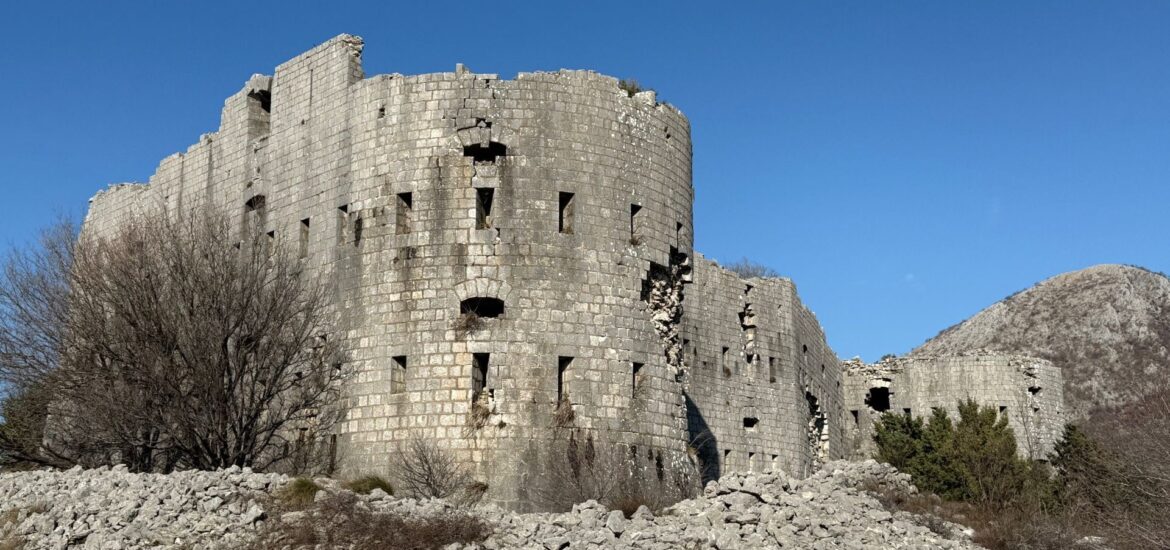
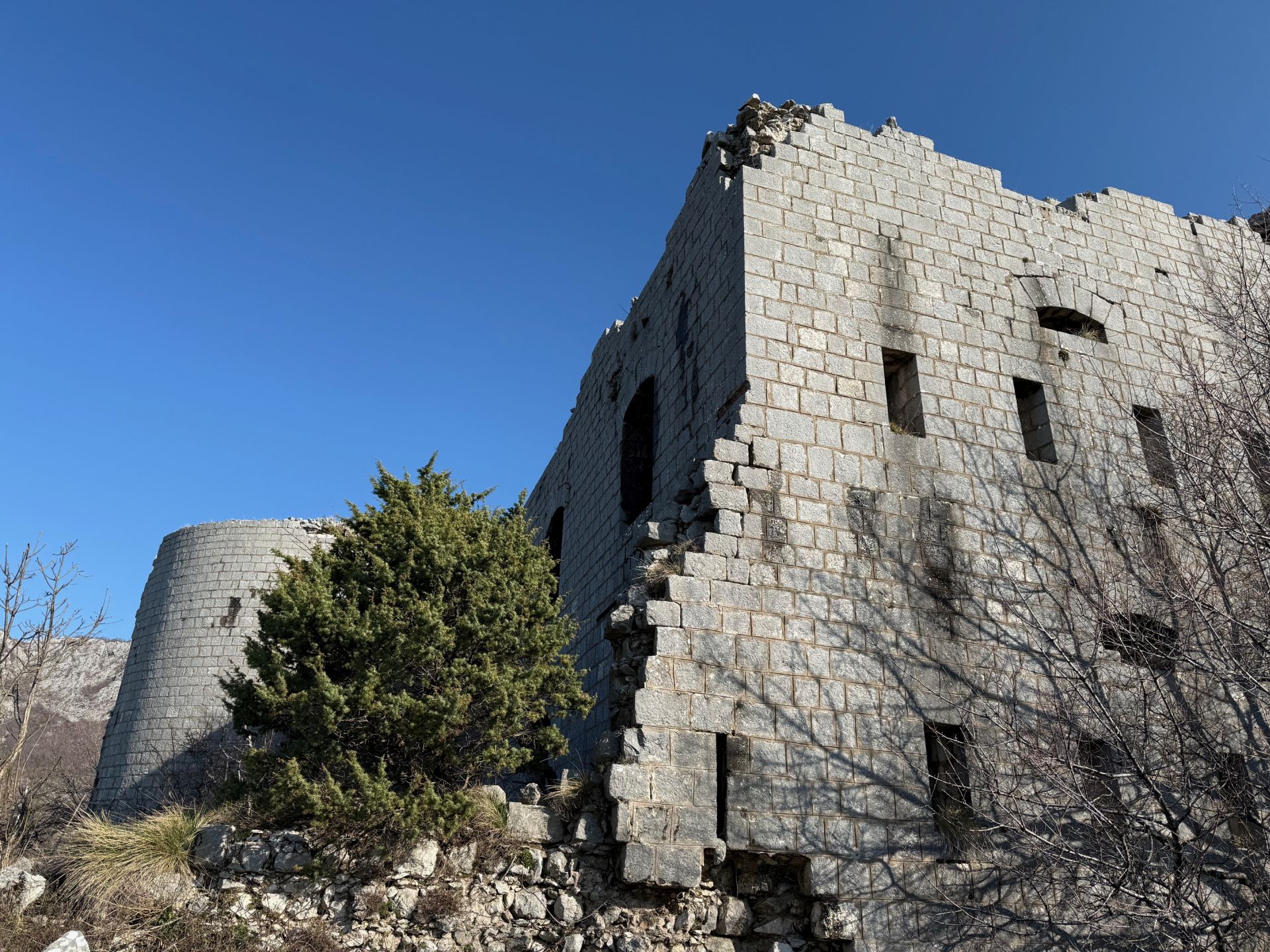
Kosmač Fortress was the southernmost fortress of Austria-Hungary. It was built in the 1840s, and was completed around 1850 as part of a network of fortifications around the Bay of Boka Kotorska and along the coastal belt. It is made of processed limestone and consists of two basic wings that meet with a central semicircular part. The semicircular extensions at the end of each wing gave the defenders a view in eight directions, through rectangular windows and arched cannon openings. The fortification had three floors: basement, ground floor and first floor, and the total area was 1,064 square meters.
The fortress was strategically important, because until 1878 it was located at the point where the Austro-Hungarian, Montenegrin and Ottoman borders met. After the outbreak of the First World War, the Austrian troops retreated and detonated the fortification. Although it lost its purpose, Italian troops used it as a fortified military position during World War II.
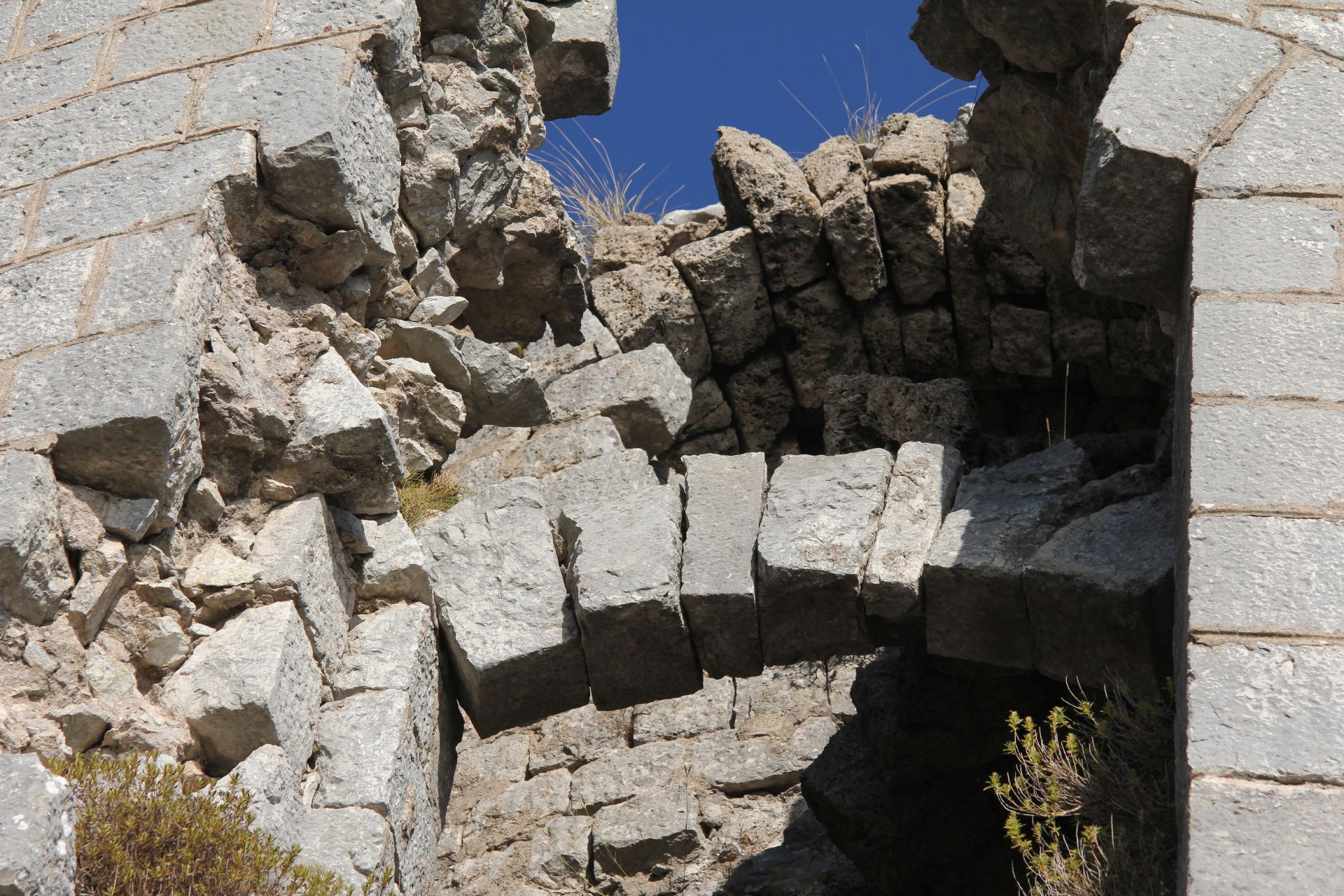
You can already see from afar that the fort is now abandoned and in a state of ruin. The roof, the interior walls, floors and central staircase collapsed. Visitors are advised to be careful when entering the fortress due to the danger of collapse!
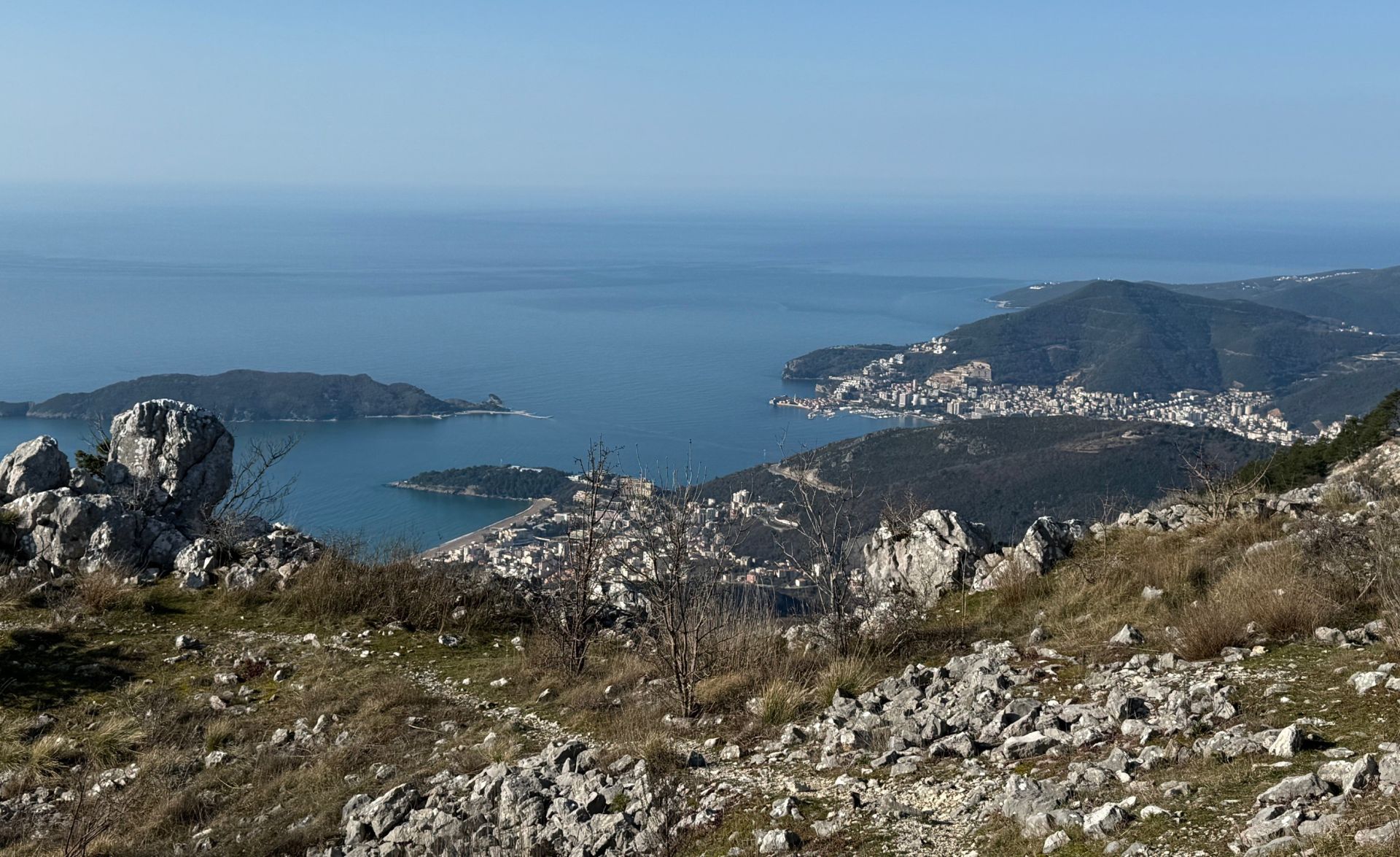
However, the view towards the sea from the plateau in front of the fortress is truly impressive. When the weather is nice, you can see Budva and Bečići as if in the palm of your hand!
The fact that Kosmač was declared an immovable cultural monument in 1964 obviously does not mean much, because apart from administrative protection, no other measures were taken for its physical protection. Locals continue the process of devastation by removing stone and other building materials from the ruins. What a shame!
Austro-Hungarian fortresses on the Montenegrin coast represent a significant part of the architectural heritage of Montenegro, but the general public learned about them only after the retired lieutenant colonel Radojica Pavićević published a monograph entitled ‘WERK – Austro-Hungarian fortresses in Montenegro’.
In addition, the book ‘The Austro-Hungarian Fortresses of Montenegro – a hiker’s guide’, written by Bernard Sullivan, is very useful for hikers who want to discover this fascinating network of hiking trails.
In any case, it is very important to raise awareness of the existence of these structures in Montenegro. Most of them are abandoned and left to the ravages of time.
This also applies to the Kosmač fortress, which I believe is absolutely necessary to protect and preserve for future generations.