When we visited Romania a few months ago, one of our goals was to explore Maramures, a region in the northwestern part of the country, where Romanian traditions are still faithfully preserved. Yes, you can find some tourists here, but due to the geographical location and poor road network, the region remains rather isolated.
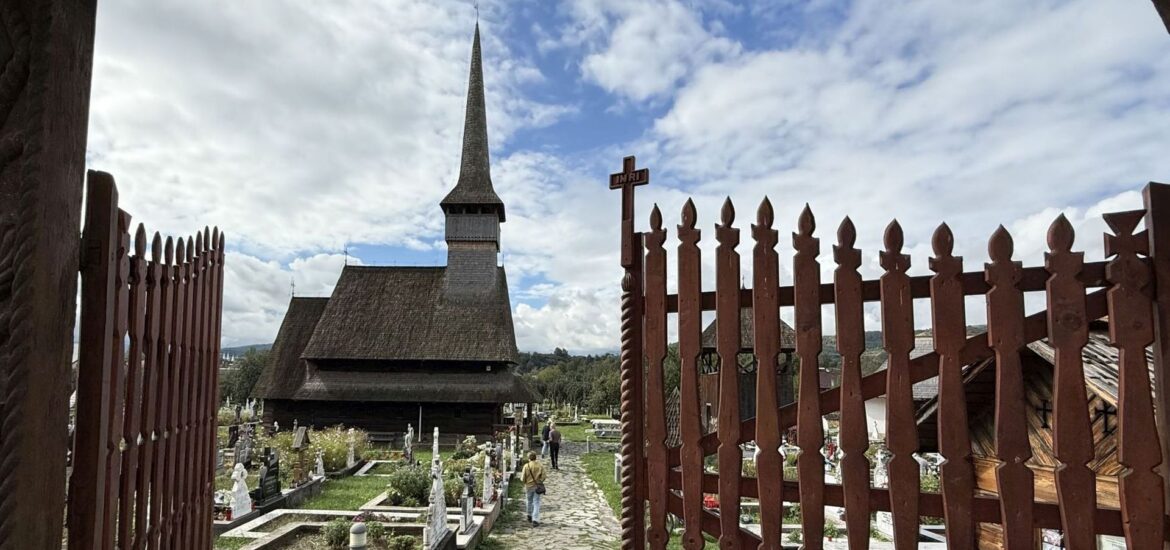
Maramures is also known as the ’land of wood’; here you will find traditional houses made of wood, carved wooden gates and also centuries-old wooden churches. Around 300 of them were built in the 17th and 18th centuries. As they were constructed without the use of nails, it was not easy to preserve them. Nowadays you can still find almost 100 wooden churches in Maramures. In 1999, eight of these churches were included in the UNESCO World Heritage list.
How is it possible that these churches survived the period of communism in Romania? Well, as it was far away from the capital Bucharest, Maramures was somehow protected from the iron grip of the Ceausescu’s regime. Due to this, these modest wooden churches were not destroyed, unlike the churches in other parts of the country. They could thus play an important role in preserving local customs, culture and community spirit.
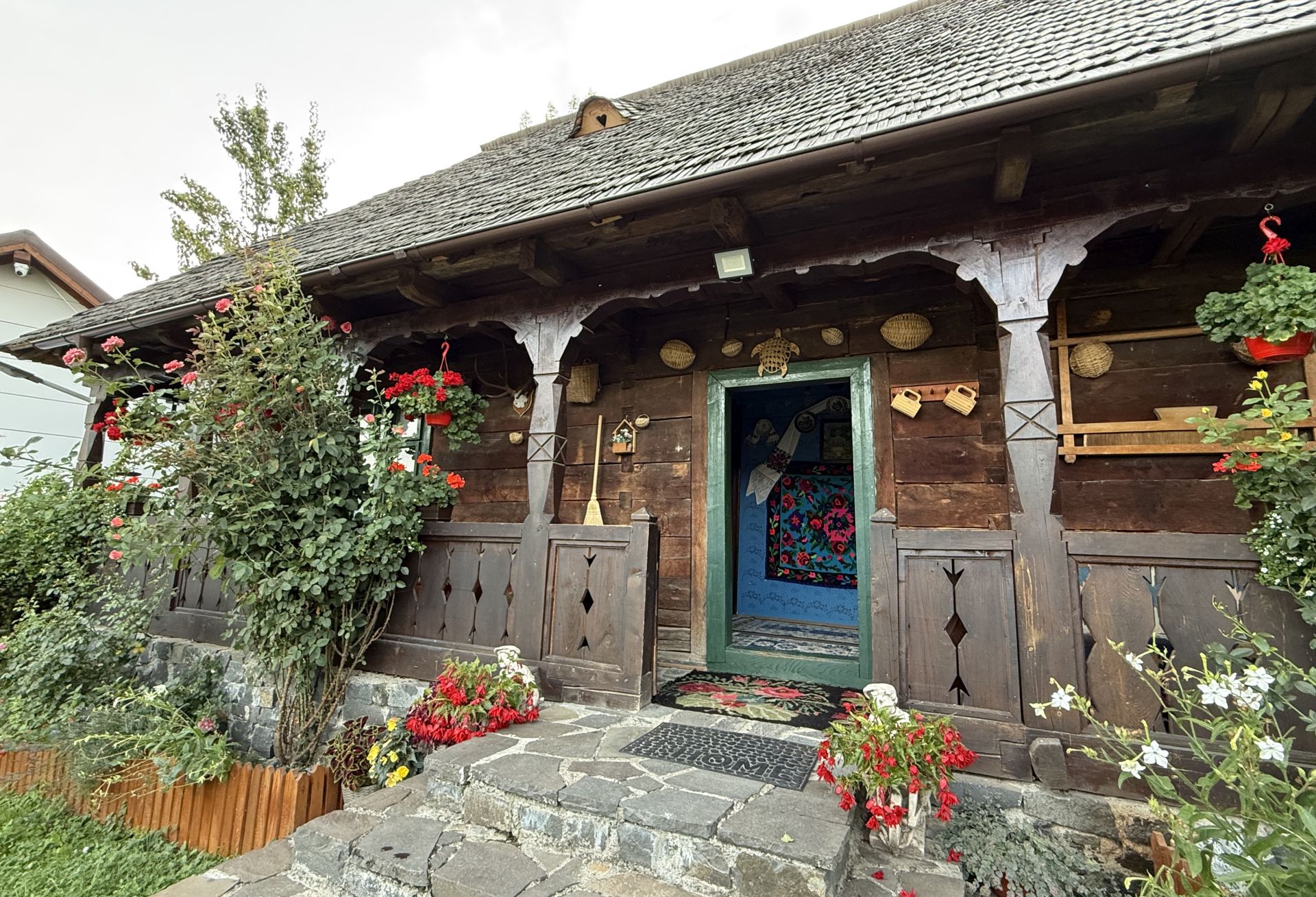
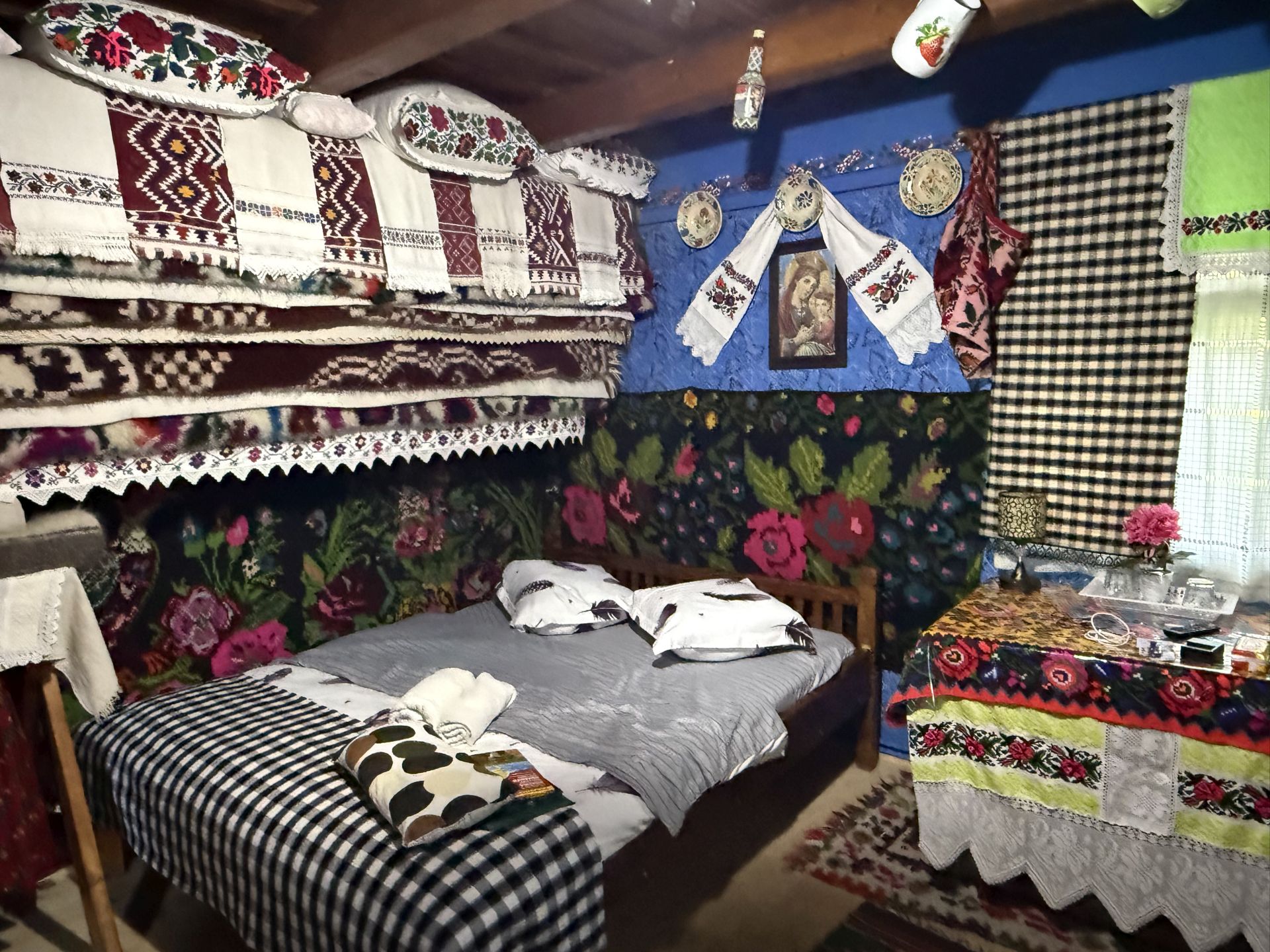
We spent a few days in Breb, a village that felt like the set of a historic movie. We found accommodation in a traditional wooden house, where our room looked like an ethnographic museum. Glass-painted icons, colorful carpets, ceramic plates and wooden utensils on the walls …I must admit, we were flabbergasted…
But one thing is for sure: I will never forget the hospitality of our hosts, the tasty natural food they served and the feeling that time is lost in this quiet village. Wandering through the dirt streets and meeting the friendly inhabitants gave us a deep insight into the daily lives of the local people.
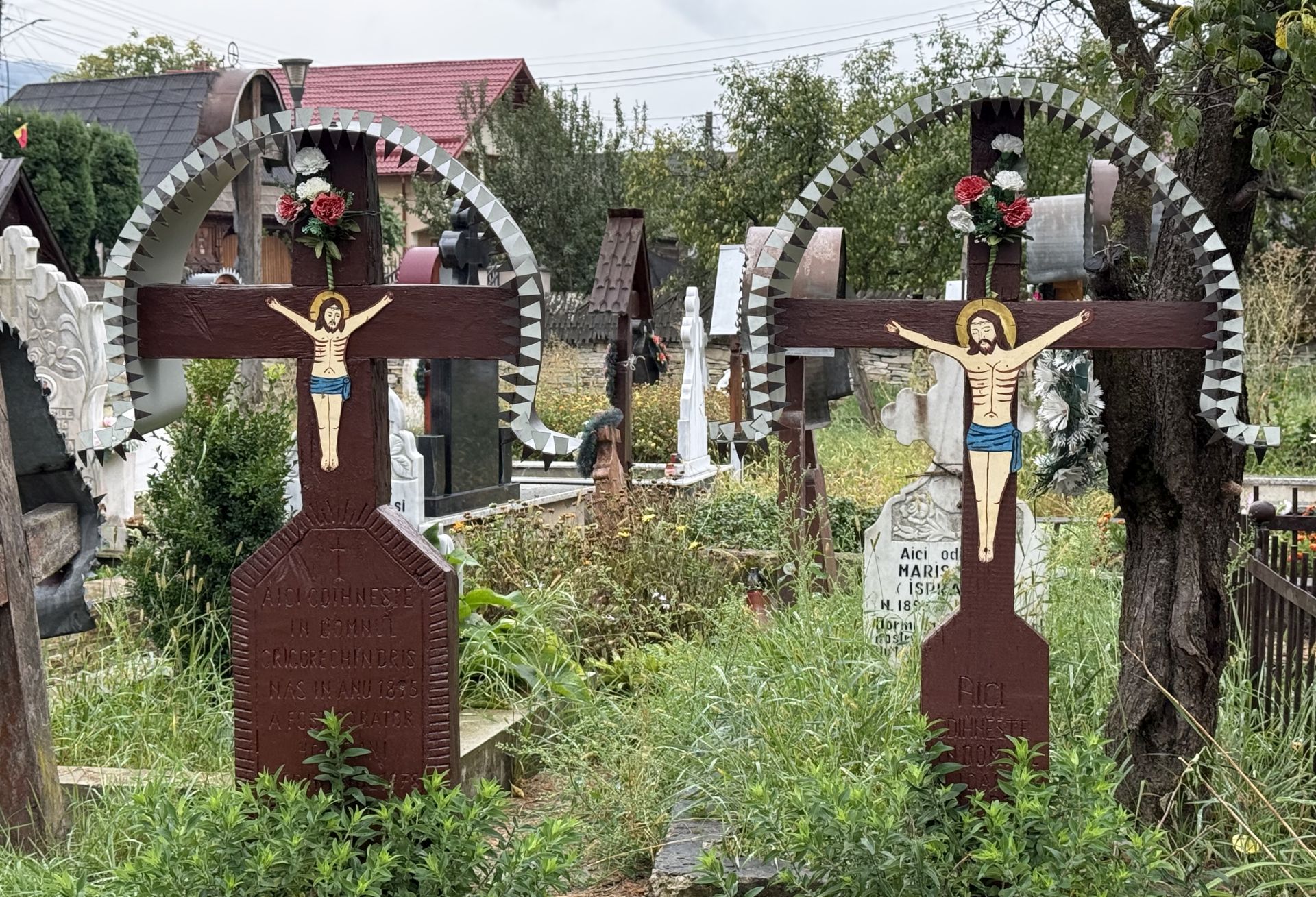
Roaming around the region, we discovered many wooden churches and admired their unique architecture and impressive interiors. The picturesque graveyards around them appeared to be a real eye-opener; I have never seen such graves before, as many of them were decorated with ‘naïve’ Orthodox crucifixes.
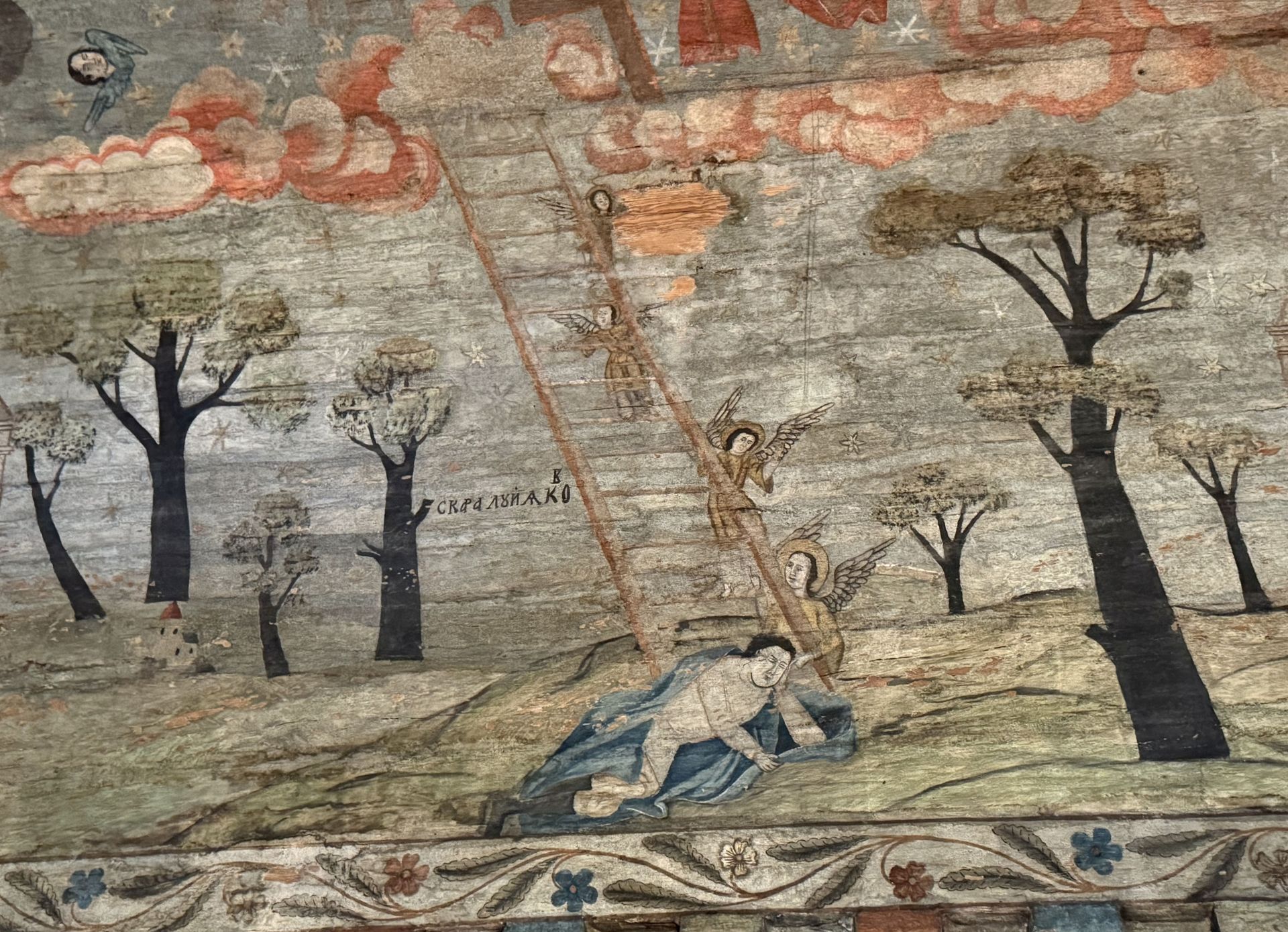
Why did the people in Maramures build such wooden churches? That is easy to understand. The Habsburg rulers, who have controlled the area for centuries, imposed a ban on the use of stone and brick for the construction of Orthodox churches. As a reply, local builders started building churches in wood. They built churches from oak wood with high, slender bell towers and steep, shingled roofs. This is now often described as ’the Gothic style of Maramures’. The interior walls were painted by local artists, with biblical scenes often juxtaposed against the familiar landscape of the village.
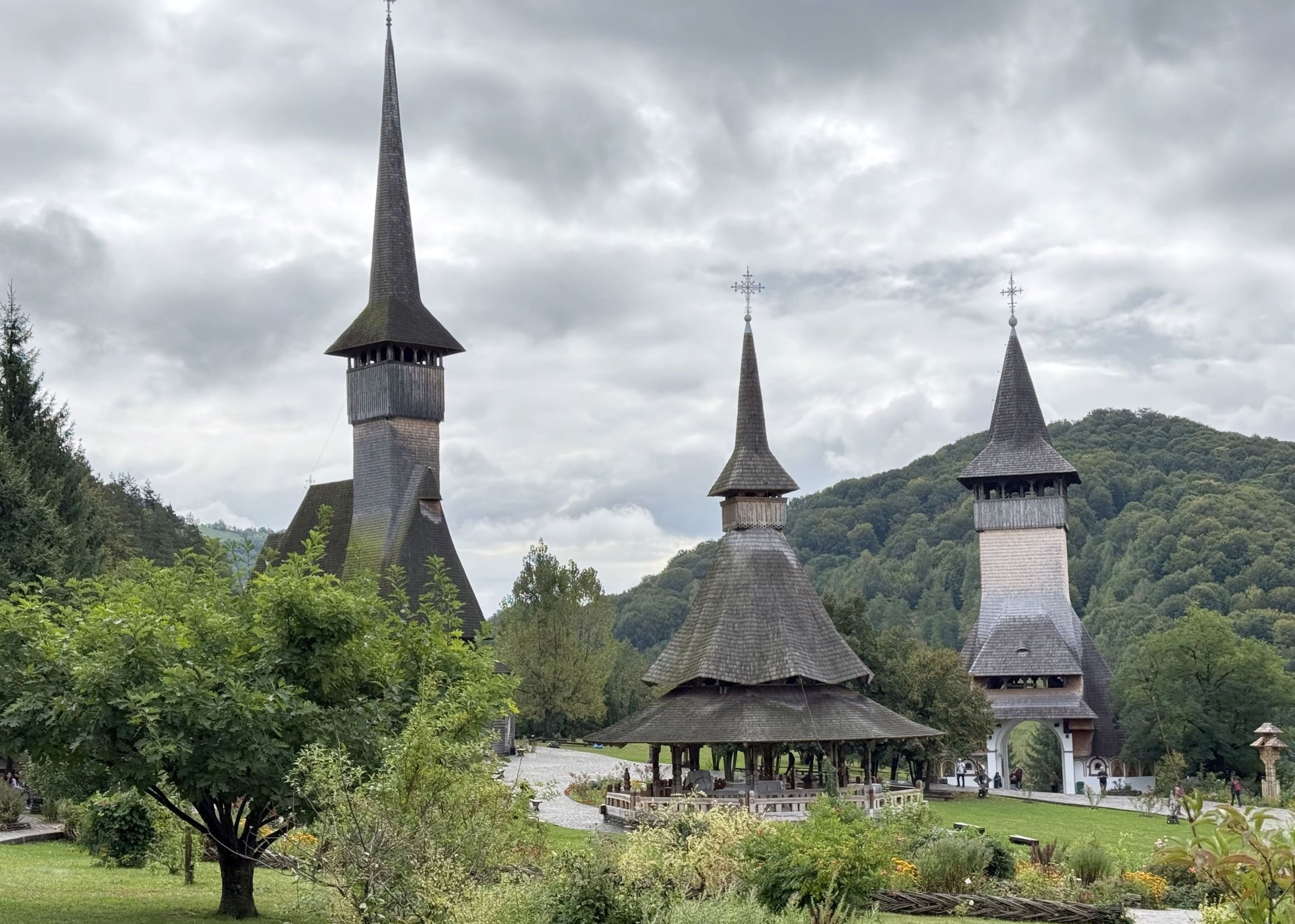
Although some churches were closed when we arrived, we could still visit several of them for a small entrance fee. There were no tourists and it was a great experience to watch the naive frescoes and to wander around the graveyards without being disturbed.
One of the most famous churches we visited was Barsana, built as a monastery church in 1720. It is named after ’barsani’, the local breeders of long-haired sheep. The church of the Entry of the Virgin is one of the tallest wooden churches in Romania, standing 57 meters high. In 1791, the church was moved closer to the village, on Jbar Hill. According to a legend, the villagers considered that the plague victims, who were buried on this hill without a funeral service, would only find peace if the church was moved to the burying grounds.
It is impossible to mention all churches we have seen, but I will describe a few of them that left an unforgettable impression on us:
A magnificent wooden church made of fir is located in Ieud. It was probably built in the 17th century and it has a very interesting graveyard. The oldest document in Romanian, the ‘Codex of Ieud’ dating from 1391 was discovered in the attic of the church in 1921. The interior walls are completely covered by murals, made by Alexandru Ponehalski in 1792.
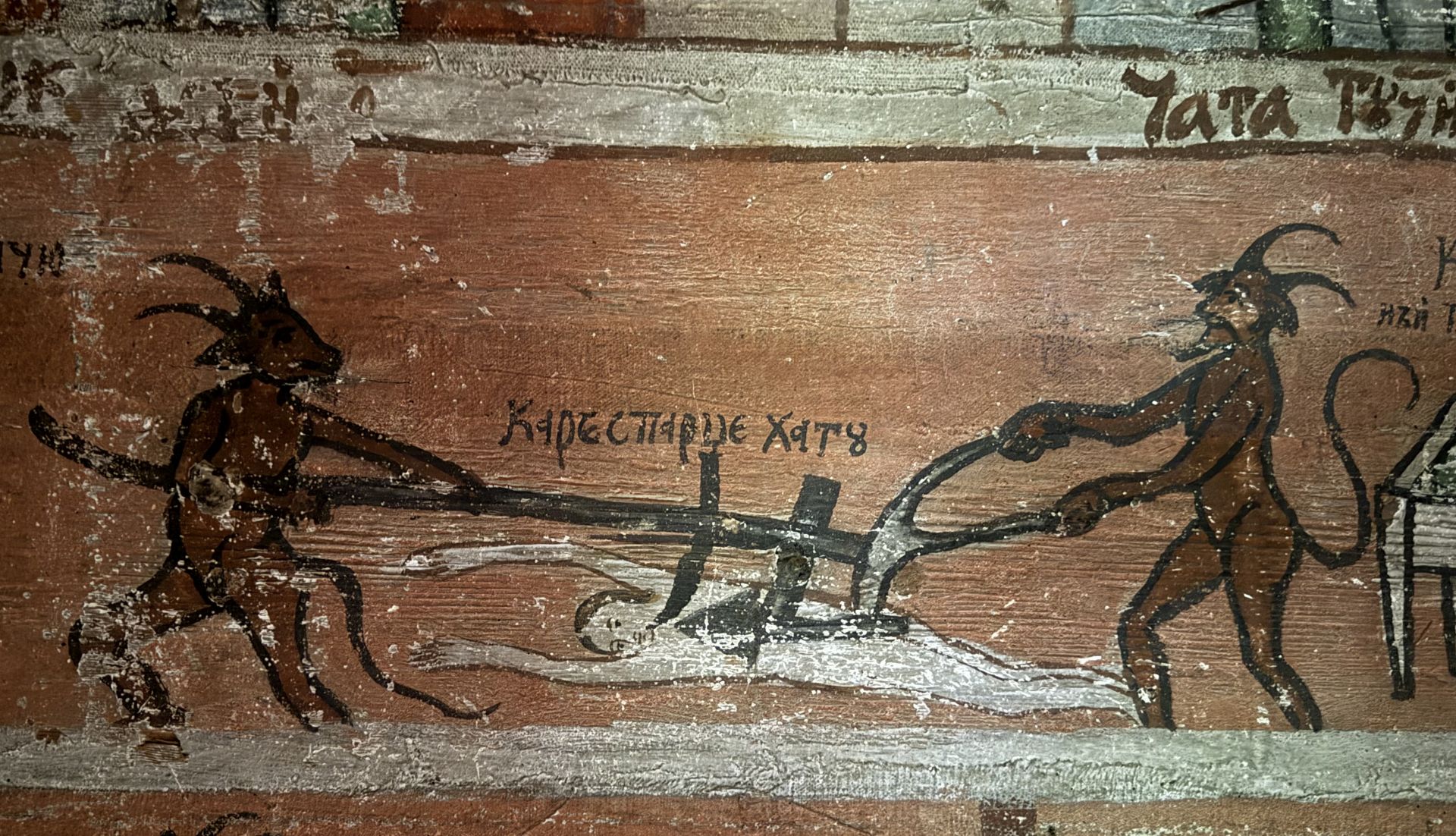
We had learned that the church of Saint Parascheva in Poienile Izei, built in 1632, was ‘famous’ for its cruel frescoes. And indeed, we were horrified to see these rather primitive paintings that show how sinners can be punished for sins and lack of faith: a liar is hanged by his tongue; a farmer gets plowed by two devils for stealing his neighbor’s land, a mother is forced to swallow her aborted baby…
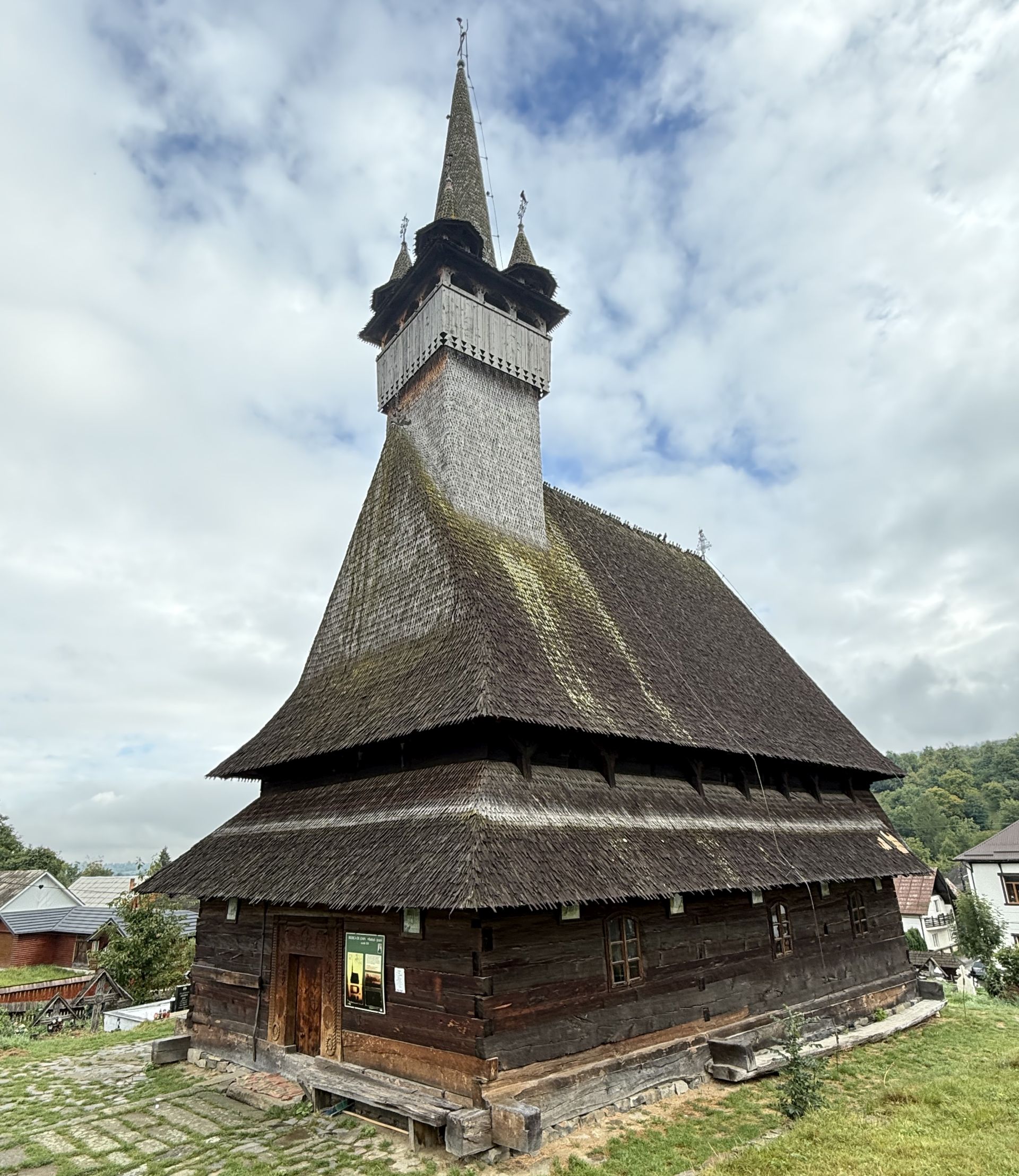
The church of Budesti was built from oak in 1643 and dedicated to Saint Nicholas. I was really impressed by the paintings (made around 1760), but also by the 15th-century wooden icons and the important collection of glass-painted icons. The belfry of the church is surrounded by four smaller turrets.
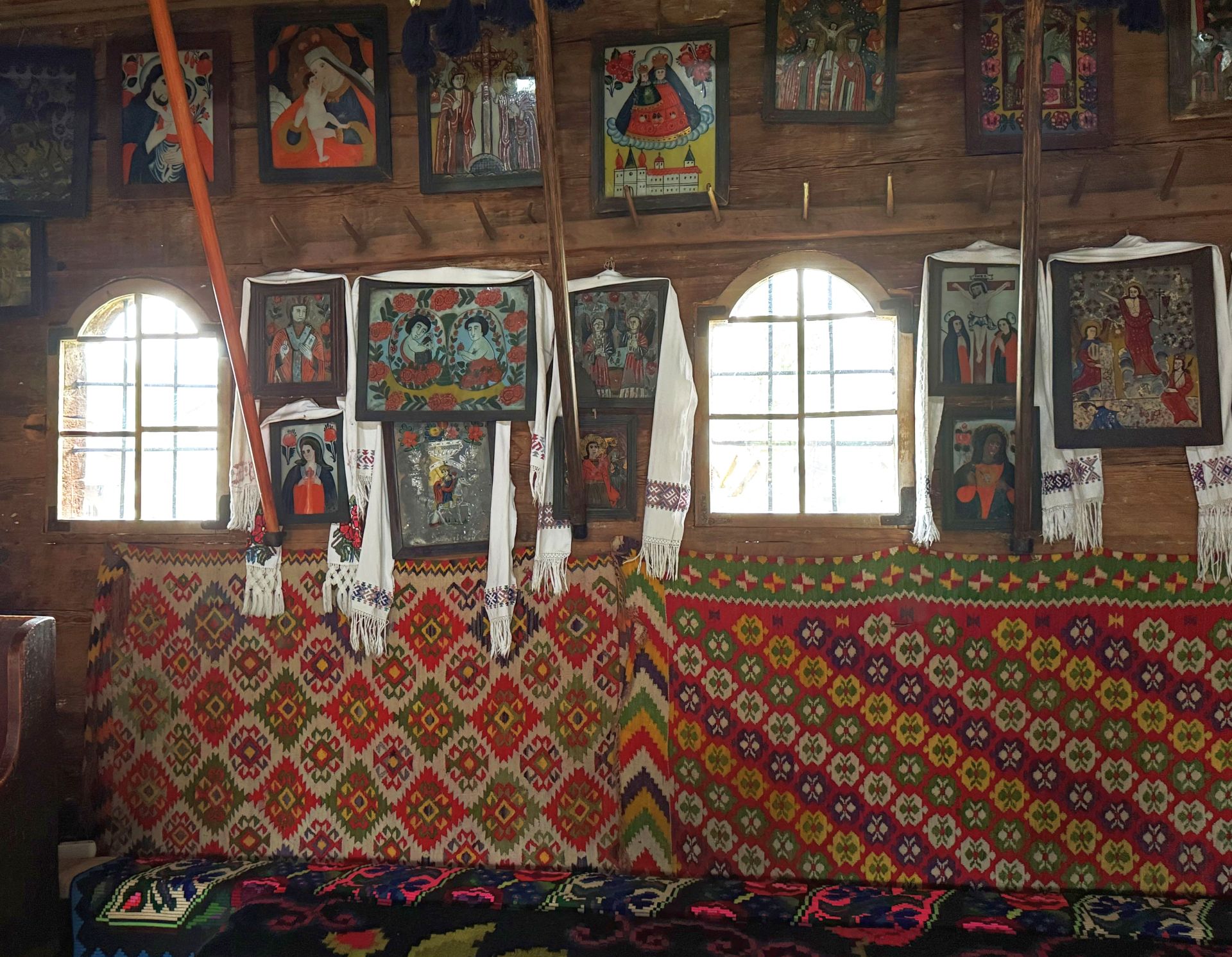
The church of the Holy Archangels in Rosavlea is not on the UNESCO World Heritage list, but I found the naive frescoes on the interior walls amazing. They date back to the 18th century and they were painted with vegetal colors on wood and fabric.
We visited many other places in Maramures, we admired the wooden gates and the beautiful nature, we made a train journey with the Mocanita steam train and visited the Merry Cemetery of Sapanta …Maramures was an eye-opener for us, a region I warmly recommend as destination for an adventurous road trip!