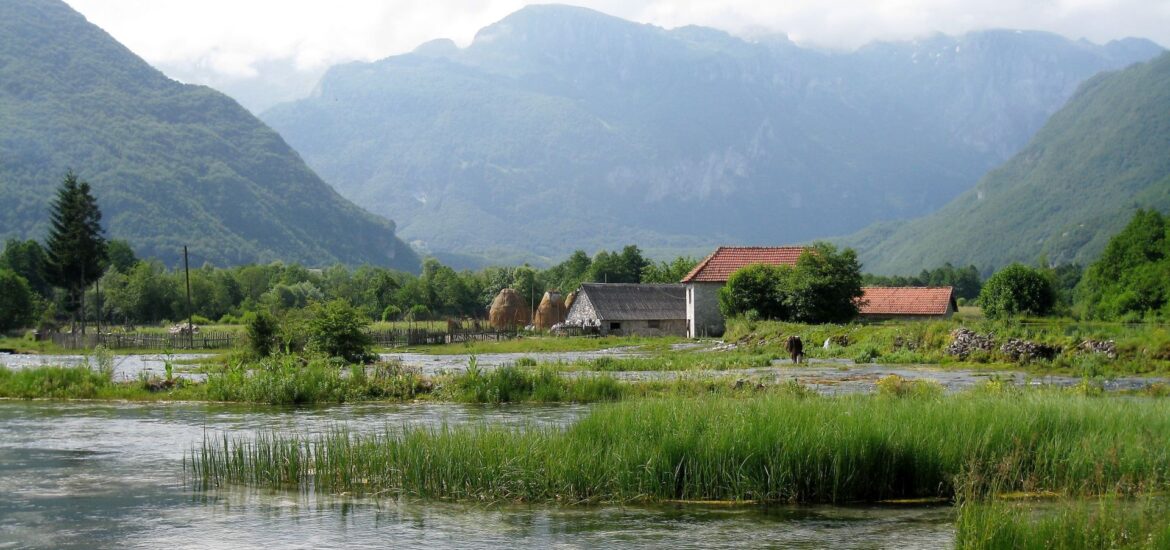
It has been a long time since we have visited the Prokletije National Park. It is not easy to reach this region in the far northeast of Montenegro, due to roadworks on various sections. But there is a good solution: if you take the Kelmend road through Albania, you will arrive within two hours, if you start from Podgorica.
Follow the road through the Cijevna (Cem) Canyon, pass the border crossing in Grabom and continue all the way to Gusinje (border crossing Bashkim/Grnčar). You will be surprised: no crowds, rare traffic, an amazing road with breathtaking mountain views.

Plav and Gusinje are widely recognized as the principal gateways to Montenegro’s Prokletije National Park, also known as the Accursed Mountains. Both towns are situated at the foot of the Prokletije mountains, which makes them natural starting points for exploring the national park and its many trails and natural wonders. Plav is also considered the most convenient starting point for the Peaks of the Balkans trail in Montenegro.
Trying to avoid the heat in Podgorica, we made this day trip last week. We enjoyed the dramatic mountain scenery along the Kelmend road; there was no one at the border crossing of Grnčar and we made a first stop at the Ali Pasha’s springs, just a few kilometers south of Gusinje.
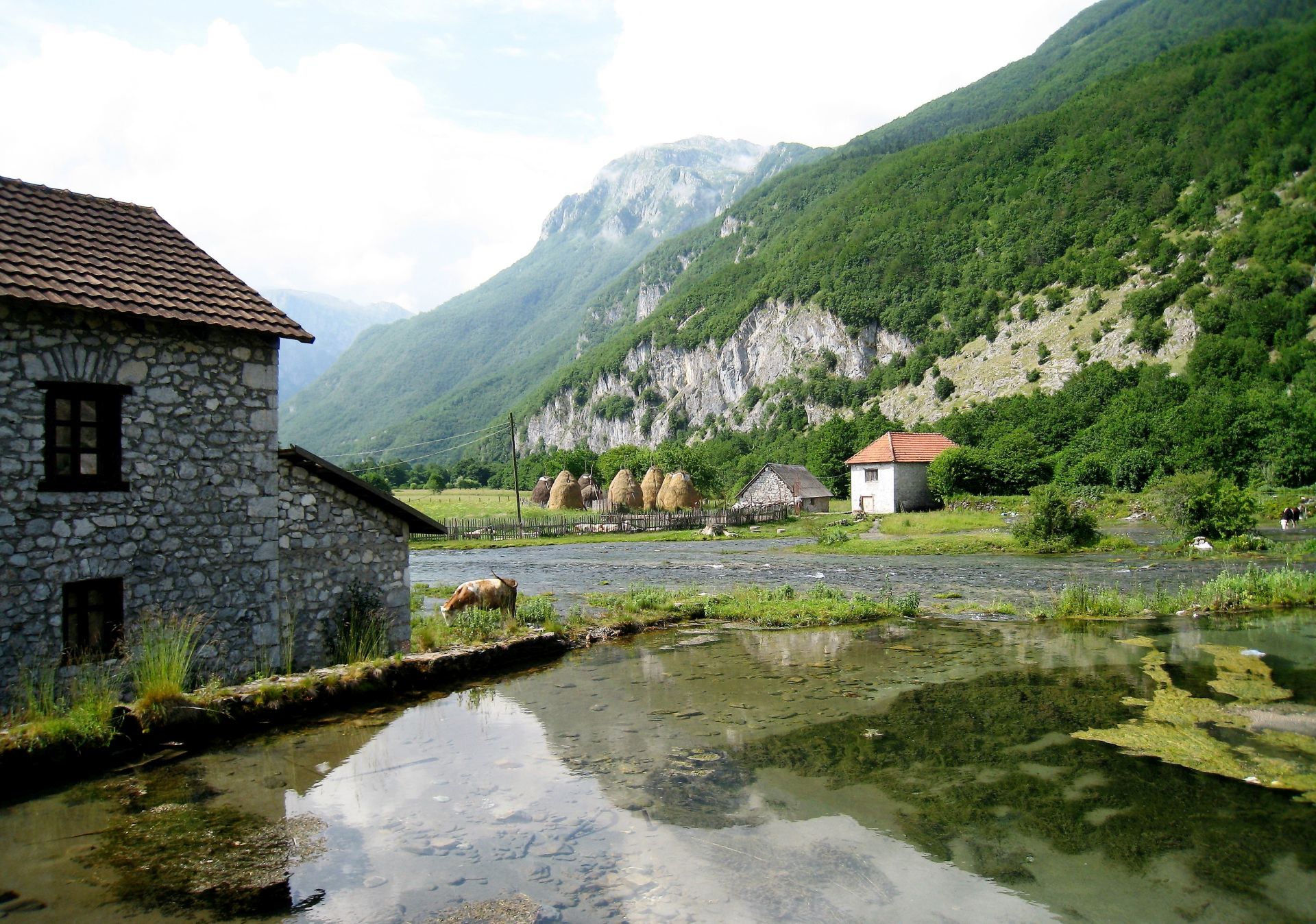
What a peaceful place! The crystal-clear water emerges from around 25 small springs and forms a shallow pool that ultimately becomes the Vruja river, which flows into Lake Plav. The springs have always been a freshwater source and a social gathering point for the local villagers. Every August 2nd, expats from the region gather here for the Festival of the Diaspora.
By the way, did you know that the springs are named after Ali Pasha Shabanagaj, a 19th-century Ottoman governor from Gusinje?
We made a walk around the springs and enjoyed the fresh air, as the springs are situated at an altitude of 925 meters above sea level.
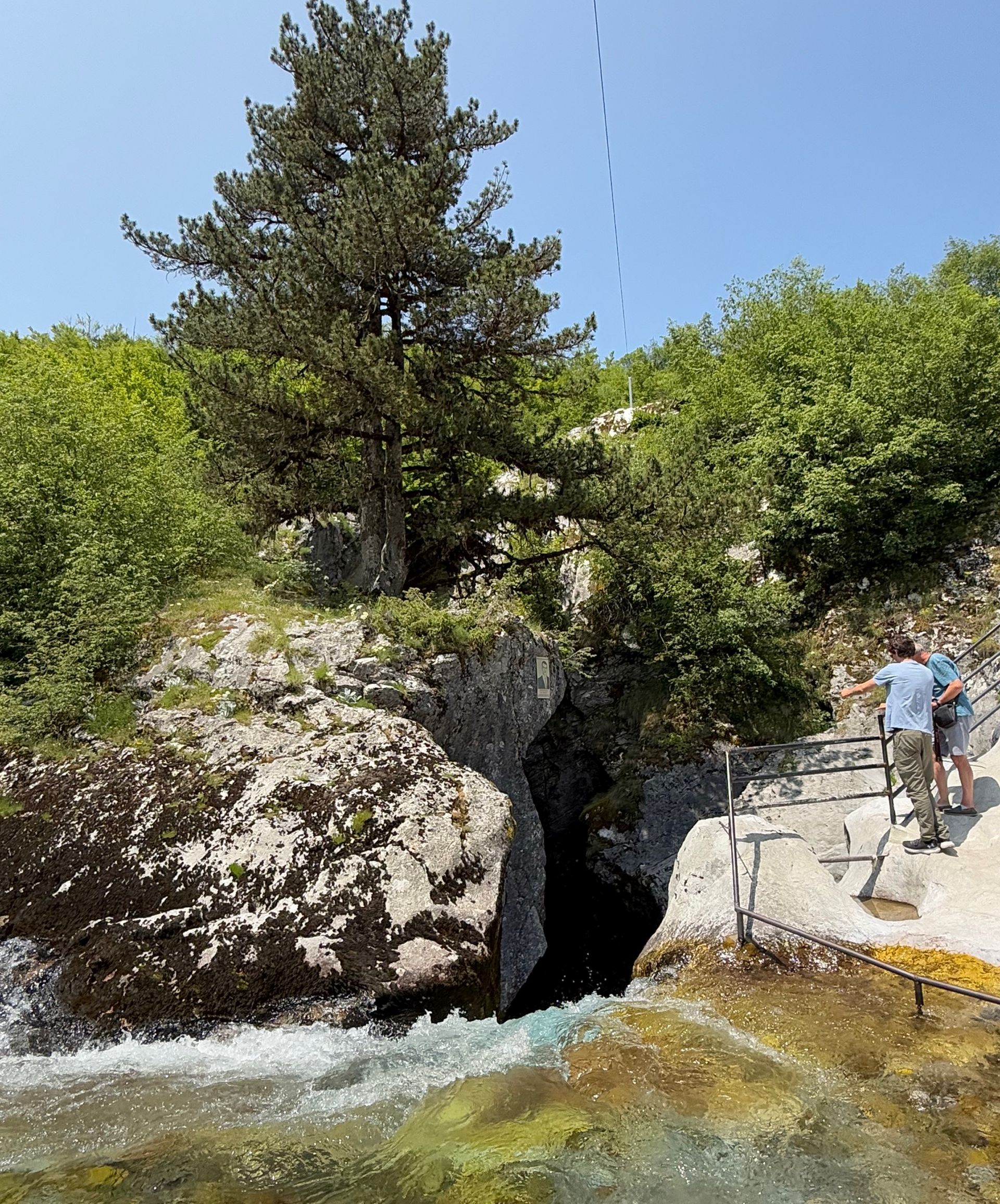
Our next stop was the Grlja waterfall, which is easily accessible from Gusinje. We drove about 4 kilometers to the village of Vusanje and parked our car in front of the restaurant next to the waterfall. Years ago, the place was not protected by a fence, which made it very dangerous to approach the canyon, as the waterfall drops approximately 15 meters into a deep natural pool. Nowadays, the area is ensured by iron railings and concrete climbing rocks, which makes it less attractive, but certainly helps protect visitors from falling hazards.
From the Grlja waterfall, there is a walking trail that leads to Oko Skakavice (‘The Eye’). The walk through the forest and along the Skakavica river lasts around 20-30 minutes, but you can also continue by car: just take the dirt road that leads to the Ropojana Valley.

Oko Skakavice is a natural karst spring that looks like a lagoon-like pool surrounded by lush forest. It resembles a blue-green eye with a 8-meter-deep hole in its center that looks like the pupil of an eye (photo: Portal Analitike).
These natural wonders, which are part of the Peaks of the Balkans Trail, are really amazing – but when we were there, there were no visitors at all…..
Of course, we were quite curious to see the Grebaje valley, which was relatively untouched when we visited it for the last time, around 5-6 years ago.
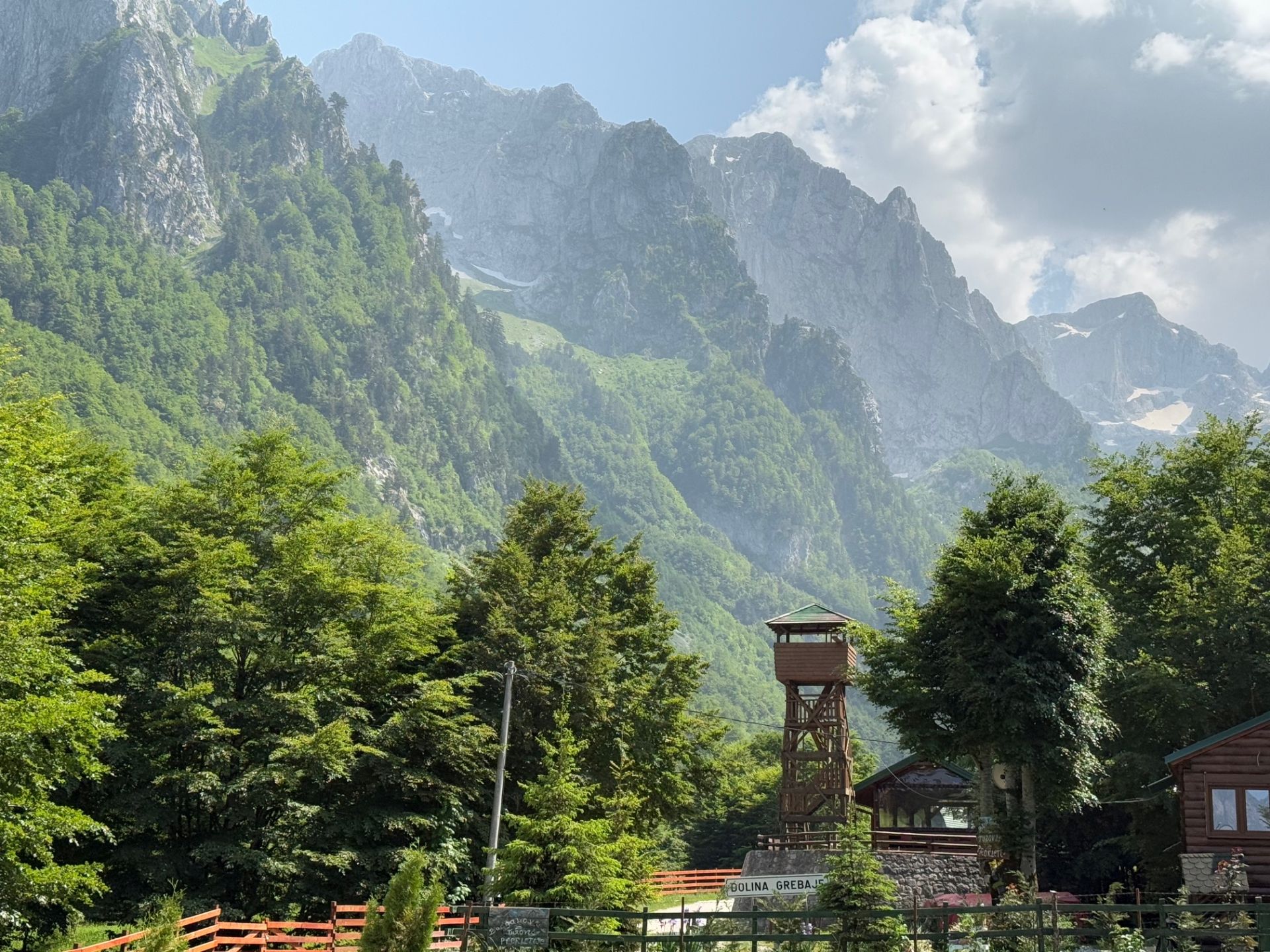
The Grebaje valley is located in the heart of Prokletije National Park, around 7 km from Gusinje. It offers access to high peaks such as Talijanka, the Karanfil massif, Volušnica and Popadija. It used to be a quiet hideaway in the mountains, a paradise for hikers, mountaineers and nature lovers.
Unfortunately, illegal construction has become a problem. Although this valley is within the boundaries of the protected national park (this is also the place where you pay entrance tickets: € 3.00 per person), many illegal structures have been built here without permits. What a pity!
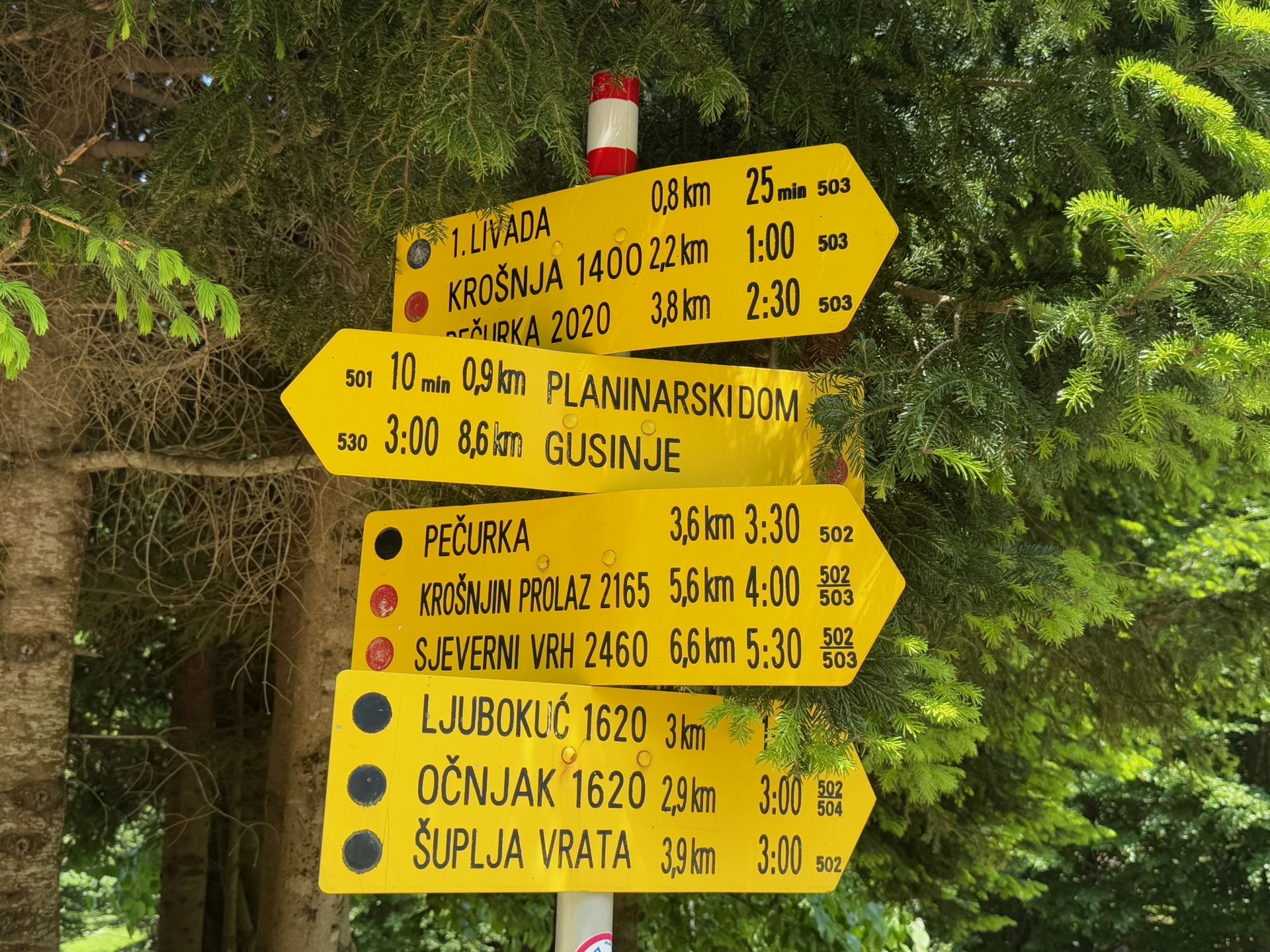
Finally, we visited Plav, well-known for its stunning natural environment and beautiful lake. Lake Plav is the largest glacial lake in the region, a perfect spot for walking, birdwatching and fishing.

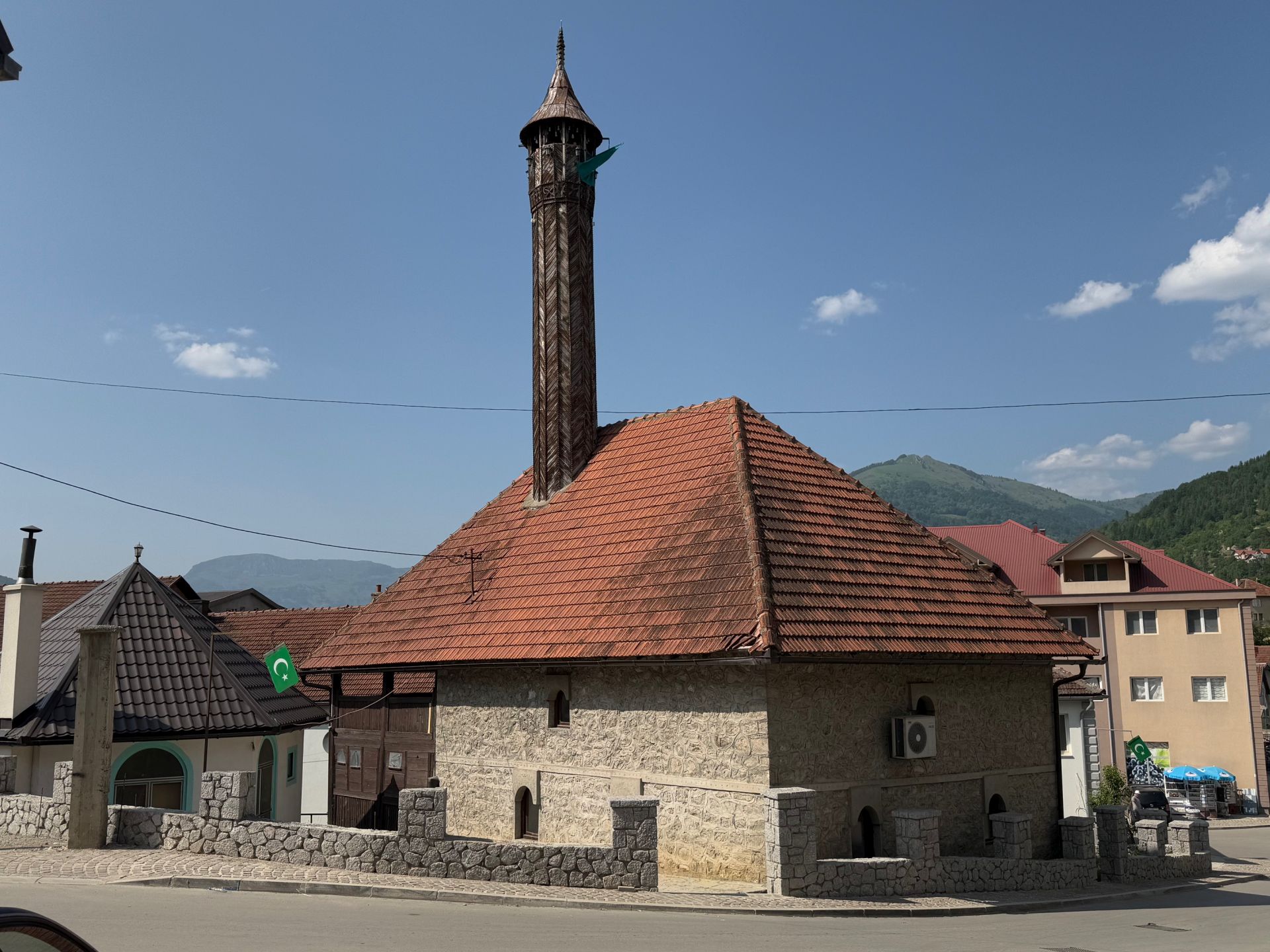
Plav is also home to the 17th-century Redžepagić Tower, where you can find ethnographic exhibits (if open). Several old mosques with wooden minarets and porches show a uniqe blend of local tradition, available materials and Ottoman-era craftmanship. Such minarets were made of pine wood, which is commonly available, and they are typical for this region.
Altogether it was a wonderful day trip in the region of Prokletije, far away from the crowds on the coast, far away from the heat wave in the central part of Montenegro.
Plav and Gusinje, with their natural and cultural attractions, are amazing places to visit!