Together with the villages of Muo and Stoliv, Prčanj is located on the northeastern slope of the Vrmac peninsula. In the Middle Ages, noble families from Kotor had their own estates with vineyards and olive groves in this area.
While the noblemen built summer houses on the coast, rural settlements were formed on the slopes of Vrmac. At that time, a road was built that runs parallel to the coast, at an altitude of 150-200 meters above sea level. This road, also called the ’Upper Medieval Road’, is notable for its transverse paths – smaller connecting routes crossing the main path and linking various medieval sites, farm estates and terraced agricultural plots.
One of such transverse paths leads from the waterfront in Prčanj to the Old Parish Church. A walking tour to this remarkable historical and architectural landmark is a wonderful experience.
The trail starts near the coast in the Grasovo area and initially follows a narrow asphalt road that becomes a horse trail with steps as it ascends. The total walk takes about 30 minutes one way. It does not require special physical conditioning, but the steepness demands a reasonable level of fitness and sturdy footwear.
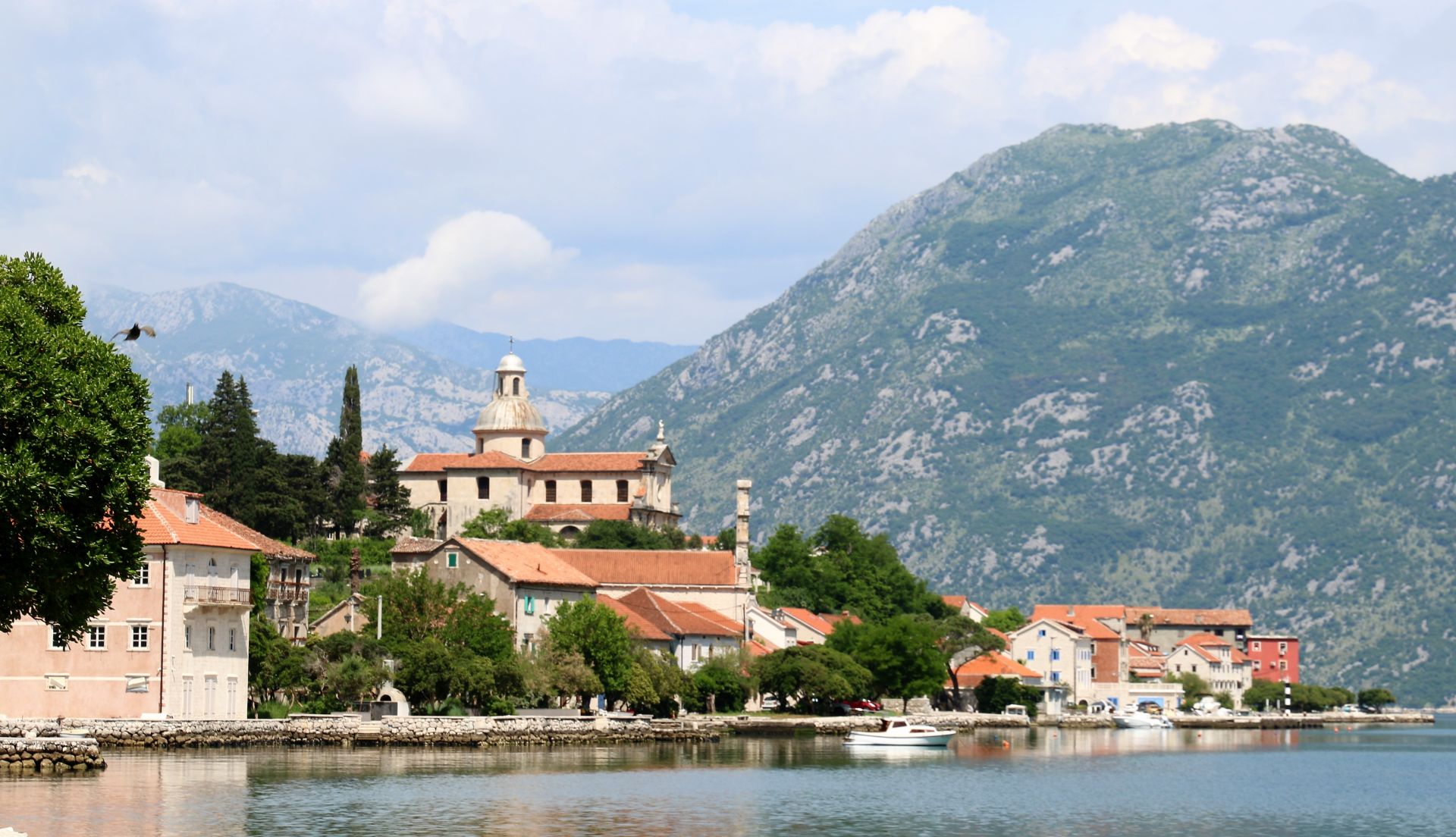
But first visit the Church of the Virgin Mary, also known as the Church of the Nativity of the Blessed Virgin Mary. This monumental Baroque church is the largest Roman Catholic church in the Bay of Boka Kotorska. Its construction began in 1789, but due to various circumstances, it was completed only in 1908. The church contains valuable works of art, votive paintings and silver and gold objects. It is particularly interesting that two wooden altars from the 17th century, which were transferred from the Old Parish Church, are now kept in this church. The icon of the Virgin of Prčanj, which supposedly has miraculous powers, was also transferred from the Upper Church.
Now take a look at the Verona Palace, a Baroque palace from the 18th century which is the largest in Prčanj. It is located near the Church of the Virgin Mary (further in the direction of Tivat). There, immediately to the right of the palace, begins a very narrow asphalt road that leads steeply uphill. The asphalt ends approximately halfway and turns into a horse trail with steps.
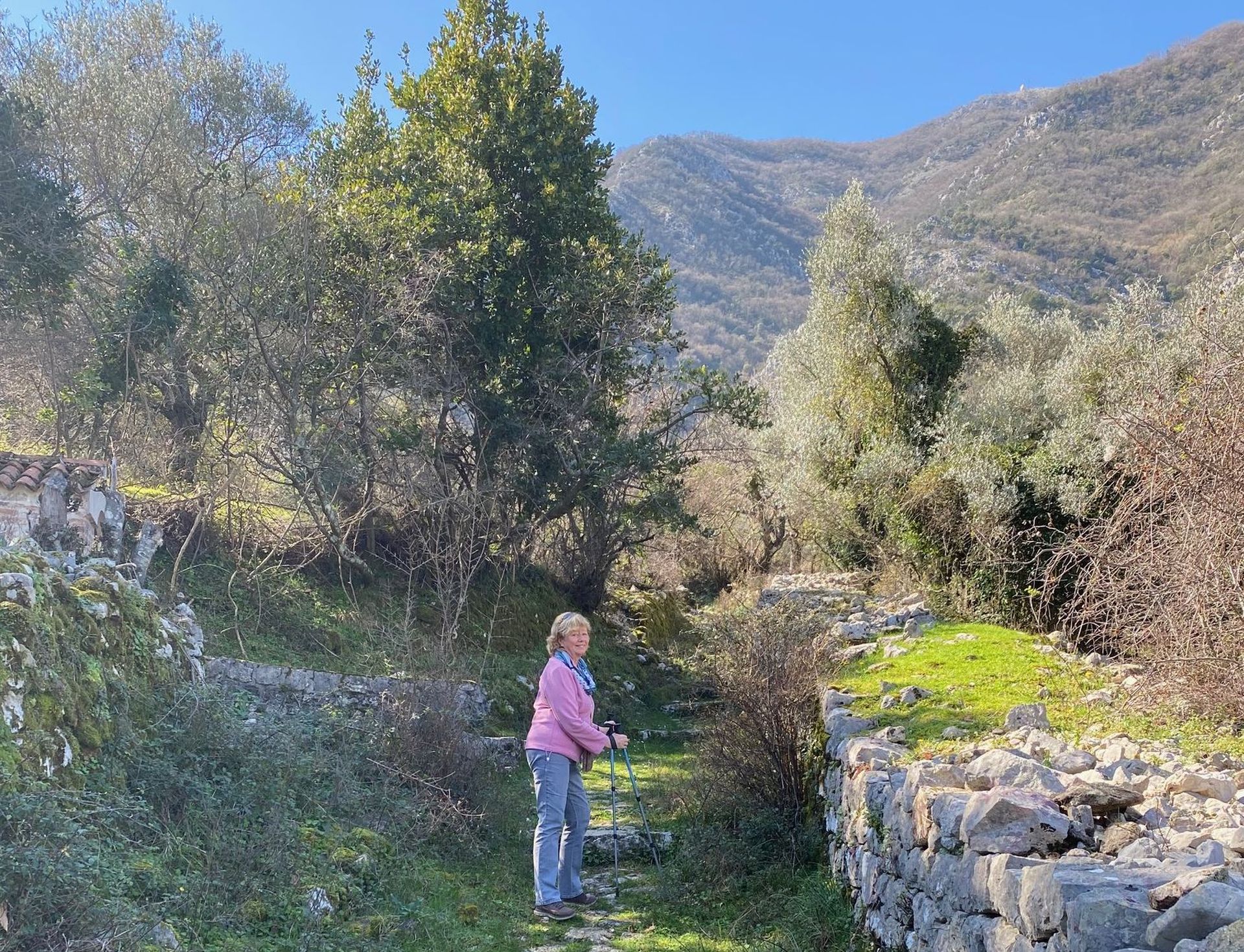
Along the pathway you will see several old houses and – if you are lucky – you will be greeted by one of the villagers, Mr. Rizoniko, who had sailed around the world for 30 years, but has now retired to his old family home, where he tends his vineyards, orchards and olive groves. If you are interested, he will be happy to tell you details about the history of this area and especially about the history of the Old Parish Church that is located further uphill.
Next to the path is the Mother of Help chapel. Inside you will see a stone relief of the Virgin with the inscription MAJKA OD POMOĆI (Mother of Help). This chapel serves as a spiritual waypoint for travelers and locals walking the old path, reflecting the religious traditions of the region. It was restored in 1860 by Captain Jozo Verona.
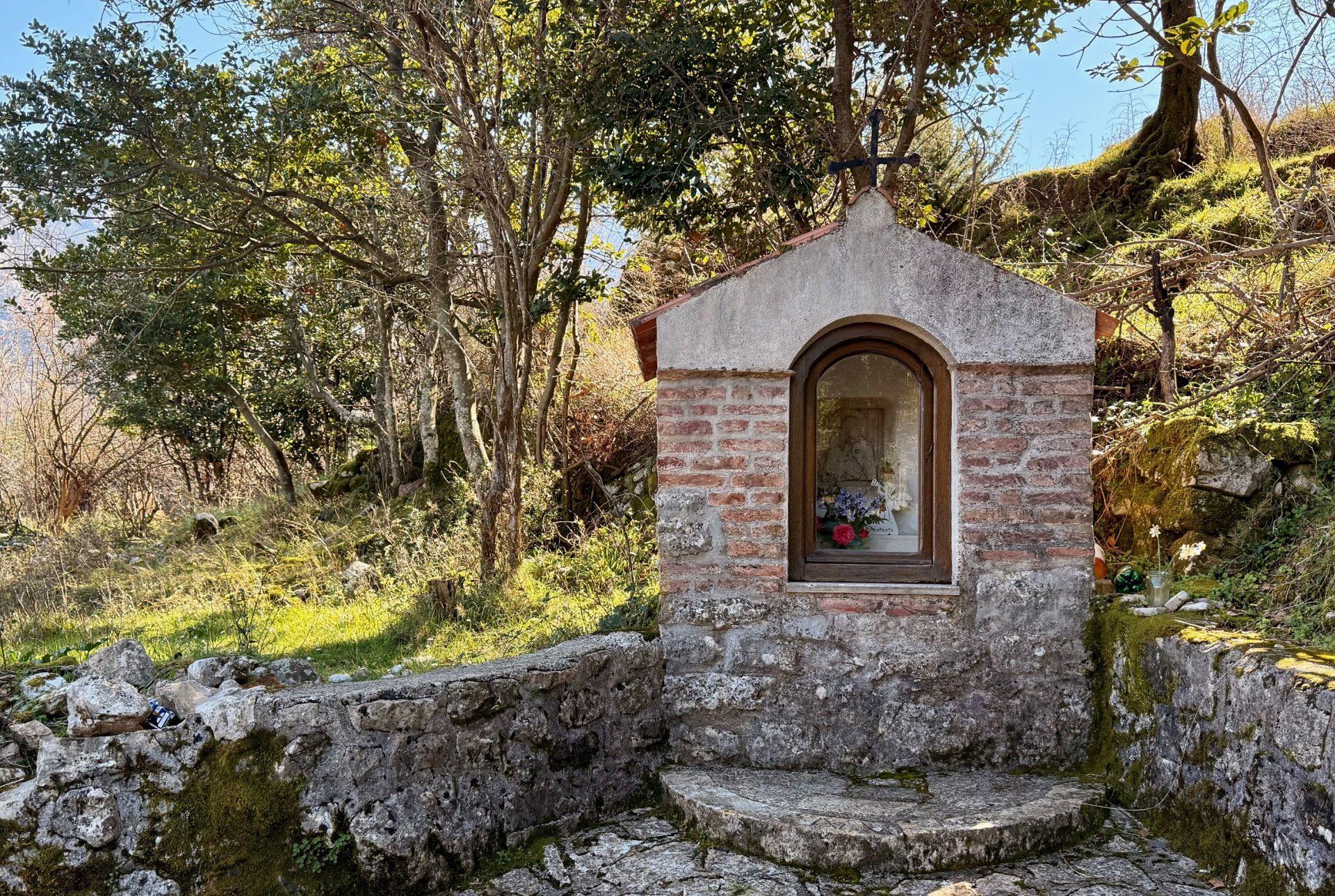
Why was such a small chapel built just here? The reason is simple: this place served as a resting place for those who were in charge of carrying the coffins of the deceased to the Upper Church to be buried, which must have been very tiring at the time.
Now you enter a zone with arable land, vineyards, terraced orchards and olive groves, separated by dry stone walls. An interesting fact is that mulberries were planted here in the 19th century for the needs of the silk industry. Silk making in the Bay of Kotor had been developed since the Middle Ages, but was interrupted in the Venetian period. Can you believe that two silk factories were still active in Prčanj in the middle of the 19th century?
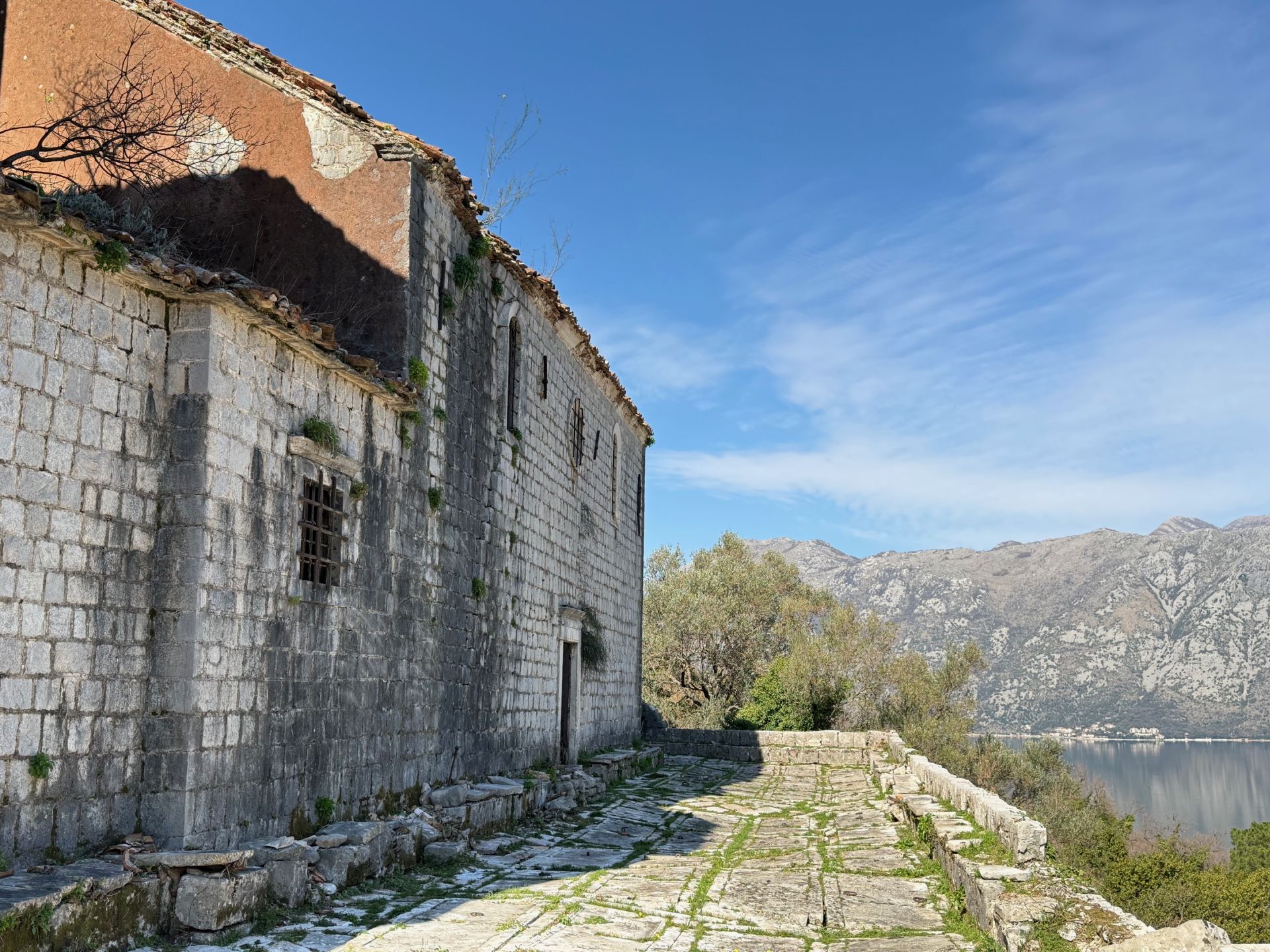
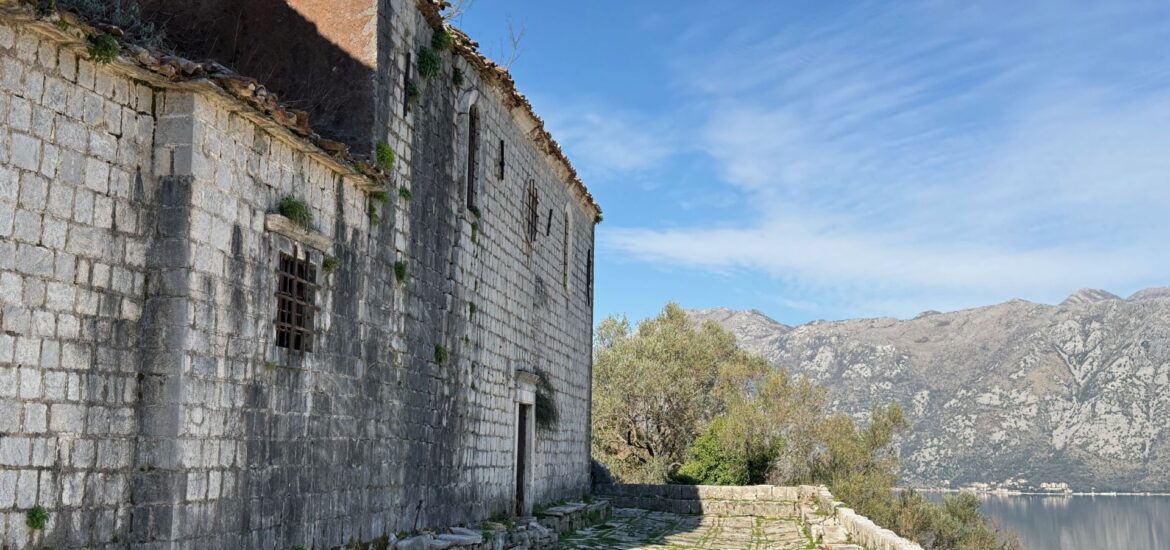
The terrain is quite steep, and soon you will join the Upper Medieval Road from Glavati to Stoliv. Turn left and after 10 minutes you will notice, above Mediterranean vegetation, the bell tower of the Old Parish Church. This church was probably built in 1399. It was rebuilt in 1672 and expanded with the addition of a large nave. According to the inscription above the door, Kotor bishop Marin Drago consecrated the church in 1705. After that, in 1740, an octagonal chapel with a dome was added.
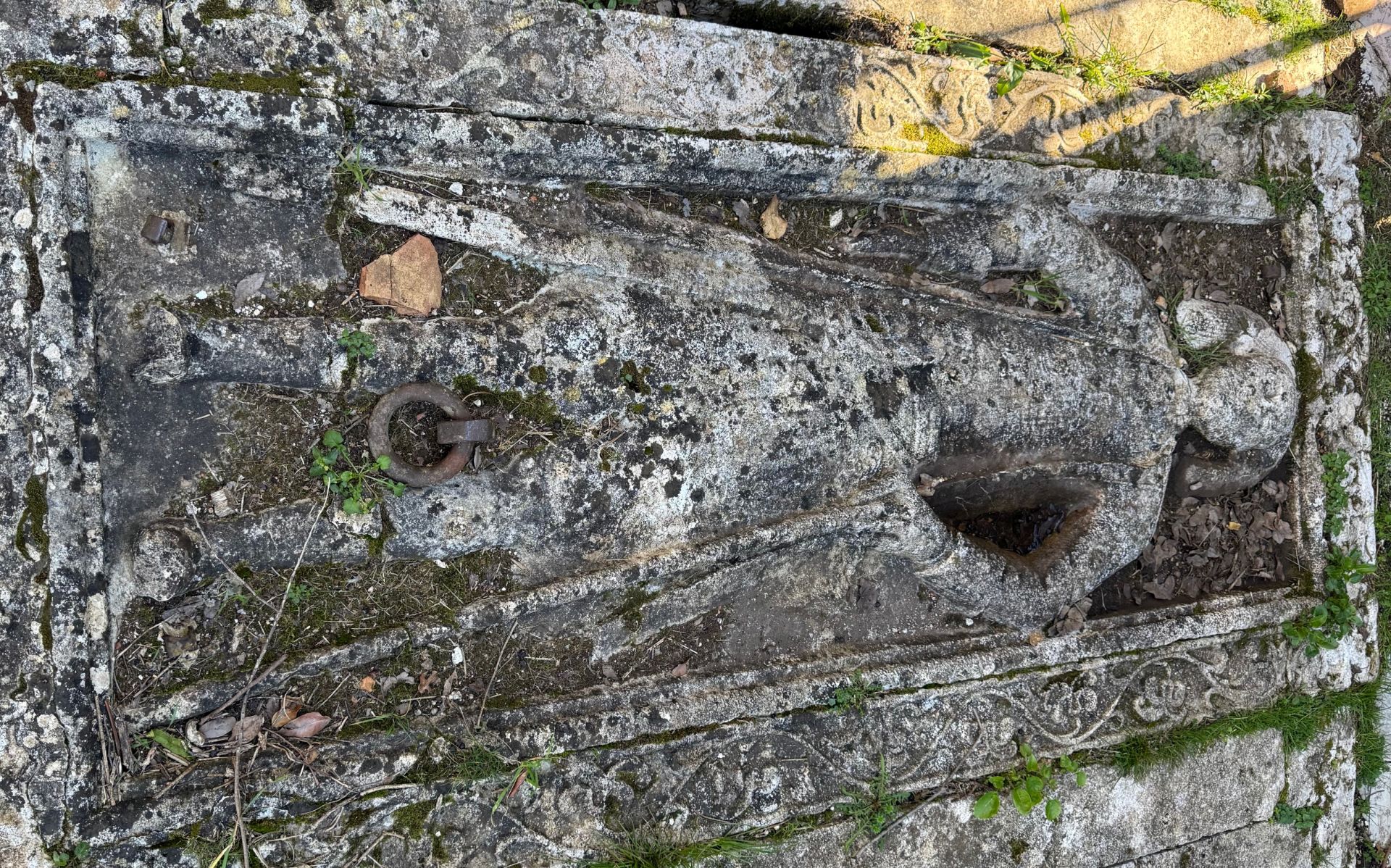
Open the rusty gate to the courtyard. You will immediately notice that the church is in danger of collapsing due to large cracks in the wall. In front of the church is a cemetery with very old tombs: one shows the date 1680, and another one shows the stone relief of a knight.
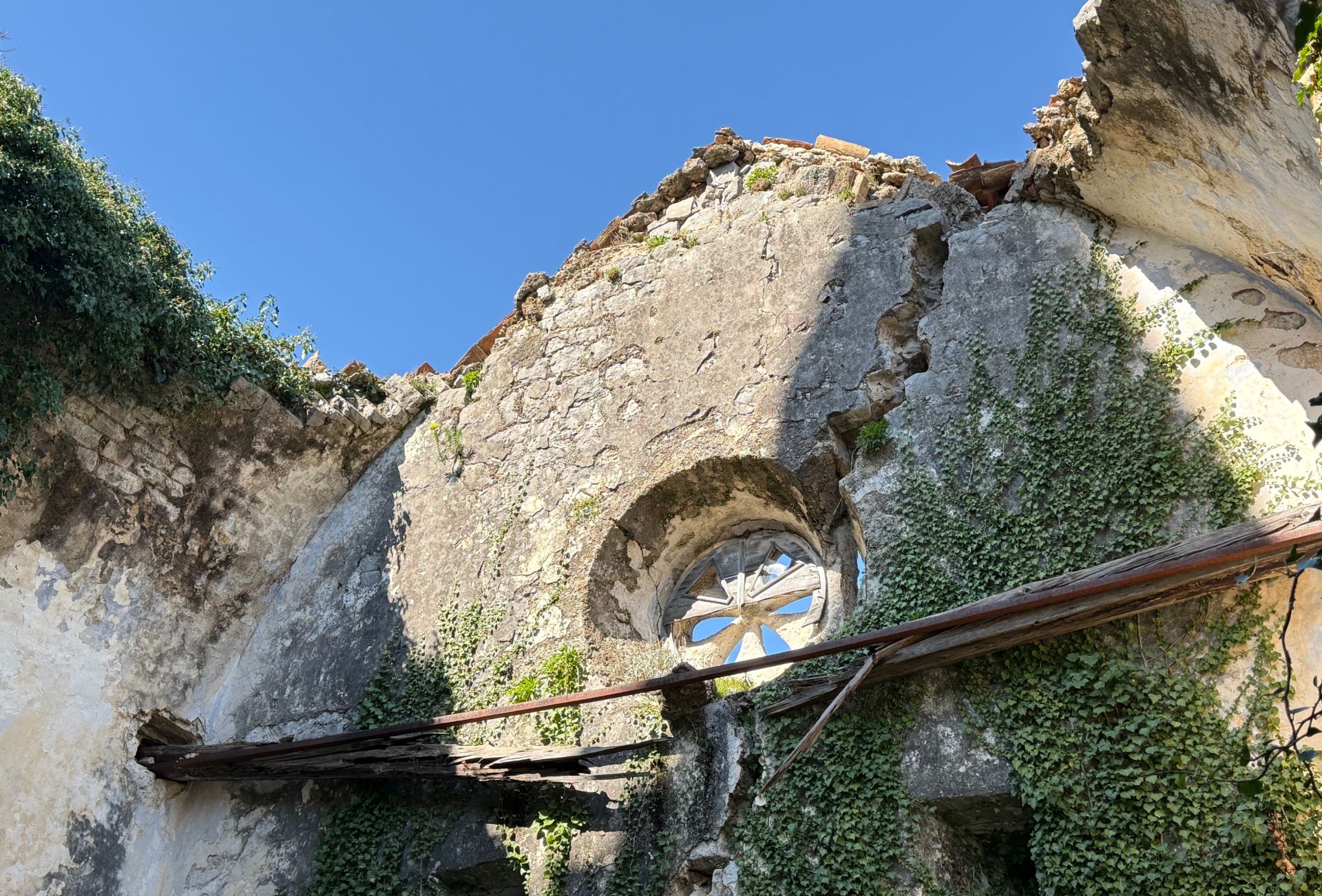
Although it seems to me that it is quite dangerous to enter such a devastated church, it can be seen that there were some tombs inside as well. Ship captains, ship-owners and priests were buried here until 1827. It is interesting to mention that Ivo Vizin, the first sailor from the South Slavic area who sailed around the world between 1852 and 1859, is also buried here.
The entire church complex is supported by a retaining wall and surrounded by a monumental stone wall with loopholes, facing the sea. From the terrace, you will have a magnificent panoramic view of Prčanj with the Church of the Virgin Mary, as well as a part of the Bay of Kotor.
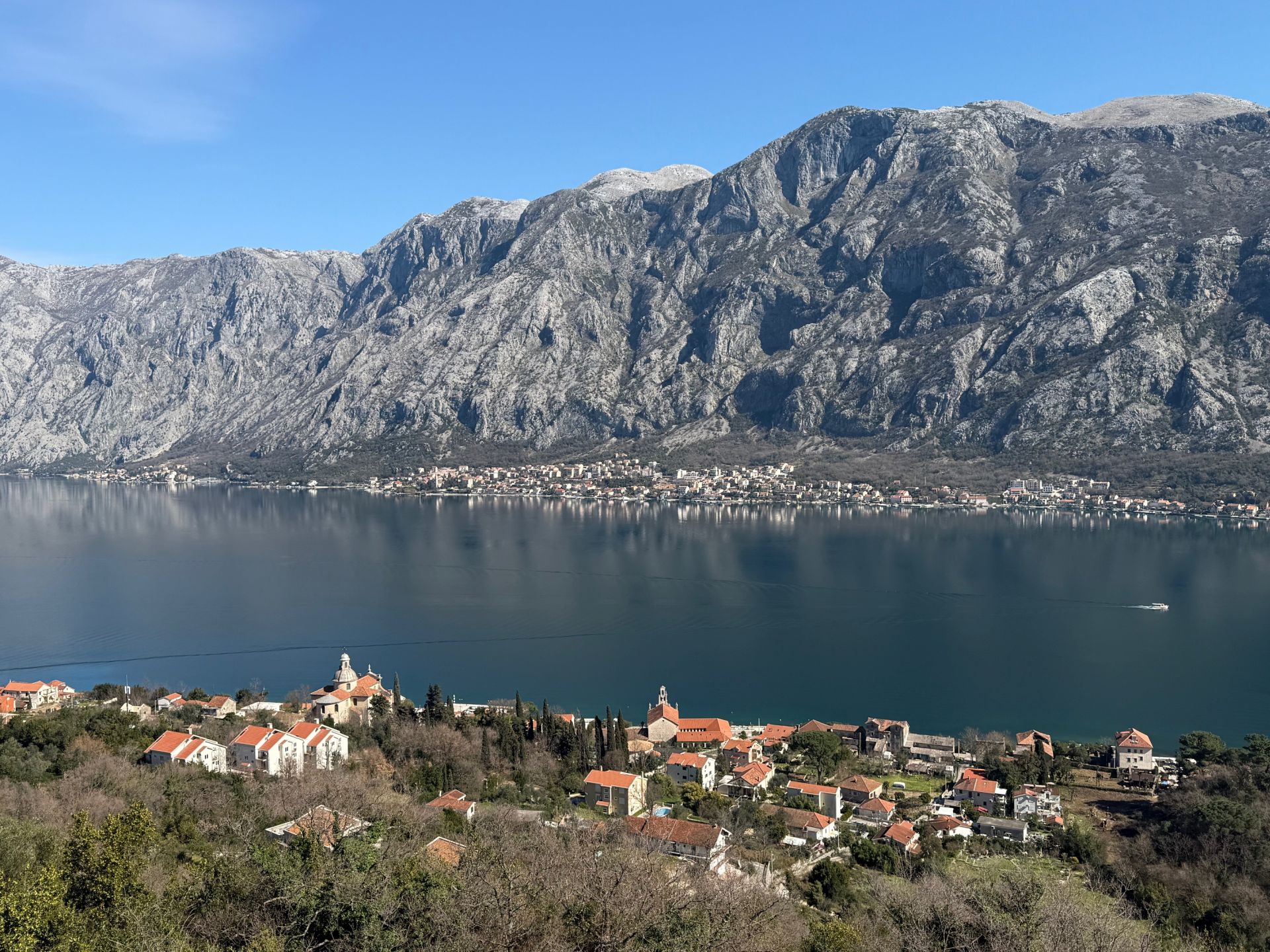
The Old Parish Church has been a major pilgrimage site for a long time. During the 19th century, it attracted up to 6,000 visitors in a single day. That was at the time when the icon of the Virgin of Prčanj, which allegedly had miraculous powers, was kept in the church. In the beginning of the 20th century, the icon was transferred to the Church of the Virgin Mary in Prčanj.
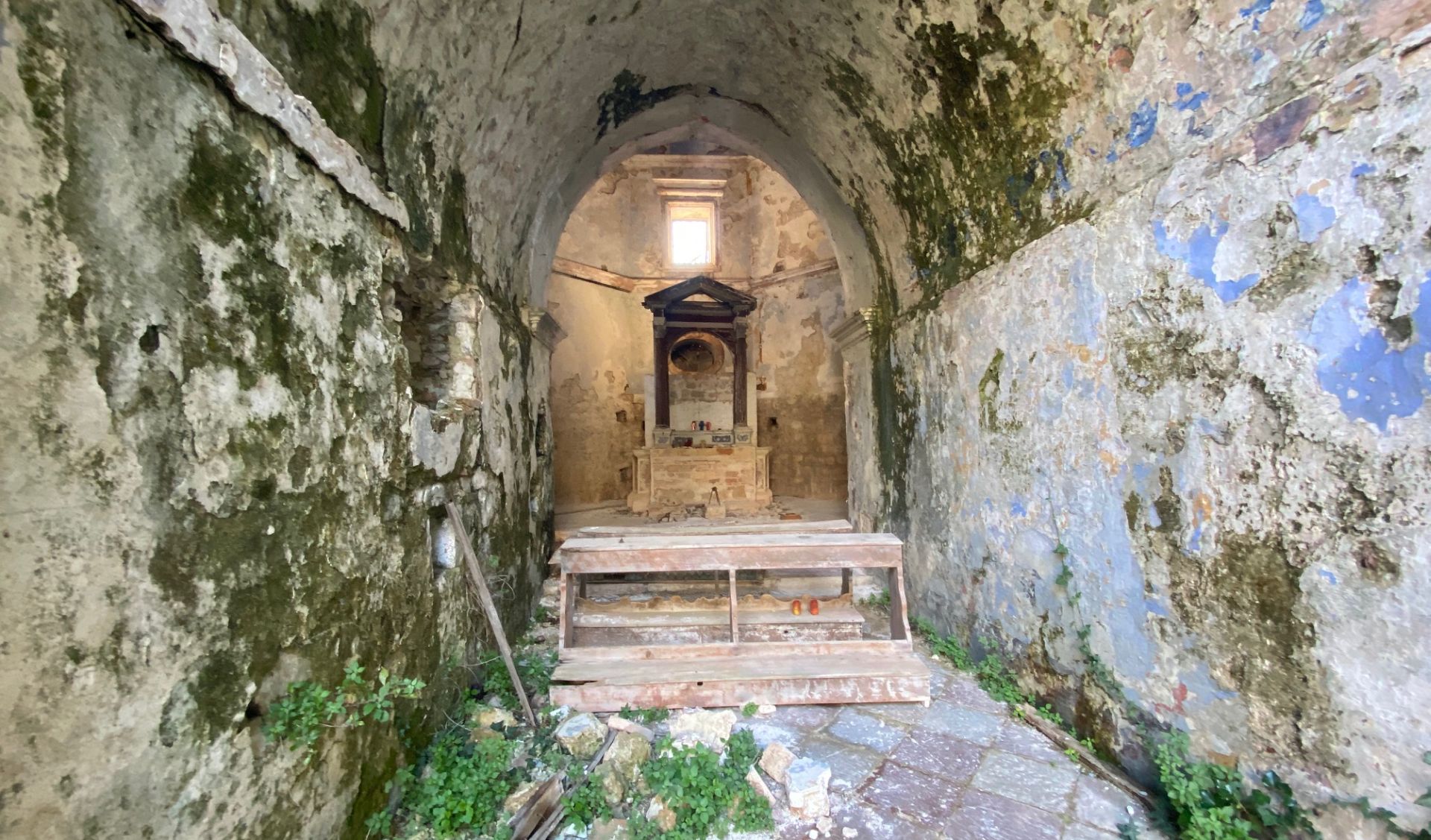
With the construction of the Church of the Blessed Virgin Mary, the altar and other valuable landmarks were moved and unfortunately, the Old Parish Church was forgotten and left to earthquakes, hooligans and the ravages of time. The church is now completely devastated. I don’t know if the cracks in the church wall and the collapse of the roof were a result of the earthquake in 1979, or if the ground subsidence was caused by the undermining of the church’s foundations during the digging of new graves on the plateau in front of the church.
What is happening now to the Old Parish Church?
For several years, hooligans have been desecrating and robbing tombs in front of the church and in the church itself in search of gold and other valuable items. In the church, some valuable marble tombs were almost completely destroyed, and other historical tombs were badly damaged.
Unfortunately, it seems that there are not enough financial resources to repair, maintain and preserve this valuable historical and cultural monument.